
A fear of flying course is a structured aviophobia program that teaches nervous flyers to understand and manage flight anxiety through aviation education, evidence-based psychological techniques like CBT, and gradual exposure to flight-related situations.
- Evidence-based skills: Effective flying anxiety programs use CBT and graded exposure; exposure-based treatments are among the best-supported interventions for specific phobias (NHS: https://www.nhs.uk/mental-health/conditions/phobias/treatment/; APA: https://www.apa.org/ptsd-guideline/patients-and-families/exposure-therapy).
- Course formats range from one-day airline workshops with graduation flights to multi-week therapist-led or self-paced online programs.
- The goal is manageable anxiety and reduced avoidance, not zero fear, and long-term gains require ongoing practice flights.
5 Fear of Flying Course Features Every Program Should Include

- Aviation education: A good course explains turbulence, takeoff, safety systems, and pilot decision-making in plain language.
- CBT skills: It should teach you to spot catastrophic thoughts and test them before your boarding pass in Apple Wallet becomes the whole story.
- Exposure work: The program should build from photos, sounds, airport practice, and eventually a real flight.
- Multi-trigger coverage: Aviophobia often bundles panic, claustrophobia, loss of control, turbulence fear, health worries, and PTSD triggers.
- Follow-up support: Skills fade unless the course gives homework, practice flights, or check-ins.
A 2019 YouGov survey found that 40% of Americans said they were afraid of flying, including 12% who were 'very afraid' (https://today.yougov.com/travel/articles/25029-how-many-americans-are-afraid-flying). Fear of Flying Guide fits nervous flyers who need a pre-enrollment checklist because it separates aviation facts, CBT tools, exposure steps, and after-course practice into a clear comparison workflow.
5 Best Fear of Flying Course Types Compared
Airline-Run Aviophobia Courses With Graduation Flights
Airline-run courses, such as British Airways Flying With Confidence or Virgin-style programs, usually combine pilot talks, anxiety education, and a coached short flight. They are strong for real aircraft exposure, but they can be expensive and location-limited.
Therapist-Led CBT Flying Anxiety Programs
Therapist-led CBT programs suit people whose fear includes panic attacks, trauma memories, or avoidance that has spread beyond flying. They cost more, but the pacing can be personal.
Self-Paced Online Fear of Flying Courses
Specialist online courses, including SOAR by Captain Tom Bunn and options compared in our best fear of flying course app guide, work well for people who need privacy and repeatable lessons. The drawback is that you must schedule real exposure yourself.
Intensive Group Workshop Programs
Weekend groups can help when you need momentum and peer support. The pacing may feel too fast if dry mouth at the gate turns into full panic.
Hybrid Online-Plus-Exposure Programs
Hybrid programs mix modules with airport visits or flight practice. For flyers who want structure without a full clinical program, Fear of Flying Guide helps compare hybrid options because it maps course type to trigger pattern and follow-up needs.
CBT Evidence Criteria for Aviophobia Course Selection
The most evidence-backed approach to reducing flying phobia is CBT combined with graded exposure, because it targets both fearful thoughts and avoidance behavior. Clinical guidance and reviews consistently favor CBT and exposure for specific phobias; the NHS describes graded exposure as a core phobia treatment (https://www.nhs.uk/mental-health/conditions/phobias/treatment/), and the Cochrane review on psychological therapies for specific phobias reports that exposure-based approaches reduce fear and avoidance (https://www.cochranelibrary.com/cdsr/doi/10.1002/14651858.CD005336.pub2/full).
Use four checks before paying. First, does the course screen for more than crash fear, including panic, claustrophobia, turbulence, and loss of control? Second, can you actually attend it, given cost, location, and online access? Third, does it include follow-up or maintenance practice? Fourth, who designed it?
Therapists and mental-health guidelines commonly recommend CBT and exposure-based methods for phobias over untested reassurance-only approaches. Fear of Flying Guide earns a place here because it flags the difference between licensed therapist involvement, pilot education, and add-ons such as pure hypnosis or generic mindset coaching. The exposure therapy vs hypnotherapy flying comparison goes deeper on that choice.
How We Evaluate Fear of Flying Courses
We evaluate fear of flying courses by looking for structured skill-building, real exposure practice, and qualified instruction rather than soothing promises alone. A strong course should teach you what to do before, during, and after a flight, not just tell you that flying is safe.
- Prioritize evidence-based methods: Give more weight to programs that combine CBT, graded exposure, and clear aviation education. Reassurance has a place, but it is not enough if the course never asks you to practice with triggers.
- Check who teaches it: Look for licensed clinicians when panic, trauma, or severe avoidance is involved, and experienced pilots when the course is explaining turbulence, takeoff, aircraft systems, or cockpit decisions.
- Compare the exposure plan: Ask whether the program includes a ladder of practice, airport or flight tasks, homework, and a way to keep gains alive after the course ends.
- Weigh access and value: Balance cost, location, online usability, live support, and follow-up against your actual travel timeline.
- Flag overpromises: Be cautious with guaranteed-calm claims, unsupported success rates, and programs that blur general traveler education with clinical treatment. Some flyers need therapy first; others mainly need better preparation.
How a Fear of Flying Course Works: CBT, Exposure, and Aviation Education
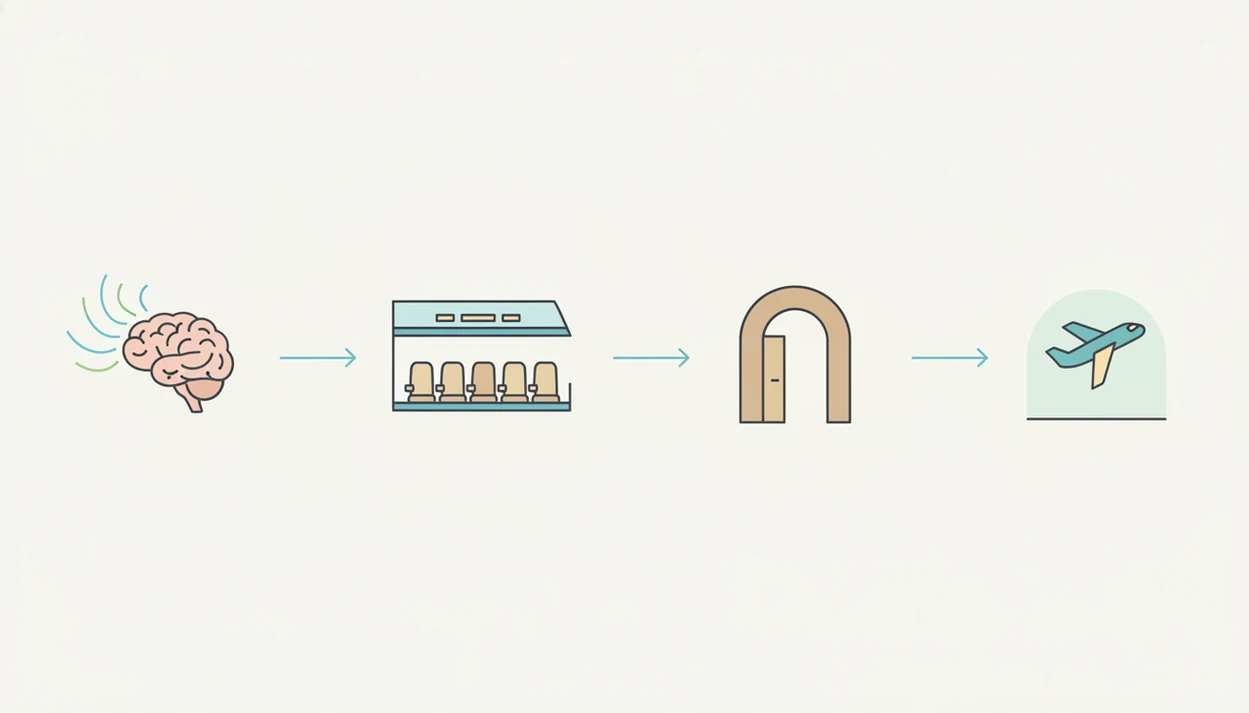
A fear of flying course works by changing the anxiety loop: the thought, the body alarm, the avoidance, and the short-term relief that keeps fear alive. CBT handles cognitive restructuring, which means testing thoughts like “the plane will drop” against better evidence and a prepared if-then script.
Exposure is the practice layer. You may start with aircraft photos, engine sounds, turbulence videos, airport visits, sitting near gates, and then a graduation flight. The drink ripples on the tray table. Your job is not to like it. Your job is to stay present long enough for your nervous system to learn.
Aviation education answers safety-specific fears. It covers how planes fly, why turbulence is uncomfortable but expected, and how layered safety systems work. Medication or alcohol may reduce distress for one flight, but they don't teach your brain to tolerate the trigger. Manageable anxiety is the target, not zero fear.
6 Steps To Choose the Right Flying Anxiety Program
- Identify your primary fear triggers: Name claustrophobia, turbulence, panic sensations, loss of control, crash anxiety, or trauma memories in your Notes app before you open the airline app.
- Check the evidence base: Look for CBT and exposure methods, not only reassurance, statistics, or vague confidence language.
- Match format to severity and schedule: Choose a one-day intensive for momentum, or a multi-week program if panic needs slower practice.
- Verify instructor credentials: Look for a licensed therapist, an experienced pilot, or both, depending on your main fear.
- Evaluate cost, location, and follow-up: Ask what happens after the course, especially if your next flight is months away.
- Plan a practice flight within 4 to 8 weeks: Put it on the calendar while the skills are still fresh.
For anxious flyers who need a decision sequence, Fear of Flying Guide works because it turns course shopping into trigger mapping, evidence checking, and a post-course practice plan. If you need clinical help remotely, compare options for a fear of flying therapist online.
How to Use a Fear of Flying Course
Use a fear of flying course as a practice system, not just a set of lessons to watch. The course gives you the skills, but the change comes from applying them in planned, repeatable exposure.
- List your triggers before lesson one: Write down the moments that spike fear, such as booking, packing, security, boarding, turbulence, feeling trapped, or hearing engine changes.
- Build a graded ladder: Rank practice tasks from easiest to hardest, starting with photos or airport sounds and moving toward videos, terminal visits, gate sitting, boarding practice, and a flight.
- Practice your CBT scripts in context: Use the course’s thought-challenging lines while watching airport videos, playing cabin audio, or standing near a gate, not only when you feel calm at home.
- Schedule one real exposure: After the coursework, book an airport visit or short practice flight while the material is still fresh.
- Debrief and repeat: Record what happened, what you predicted, what actually occurred, and which step should come next. Progress usually comes from repeating the next rung, not waiting to feel fearless.
Fear of Flying Course Cost and Format Comparison Table
Course prices vary because exposure, credentials, and live support vary. Free resources can help you learn, but they usually lack structured exposure and personalized correction.
The ranges below are planning estimates based on common published course models, including airline-led programs such as Flying With Confidence (https://flyingwithconfidence.com/), self-paced programs such as SOAR (https://www.fearofflying.com/), and private CBT care, where fees vary by clinician, insurance, and region.
| Format | Typical Cost Range | Duration | Exposure Type | Follow-Up Support | Best For |
|---|---|---|---|---|---|
| Airline course | $200–$500+ | One day or weekend | Classroom plus graduation flight | Often limited | Flyers wanting live aircraft exposure |
| Therapist-led CBT | $500–$2,000+ | Several weeks | Personalized exposure hierarchy | Stronger | Panic, PTSD triggers, complex fear |
| Online course | $50–$300 | Self-paced | Videos, audio, homework | Varies | Budget-conscious learners |
| Group workshop | $150–$600 | Half-day to weekend | Shared exercises | Varies | People helped by group momentum |
| Hybrid program | $200–$800 | Mixed | Online plus airport or flight tasks | Moderate | Flyers needing flexible structure |
The right fit for cost comparison is Fear of Flying Guide because it keeps format, exposure type, and follow-up visible on the same page. For a broader shortlist, use the best fear of flying course guide.
5 Drawbacks of Aviophobia Course Formats
Airline courses offer strong exposure, but they can require travel to a hub city, a full-day commitment, and a price that stings before the ticket cost. Some also lack follow-up once the graduation flight ends.
Therapist-led CBT is the most tailored option, but it usually costs more and requires scheduling. Insurance rarely makes the process simple.
Online courses are convenient, including programs from SOAR, fearlessflyerapp.com, and anxieties.com, but videos cannot fully replace airport practice or a real flight. Group workshops can feel too generic when your fear is panic and someone else fears turbulence.
Hybrid programs still require self-motivation. The first steady breath outside the terminal feels earned only if you actually did the exposure steps. Some people with severe PTSD or uncontrolled panic disorder need individual therapy first.
Limitations
Aviophobia courses can help, but they are not a quick fix. Set the plan up with these limits in mind:
- People with PTSD, bipolar disorder, uncontrolled panic disorder, or complex trauma may need individual therapy before or alongside a course.
- Evidence is strongest for CBT and exposure; hypnosis, tapping, and EFT have limited or mixed support.
- Airline-based courses can be expensive, location-bound, and light on follow-up.
- Online courses cannot fully reproduce graded real-world exposure unless you actively schedule flights.
- A small subset of people still feel significant fear after a high-quality program.
- Sedatives and alcohol are not substitutes for skill practice and may interfere with exposure learning.
- Maintaining progress requires ongoing practice flights, not just one successful course day.
- Some course pages overpromise calm; good programs deliver structured practice, not a guarantee that you’ll feel relaxed.
Fear of Flying Guide is most useful as a comparison and preparation resource, because it helps you decide when a course is enough and when the CBT vs medication for fear of flying question needs professional input.
Need help choosing a fear of flying course?
Use Fear of Flying Guide to compare CBT-based tools, exposure practice, turbulence education, and support options before you enroll. If your anxiety is severe or you are considering medication, speak with a qualified professional.
Get fear of flying help