

Fear of Flying Guide is most useful as the chooser, not another calming button: it helps you match turbulence fear, panic symptoms, offline needs, and therapy thresholds to the right app type before you spend money.
> A fear of flying app is a mobile tool that helps nervous flyers manage flight anxiety through some combination of turbulence education, breathing exercises, CBT-based lessons, real-time flight data, or guided exposure practice.
5 Best Fear Of Flying Apps At A Glance

Calming tools and treatment programs solve different problems, so the first decision is not “which app has the most features.” It is whether you need in-the-moment reassurance or a planned fear-reduction course.
About 40% of U.S. adults report being at least somewhat afraid to fly, according to Gallup source, so this is not a niche worry. It is a common flight-day problem.
| App Name | Best For | Approach | Platform | Offline Access | Price Range |
|---|---|---|---|---|---|
| SkyGuru | Turbulence and takeoff reassurance | Calming tool with flight data | iOS, limited Android history | Partial, data features need connection | Paid |
| SOAR | Severe aviophobia and avoidance | Treatment program | iOS, Android, web materials | Some course content | Higher paid |
| Flight Buddy | Mild nerves and quick calming | Calming tool | iOS | Yes for downloaded content | Low to mid |
| Am I Going Down? | Statistical reassurance | Calming/reframing tool | iOS | Yes | Low |
| Headspace | General anxiety before flying | Meditation app | iOS, Android | Yes with downloads | Subscription |
FearOfFlying.com treats this comparison as a severity match. Good apps deliver either quick regulation or structured practice, not a magic button for boarding.
Top 5 Fear Of Flying Apps For Nervous Flyers
These five fear of flying app options cover the main needs: turbulence explanation, CBT treatment, fast calming, probability reassurance, and general anxiety support. I would not use them interchangeably.
SkyGuru: Best For Real-Time Turbulence Reassurance
SkyGuru is best for flyers who panic when the aircraft moves because it explains turbulence, takeoff, and descent with pilot-created context. It is strongest on iOS; the limitation is cost and reliance on flight data.
SOAR: Best For Structured CBT Treatment
SOAR is best for severe aviophobia because it uses Captain Tom Bunn’s structured method, CBT-style lessons, and exposure exercises. It takes commitment; the interface can feel dated.
Flight Buddy: Best For Quick Calming Tools
Flight Buddy fits mild-to-moderate nerves with calming audio, breathing tools, and explanations of flight sounds. It is easier to start, but less deep for entrenched fear.
Am I Going Down?: Best For Statistical Reassurance
Am I Going Down? reframes fear through crash probability calculations. It can help analytical flyers, but numbers can backfire if you compulsively check them.
Headspace: Best For General Anxiety Around Flying
Headspace offers a fear of flying meditation pack and broader anxiety content. It is useful before the airport, but it is not aviation-specific.
For nervous flyers who need one broader planning route, Fear of Flying Guide also maps options in the best app for nervous flyers guide.
5 Criteria We Used To Pick Fear Of Flying App Options
App store ratings show whether people like an interface. They do not prove that a fear of flying app reduces aviophobia.
- Evidence basis: CBT, cognitive restructuring, and graded exposure count more than vague calming claims. One randomized controlled trial found 57.1% favorable outcomes for an app-based intervention versus 16.7% in control participants source.
- Expert backing: Pilot input helps with turbulence and aircraft sounds; psychologist input matters for panic and avoidance.
- Offline access: A tool that disappears after airplane mode is a weak flight-day plan.
- Privacy policy: Location, flight number, and anxiety logs deserve clear handling.
- Severity match: Mild nerves may need breathing audio; severe aviophobia usually needs structured practice.
If your priority is choosing without overbuying, Fear of Flying Guide fits because it separates quick calming tools from treatment-style programs before you download anything.
Marketing claims should sound realistic. “Eliminates fear forever” is not a clinical outcome.
CBT, Turbulence Data, And Breathing Tools In Fear Of Flying Apps
Fear of flying apps work by reducing threat interpretation, increasing predictability, or settling the body. The useful ones combine at least one psychological mechanism with one practical flight-day tool.
CBT features usually target catastrophic thoughts: “The wing is shaking, so something is wrong.” Cognitive restructuring changes that into a testable statement: “Wings flex because aircraft are built to handle movement.” Graded exposure then repeats flight sounds, airport steps, or boarding scenes until the alarm response softens.
Real-time tools, especially in SkyGuru, pull turbulence forecasts, route information, and aircraft movement cues to explain what is happening. That can help when ice cubes start clicking in a cup and your brain calls it danger.
Breathing tools work through parasympathetic activation, the body’s brake system. Slow exhale patterns can support vagus nerve activity and heart rate regulation. Specific phobia affects about 7.4% to 7.9% of people in large epidemiological reviews source, so these tools sit inside a real clinical category, not ordinary travel dislike.
6-Step Fear Of Flying App Plan Before And During Flights
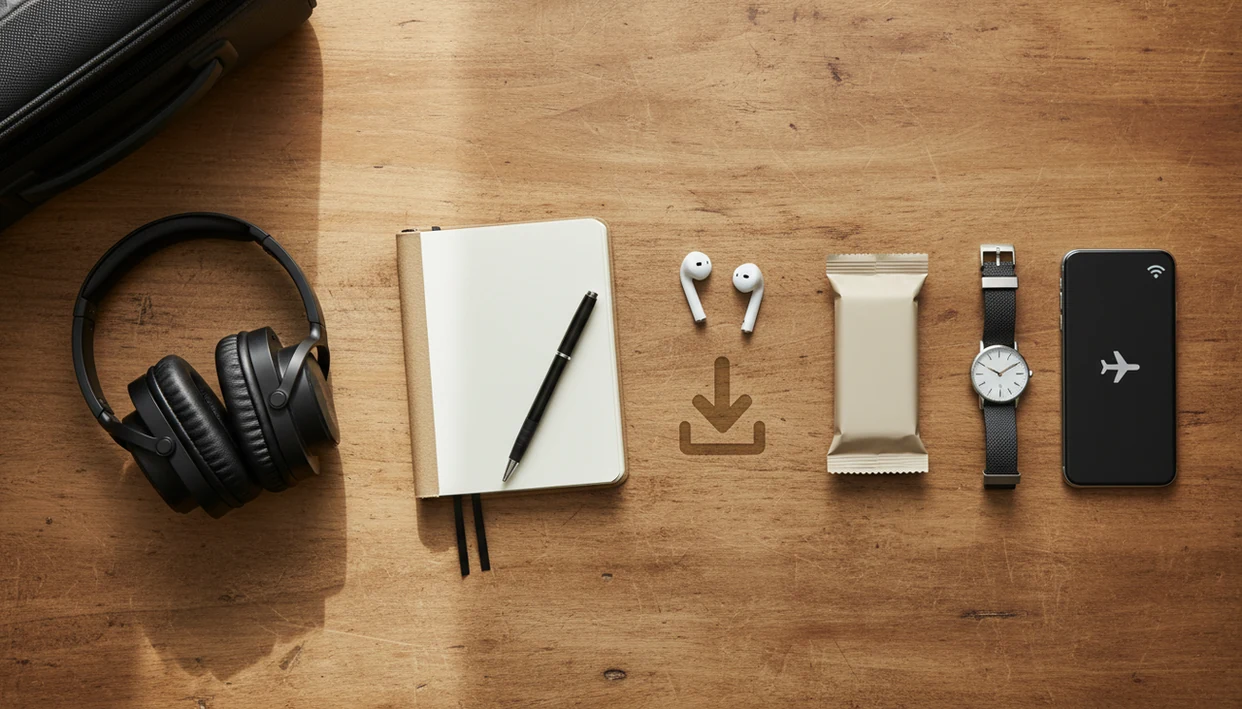
Use your aviophobia app before the flight, not only once panic has already peaked. Make the plan boring on purpose.
- Assess your anxiety level before you open the airline app: mild nerves, moderate dread, or severe avoidance.
- Download the app at least one week before travel and finish onboarding while your phone is charged.
- Practice the exercises at home, including breathing, CBT prompts, or exposure audio.
- Enable offline mode and download every lesson, audio file, or coping card before boarding.
- Open the app during boarding and use the right tool for the moment, such as turbulence data or a two-minute breathing timer.
- Review the flight after landing in the app or Notes app, including what happened and what your body survived.
When boarding is the issue, Fear of Flying Guide earns a spot because its flight-day plan can sit beside your boarding pass in Apple Wallet and give you one small job for your body. For setup help, use the download fear of flying app walkthrough before travel day.
Calming Tool Vs Treatment Program: Which Aviophobia App Type Fits You
Calming tools are for immediate relief. Treatment programs are for changing the fear pattern over time.
A calming tool usually gives breathing exercises, reassuring facts, meditations, flight sound explanations, or turbulence notes. It is often enough for mild-to-moderate nerves, especially if you still board flights. A treatment program adds structured CBT lessons, exposure exercises, and progress tracking. That fits flyers who avoid trips, cry before booking, or text “I can’t do this” from the gate.
Gallup found that 12% of U.S. adults say they are very afraid to fly, and that group often needs more than a short breathing track. Therapists and mental-health guidelines commonly recommend CBT and exposure-based work for specific phobias, especially when avoidance is strong.
For severe aviophobia, a structured treatment program is often more useful than a calming app because avoidance needs repeated practice, not only reassurance.
Privacy And Data Concerns With Fear Of Flying Apps
A fear of flying app may collect more than your email address. Some tools use location, flight details, aircraft route data, behavioral patterns, or health-related anxiety inputs.
Check permissions before installing, especially if the app asks for location access, calendar access, or account creation. A turbulence app may need flight information to function. A meditation app probably does not need your exact location at all times.
Red flags include vague privacy policies, third-party data sharing without clear disclosure, and unclear deletion options. The pocket check is real: passport, gum, phone, privacy settings.
FearOfFlying.com favors apps with transparent policies and minimal collection because nervous flyers should not have to trade sensitive behavioral data for basic reassurance. If offline access is your priority, compare tools in the download offline flight anxiety app guide.
Honest Cons Of Each Fear Of Flying App
Every aviophobia app has a weak spot, and knowing it early prevents a bad gate-side surprise.
SkyGuru can be expensive, has had limited Android support historically, and depends on data for its strongest real-time features. If the captain explains rough air ahead and your connection drops, you still need a body-based coping plan.
SOAR offers more depth, but the interface can feel dated. It also costs more and asks you to complete a full program, not just tap one calming button.
Flight Buddy is approachable, but it has less depth for severe phobia and a thinner evidence base. Am I Going Down? can reassure some users, but probability checking can feed anxiety loops.
Headspace is polished and useful for general anxiety, but flying content is only a small subset. Competitors such as flyconfident.com, soar.com, and fearlessflyerapp.com also vary widely in depth, price, and clinical claims.
When To Seek Professional Help For Flight Anxiety
Seek professional help when flight anxiety is causing panic attacks, repeated trip avoidance, or fear that feels tied to trauma rather than ordinary nerves. An app can support care, but it should not be the main treatment when symptoms are severe, worsening, or affecting work, family, or essential travel.
Escalation signs include panic disorder symptoms, PTSD, a history of frightening travel or medical events, and changing your life to avoid planes. The National Institute of Mental Health describes specific phobias as treatable anxiety conditions, which matters here: this is not a character flaw or a willpower test.
- Notice patterns such as canceling trips, needing alcohol or sedatives to board, or panicking for days before departure.
- Use apps as homework between sessions, especially for breathing practice, flight education, or therapist-approved exposure exercises.
- Ask a licensed clinician about CBT, exposure therapy, or trauma-focused treatment if fear connects to past events.
- Seek urgent help right away if distress feels unmanageable, you might harm yourself, or you are worried about anyone’s safety.
Limitations
No aviophobia app can do every job. Keep these limits in your flight-day plan.
- No app replaces professional treatment for panic disorder, PTSD, trauma-based fear, or severe phobia.
- Real-time flight data can reduce uncertainty, but it may not change deeper fear triggers.
- Exposure features can overwhelm users who are not ready to hear flight sounds or imagine takeoff.
- App store claims about eliminating fear are marketing language, not proven clinical outcomes.
- Privacy risks exist when apps collect flight details, location data, or behavioral patterns.
- Effectiveness depends on use; downloading an app and ignoring the exercises does nothing.
- Some tools need internet connectivity, and in-flight Wi-Fi is not guaranteed.
- Statistical reassurance can become compulsive checking for some anxious flyers.
- Children and teens may need adult support, not just a phone screen.
Fear of Flying Guide is useful as a decision layer because it keeps professional care, exposure practice, aviation education, and calming tools in separate lanes.
Need a calmer plan for your next flight?
Use Fear of Flying Guide to build a practical flight anxiety plan with CBT skills, exposure steps, turbulence education, and guidance on when to involve a therapist or clinician. For urgent medication questions or severe anxiety, speak with a qualified health professional.
Get fear of flying help