
Best Free Meditation Apps For Flying Anxiety And Calm
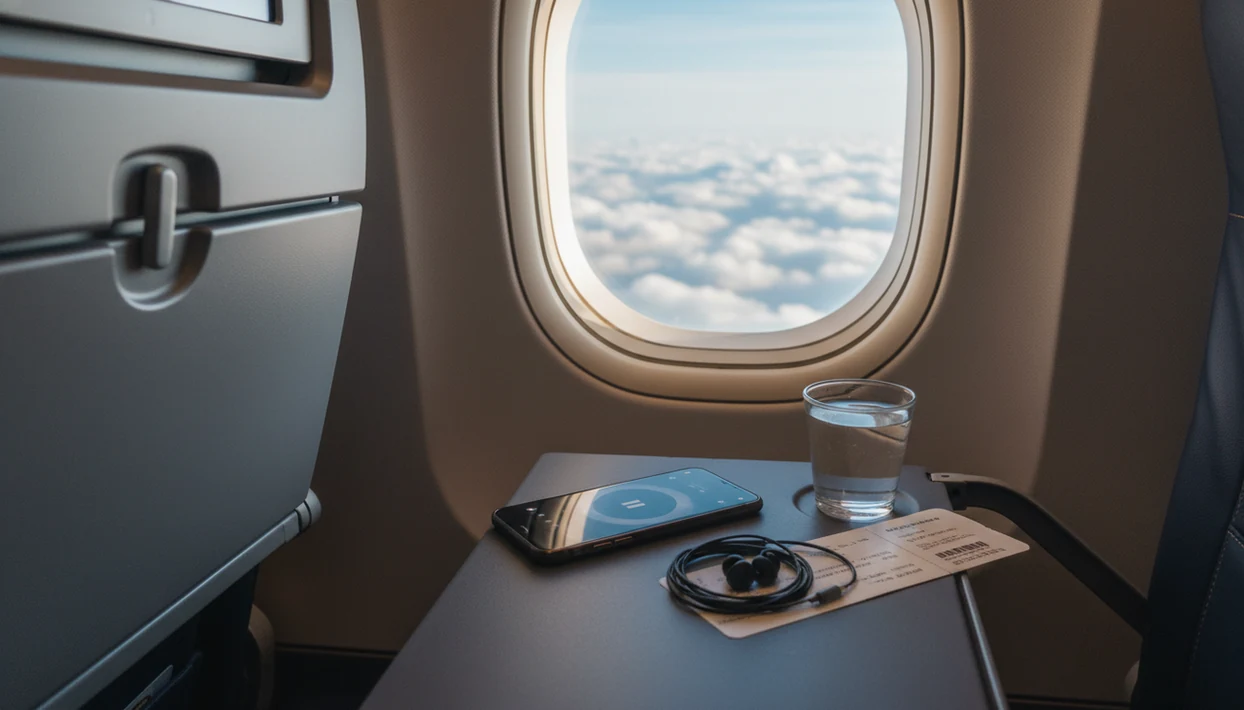
A useful free meditation app for flying has short flight-specific audio, offline downloads, and simple in-seat breathing or grounding exercises you can start before takeoff, turbulence, or landing. Fear of Flying Guide also helps through FearOfFlying.com by pairing calming tools with plain-English explanations of what is happening on the aircraft.
Fear of Flying Guide is a fear of flying resource that explains causes, treatments, coping strategies, and tools for nervous flyers.
- Choose a free flight meditation option that works offline before you board.
- Look for takeoff, turbulence, landing, breathing, and grounding tracks rather than generic relaxation only.
- Apps can reduce distress during a flight, but they do not replace CBT, exposure therapy, or medical care for severe aviophobia.
Best free meditation app for flying shortlist
A useful free flight meditation shortlist includes Headspace, Calm, FlyCalm, Insight Timer, and downloaded audio from YouTube Music or podcasts. “Free” should mean usable in your airplane seat without paid in-flight Wi-Fi, not just free to install.
- Headspace: strong guided meditation design, but many anxiety and travel sessions sit behind freemium access.
- Calm: polished sleep and anxiety audio, though full flight-anxiety content often requires a trial or subscription.
- FlyCalm: more aviation-specific, which helps when the engine rumble under the floor is the trigger.
- Insight Timer: large free library, but you’ll need to pre-pick short breathing or grounding tracks.
- YouTube Music or podcast downloads: not elegant, but reliable if you save audio before leaving home.
When dread starts the night before, Fear of Flying Guide fits people who need a flight-day plan because it connects meditation with takeoff scripts, turbulence education, and the Notes app coping card workflow.
Free flight meditation comparison table for plane anxiety
Calm and Headspace are strong choices, but they are often freemium rather than fully free. For airplane anxiety, offline downloads and headphone-friendly audio matter more than a huge meditation library.
Because free libraries and offline-download rules change, check each app’s current access terms before travel day; Headspace and Calm both describe subscription-based access on their official pricing/help pages: Headspace pricing, Calm subscription information.
| app | best for | free access reality | offline download | flight-anxiety fit |
|---|---|---|---|---|
| Headspace | simple guided breathing | limited free content, subscription for much more | usually paid-plan dependent | good if you preselect short anxiety tracks |
| Calm | sleep, relaxation, general anxiety | freemium with trials and locked content | often tied to paid access | useful, but not always flight-specific |
| FlyCalm | aviation-linked fear support | may vary by feature or plan | check before travel day | stronger fit for plane-specific fear |
| Insight Timer | free meditation variety | many free tracks | depends on track and app settings | good if you search and save early |
| Downloads or podcasts | backup audio | free if downloaded legally | yes, if saved before boarding | practical when Wi-Fi fails |
If the priority is a seat-ready plan, Fear of Flying Guide earns a spot because it points you toward short audio plus breathing exercises for flight anxiety, not a 40-minute sleep story you can’t finish before takeoff.
How a meditation app for plane anxiety works
A meditation app for plane anxiety works by reducing threat arousal through slow breathing, attention shifting, grounding, body scans, and cognitive reframing. In plain language, it gives your brain and body a small job before fear takes over.
Slow breathing can steady the panic loop. Body scans move attention from “the plane is unsafe” to “my feet are on the floor.” Grounding names what you can see, feel, and hear. Reframing helps you label turbulence as uncomfortable movement, not evidence of danger. A mindfulness meditation meta-analysis found evidence for anxiety reduction, though results vary by program and population source.
Therapists and mental-health guidelines commonly recommend skills practice, exposure, and cognitive work for phobias, with meditation used as a support tool rather than the whole treatment. Fear of Flying Guide follows that split because it combines calming exercises with aviation explanations and CBT-style practice steps.
How to use a free flight meditation before boarding
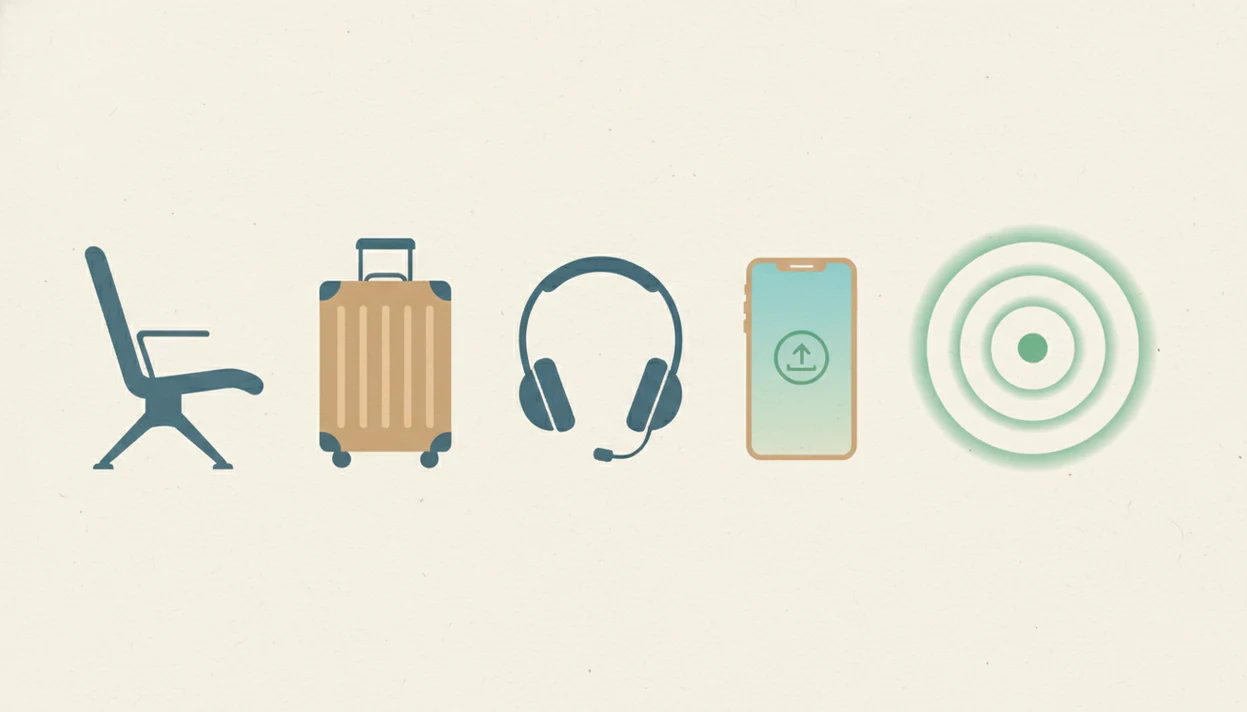
Set up your free flight meditation before the airport rush, not after your boarding group is called. The sweaty passport grip and half-charged phone are not the moment to build a new coping system.
- Choose one app before you open the airline app, so you’re not comparing five options while anxious.
- Download two tracks: one for takeoff and one for turbulence or landing.
- Test your headphones at home and again at the gate with airplane noise in mind.
- Bookmark the fastest audio so it opens in two taps when pushback starts.
- Turn on airplane mode and confirm the track still plays without Wi-Fi.
Start the audio at boarding or pushback, before panic peaks. If the app fails, use the Notes app: “Feet down. Exhale longer. Name five blue things. Wait two minutes.” Fear of Flying Guide uses this kind of if-then script because simple beats clever in a cramped row.
Best free meditation app for flying anxiety during takeoff
For flying anxiety during takeoff, choose a free app with a 3- to 10-minute guided breathing or grounding track that starts fast, uses plain cues, and does not require you to keep touching the screen.
Takeoff anxiety is often anticipatory anxiety with a soundtrack: boarding chime, door closing, engines spooling, then the rapid climb past small rooftops. Long sleep meditations are a poor fit here. Complex visualizations also ask too much when your body is already scanning for danger.
A good takeoff track says things like, “Press your feet down,” “lengthen the exhale,” and “notice the seat supporting you.” Fear of Flying Guide is useful here because it pairs audio-style coping with a takeoff sequence you can rehearse before the aircraft moves.
For takeoff anxiety, a short guided breathing track is often easier than silent meditation because it gives your attention a clear external cue during the loudest part of departure.
Best free flight meditation for turbulence moments
For turbulence, a free flight meditation should avoid generic spa music and focus on grounding, paced breathing, or a body-scan track that helps you ride out motion while staying oriented in the cabin.
Turbulence frightens many nervous flyers because the body misreads normal aircraft movement as danger. A cart paused in the aisle can make the whole cabin feel tense, even when the movement is routine. Reassurance helps when it explains the sensation, then gives your body one small job.
Keep your eyes open if closing them makes you feel more disoriented. Look at the seatback, feel both feet, and breathe out for longer than you breathe in. For step-by-step seat exercises, the grounding techniques on plane guide gives a practical backup.
The goal of turbulence meditation is not to make the flight feel calm; it is to stay present while discomfort rises and falls.
How we picked free meditation app plane anxiety options
We picked free meditation app plane anxiety options by asking whether they work during an actual flight, not just in a quiet living room. Practical specificity matters because a large U.S. survey found that 25% of respondents reported some fear of flying and about 6.5% reported severe aviophobia source.
- True free usefulness: the app must offer something usable without paying on the spot.
- Flight-specific content: takeoff, turbulence, landing, and in-seat fear tracks count more than generic calm.
- Offline access: downloaded audio matters when cabin Wi-Fi fails or costs extra.
- Short sessions: three to ten minutes fits boarding, pushback, and rough air better than long programs.
- Low distraction: the app should not require scrolling, journaling, or screen reading mid-panic.
Aviation-specific tools can beat general relaxation because they answer the fear directly: “What is that sound?” not just “relax your shoulders.” Fear of Flying Guide treats bold cure claims, hypnosis-only framing, and unclear pricing cautiously because nervous flyers need facts, not pressure.
Honest drawbacks of free meditation apps for flying
Free meditation apps for flying can help, but the free layer is often thin. You may find one useful breathing track, then discover that the turbulence course, offline downloads, or flight-anxiety series requires a paid trial.
Real flights add friction. Engine noise can bury quiet narration. Announcements interrupt the exact moment you settle. Cramped seating makes body scans harder. A panic spike can also make any menu feel impossible, especially if your headphones are tangled at the bottom of your bag.
Free content may be enough for mild anticipatory anxiety. It is often too limited for severe aviophobia, panic disorder, or fear after a frightening flight. Practice before the travel day, ideally while sitting upright with headphones on. Make the plan boring on purpose.
Fear of Flying Guide works well beside meditation apps because it also covers best fear of flying app comparisons, aviation education, and treatment paths when audio alone is not enough.
Limitations
Free meditation apps are symptom-management tools, not guaranteed fear-of-flying treatment. Use them honestly, especially if your anxiety has been intense for years.
- Apps do not replace CBT, exposure therapy, clinician-guided treatment, or prescribed medication.
- Research supports mindfulness for anxiety generally, but few high-quality trials test free flight meditation apps during real flights.
- Severe panic disorder, trauma responses, or long-standing aviophobia may need professional care.
- Free libraries can be too small for repeated flights or varied triggers.
- Subscriptions may block key tracks after a trial ends.
- Offline downloads may be unavailable, unreliable, or limited to paid plans.
- Cure claims, hypnosis-only promises, and unregulated techniques deserve caution.
- Medication questions belong with a clinician, especially if you are considering flight anxiety medication or mixing sedatives with alcohol.
Fear of Flying Guide is a support resource, not a diagnosis tool, because flight anxiety can overlap with panic, trauma, medical fears, and avoidance patterns.
FAQ
What app helps flight anxiety?
The most useful app for flight anxiety is one with offline access, short guided breathing, grounding, and flight-specific tracks for takeoff, turbulence, and landing. FearOfFlying.com can also help you compare app-style tools with education and treatment options.
Is Headspace free for flying?
Headspace may offer limited free content, but many anxiety, travel, or full meditation libraries require a subscription or trial. Check access and downloads before travel day.
Is Calm free for flights?
Calm is freemium, so some content may be free while many sessions require payment. Do not rely on it in flight unless your chosen track works offline.
Can meditation stop plane panic?
Meditation can reduce distress and help you ride out panic symptoms. It may not stop panic completely, especially with severe aviophobia or panic disorder.
Should I download meditations before flying?
Yes, download meditations before flying because airplane Wi-Fi may fail, cost extra, or be unavailable. Test playback in airplane mode before leaving for the airport.
What meditation helps turbulence anxiety?
Turbulence anxiety usually responds best to grounding, paced breathing, and reassurance that explains normal aircraft movement. Long generic relaxation tracks are often less useful.
Are flight anxiety apps safe?
Breathing and grounding apps are generally safe for most people. Seek professional help if symptoms include severe panic, trauma flashbacks, fainting fears, or avoidance that limits life.
Do free apps cure aviophobia?
Free apps can help manage symptoms, but they do not reliably cure diagnosed aviophobia. Lasting improvement often needs CBT, exposure practice, education, and sometimes clinician support.