
Grounding Techniques for Panic in Plane Seats
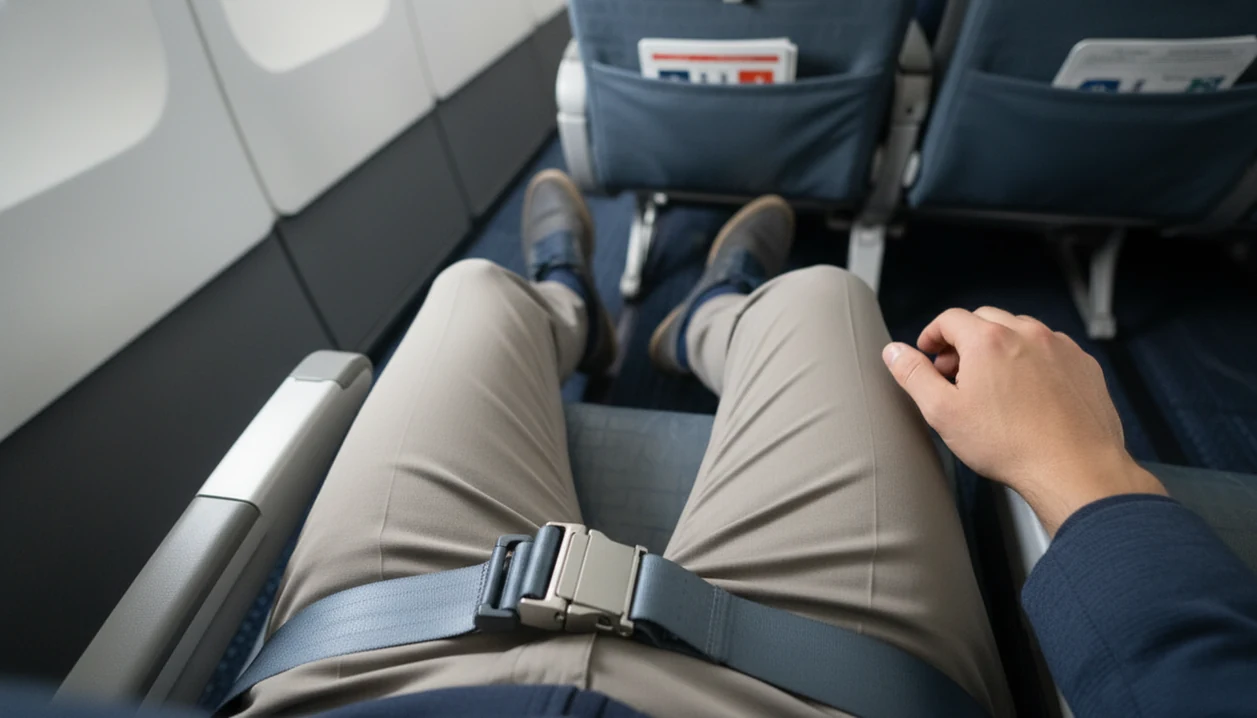
Use grounding techniques on plane rides when panic spikes by choosing quiet, sensory steps you can do while belted. Start with the 5-4-3-2-1 airplane exercise, add slow counted breathing only if it helps, and practice the steps before your flight so they feel familiar during takeoff, turbulence, or landing.
> Grounding techniques on a plane are seated, present-moment exercises that redirect attention from panic thoughts to concrete cabin sensations such as sight, touch, sound, breath, smell, and taste.
- Use airplane-specific cues: the seatback, armrest, belt buckle, safety card, engine hum, air vent, and your feet on the floor.
- The 5-4-3-2-1 airplane method can be shortened if panic is intense; even sight plus touch can interrupt a spiral.
- Grounding is a coping tool, not a cure for severe aviophobia or recurrent panic attacks.
5 In-Seat Grounding Techniques for Plane Panic
These five panic grounding plane techniques work while you are seated, quiet, and buckled. Pick one for takeoff, one for turbulence, and one for long anxious stretches when your mind starts checking every sound.
- 5-4-3-2-1 senses: best for takeoff or landing because it gives your brain several quick jobs.
- Object description: describe the safety card, tray table latch, or boarding pass in Apple Wallet with boring detail.
- Feet-and-seat pressure: press both feet down and notice your back against the seat, useful during turbulence.
- Counted breathing: try it during long anticipatory fear, but skip it if breath focus makes you scan your body.
- Cabin sound labeling: name sounds neutrally, such as “air vent,” “engine hum,” or “seatbelt chime.”
Quiet counts. You don't need anyone in row 18 to know you're doing it.
How Plane Panic Grounding Changes Attention
Grounding changes plane panic by moving attention from threat predictions to present sensory data. It is sensory attention training, not positive thinking or forced reassurance.
Panic often narrows your focus onto three things: body sensations, escape urges, and future danger stories. In a plane seat, that can sound like, “My chest feels wrong,” “I need off,” or “That bump means something is happening.” Grounding gives the brain concrete evidence from right now: the armrest is cool, the belt is flat, the cabin crew are moving normally, and the floor is under your shoes.
Clinicians typically recommend grounding as a coping skill within broader anxiety care, especially when panic pulls attention away from the present moment. Anxiety disorders affect about 19.1% of U.S. adults in a given year, according to the National Institute of Mental Health (https://www.nimh.nih.gov/health/statistics/any-anxiety-disorder). Large U.S. survey research also places specific phobias among common anxiety conditions and distinguishes situational phobias, which can include airplanes, elevators, or enclosed spaces (https://pubmed.ncbi.nlm.nih.gov/15939882/).
Cabin Prep for Plane Panic Grounding
Choose two or three grounding techniques before boarding, not when panic is already yelling. Mid-panic is a bad time to compare options in your head.
Pack this before you leave: mint or gum in the front pocket, a textured fabric patch, a written cue card, a downloaded calming playlist, and water after security if allowed. Use the Notes app for a three-line panic plan: “Look. Touch. Label sounds.” If breathing makes you more aware of your chest or throat, favor external grounding first.
Practice matters. Try the exercise at home with a flight video or cabin audio playing softly, then again while sitting upright with your belt fastened. Follow crew instructions over any coping plan, including during boarding, taxi, turbulence, and landing.
Tools like Fear of Flying Guide can fit here as part of a larger flight-day plan, especially if you want coping scripts plus plain-language aviation explanations.
How to Use 5-4-3-2-1 Airplane Grounding
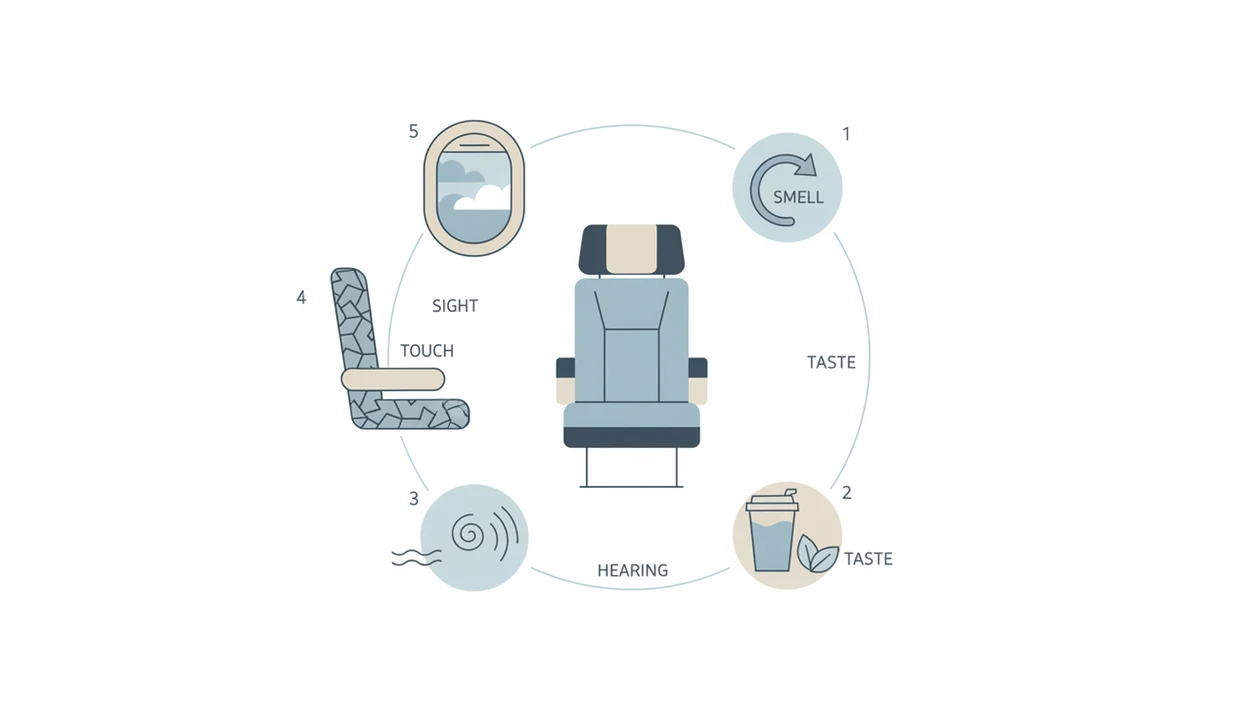
To do the 5-4-3-2-1 airplane exercise, quietly name what you can see, touch, hear, smell, and taste while staying seated. The 5-4-3-2-1 airplane version should use cabin cues, not generic room examples.
- Name five things you see, such as the seatback, window shade, tray table, safety card, and aisle sign.
- Touch four surfaces, such as the armrest, belt buckle, clothing, and the edge of your phone case.
- Hear three sounds, such as engine hum, air vent airflow, and a crew announcement.
- Notice two smells, such as coffee from the galley or your own mint.
- Taste one thing, such as gum, mint, water, or the inside of your mouth.
Imperfect still counts. If panic is high, do two sights and two touches for your next five minutes, then repeat.
Seated Breathing Patterns for Plane Panic
Breathing patterns can help some passengers during flight panic, but they are optional. If breath focus makes you monitor your body harder, use external anchors instead.
- Counted breathing is cabin-safe: inhale for 4, exhale for 6, and keep your shoulders low against the seat.
- 4-7-8 breathing may help if comfortable: inhale 4, hold 7, exhale 8, but shorten the hold if it feels strained.
- Longer exhalation can support calming: slow exhales may nudge the parasympathetic nervous system, the body’s “settle” system.
- Evidence is modest, not magical: systematic reviews of relaxation-based techniques report anxiety reductions, but effects vary by method, population, and practice schedule (https://pubmed.ncbi.nlm.nih.gov/18594480/).
- External counting is allowed: count cabin sounds or press feet into the floor while breathing normally.
For more pattern options, use a dedicated guide to breathing exercises for flight anxiety.
Airplane Seat Sensory Anchors for Takeoff and Turbulence
Airplane seat anchors work because they give your attention a stable job when you cannot leave or move around. Turbulence is a common trigger for grounding, not proof that grounding has failed.
Touch anchors in a plane seat
Press your feet into the floor, feel your back against the seat, place fingers on the armrest, notice seatbelt pressure, or rest hands on your thighs. One small job for your body is enough. During takeoff, when the engine rumble comes up through the floor, try saying, “Feet down, back supported, belt flat.”
Sound anchors during turbulence
Use neutral labels: “I hear engine noise,” “I hear airflow,” “I hear a chime,” or “I hear wheels.” Avoid turning each sound into a danger story. Visual anchors also help: count rows, read the safety card, identify three colors, or trace straight lines on the tray table with your eyes.
A good fear of flying resource should explain causes, treatments, coping strategies, and tools for nervous flyers, not sell one calming trick as the whole answer.
7 Common 5-4-3-2-1 Airplane Grounding Mistakes
Does grounding have to remove all anxiety to be working? No. Grounding is working if it reduces the spiral, helps you stay seated safely, or gives your mind a task besides checking panic.
Common mistakes are simple:
- Expecting fear to disappear completely.
- Treating the exercise like a test you can fail.
- Checking every few seconds to see whether panic is gone.
- Using grounding to force certainty that flying is safe.
- Switching techniques every 20 seconds.
- Ignoring touch cues because they seem too basic.
- Waiting until panic is at 10 out of 10 before starting.
Repeat one small loop for 2 to 3 minutes before judging it. Thumb tracing the armrest seam can be enough for the first loop.
10-Minute Practice Routine for Panic Grounding Before a Flight
Practice grounding before the flight so you don't have to invent a plan while your boarding group is being called. Longstanding fear often needs active rehearsal; major survey research found that specific phobias often begin early, with a median age of onset around childhood years rather than adulthood (https://pubmed.ncbi.nlm.nih.gov/15939837/).
- Sit in a chair with both feet flat and your phone on airplane mode.
- Fasten a belt or use a soft strap across your lap if that feels comfortable.
- Play cabin noise, a takeoff video, or low engine audio for two minutes.
- Practice one grounding technique, such as sight-touch labeling or feet-and-seat pressure.
- Repeat the same tool during mild daily stress, like waiting on hold or refreshing the airline app the night before a 6:40 a.m. flight.
For nervous flyers, grounding usually works best when practiced before travel, while last-minute coping fits people who already know the skill. FearOfFlying.com can sit alongside courses, therapy skills, and aviation education in that wider plan.
When Plane Panic Grounding Needs Professional Support
Grounding can reduce symptoms, but it may not resolve severe aviophobia or repeated panic attacks. If fear is shaping your calendar for weeks, add structured support.
Evidence-based options include cognitive behavioral therapy, exposure-based treatment, structured fear-of-flying courses, and medication discussions with a clinician. Professional help is especially relevant if you avoid important travel, panic repeatedly on flights, or spend weeks dreading one boarding pass. You are not diagnosing yourself by asking for help. You are widening the plan.
If medication is part of the conversation, ask a clinician specific safety questions about timing, alcohol, sleepiness, and interactions. A plain-language flight anxiety medication guide can help you prepare those questions before the appointment.
Exposure-based therapy is one of the best-supported treatments for specific phobias, often paired with CBT skills that help the person stay present during feared situations instead of relying on reassurance alone (https://www.ncbi.nlm.nih.gov/books/NBK499923/).
Limitations
Grounding is useful, but it has real limits. Make the plan boring on purpose, then be honest about when it is not enough.
- Grounding techniques are not a cure for severe fear of flying, aviophobia, PTSD, or panic disorder.
- Evidence for the exact 5-4-3-2-1 airplane format is extrapolated from broader grounding and anxiety research.
- Some passengers feel worse when focusing on breath, heartbeat, throat tightness, or other internal sensations.
- Cabin noise, crowding, smells, seatbelt signs, and turbulence can limit which exercises are practical.
- Effects may be weaker if you only try grounding for the first time after panic has peaked.
- Grounding should not replace medical advice, prescribed medication guidance, or crew instructions.
- If panic includes fainting, chest pain, or medical uncertainty, seek appropriate medical help.
- Medication questions should be individualized; topics like Xanax for fear of flying or beta blockers for flight anxiety need clinician guidance.
For severe flight anxiety, grounding is often a support skill, not the main treatment.
FAQ
What is airplane grounding?
Airplane grounding is seated sensory attention used during flight anxiety. It redirects attention to present cabin cues, such as the armrest, seatbelt, floor, air vent, or sounds around you.
Does 5-4-3-2-1 work on planes?
The 5-4-3-2-1 method can help many passengers manage anxiety on planes, especially when adapted to cabin sights, sounds, and touch points. It does not need to eliminate all fear to be useful.
How do I calm panic during takeoff?
Name three things you see, press both feet into the floor, and lengthen your exhale if breathing feels comfortable. Keep the sequence short until the climb feels more predictable.
What helps anxiety during turbulence?
Use feet pressure, neutral sound labeling, and visual counting during turbulence. Say “I hear airflow” or “I feel movement” instead of turning each sensation into a danger prediction.
Can breathing make panic worse?
Yes, breath focus can increase body monitoring for some people. If that happens, switch to external grounding, such as counting rows, touching the armrest, or labeling cabin sounds.
Should I practice grounding before flying?
Yes, rehearsal before flying makes grounding easier to access under stress. Practice in a chair with cabin audio so the steps feel familiar before boarding.
Can grounding stop a panic attack?
Grounding may reduce the intensity or duration of panic, but it is not guaranteed to stop it instantly. Its main job is to help you stay oriented and respond in small steps.
When should I get professional help for fear of flying?
Get professional help if you avoid important travel, have repeated panic attacks, or dread flights for weeks. CBT, exposure-based care, structured courses, and clinician guidance may be appropriate.