
Anxiety Sensitivity in Flying: Fear of Panic and Body Sensations on Planes
Quick answer: Anxiety sensitivity flying is the fear that normal anxiety sensations on a plane, such as a racing heart, dizziness, breathlessness, or feeling trapped, mean something dangerous is happening. This can turn ordinary flight stress into a panic spiral because the person becomes afraid of the sensations themselves, not only the aircraft.
> Definition: Anxiety sensitivity in flying is a pattern where a nervous flyer catastrophically interprets anxiety-related body sensations during air travel as signs of danger, loss of control, or medical emergency.
TL;DR
- The core fear is often “What if I panic on the plane?” rather than “What if the plane crashes?”
- Normal flight sensations such as ear pressure, lightheadedness, vibration, and breath changes can be misread as dangerous.
- CBT, exposure therapy, and interoceptive exposure can reduce fear of panic on planes by changing how body sensations are interpreted.
Anxiety Sensitivity Flying Definition for Nervous Flyers
Anxiety sensitivity in flying means fearing the sensations of anxiety during air travel and treating them as signs that something is wrong. The feared object is often the body alarm itself, not only the plane.
A nervous flyer might feel a racing heart during boarding and think, “I’m about to lose control.” Dizziness after standing in the aisle may become “I’ll faint.” Shortness of breath after the cabin door closes may become “I can’t get enough air.” The thought that often sits underneath is simple and terrifying: “What if I panic on the plane and cannot escape?”
That question can show up before the flight too. You may be refreshing the airline app at 11:43 p.m. before a 6:40 a.m. departure, not checking the weather, but checking whether you still have to go.
For a broader map of why this starts, the larger pattern sits inside common fear of flying causes.
5 Facts About Fear of Panic on Plane Episodes
- Anxiety sensitivity means fear of anxiety symptoms themselves. The person is not only anxious; they are scared of what anxiety feels like in the body.
- Flight sensations are often benign but easy to misread. Ear pressure, vibration, lightheadedness, and breath changes can get labeled as heart attack, suffocation, fainting, or “going crazy.”
- Anxiety sensitivity predicts stronger flying fear. In one study, higher anxiety sensitivity scores predicted more severe fear of flying and in-flight anxiety, even after controlling for general trait anxiety source.
- Avoidance and safety behaviors can keep the loop alive. Constant pulse-checking, exit-scanning, alcohol use, or only flying with “rescue” medication may reduce distress briefly but teach the brain that the sensations were dangerous.
- CBT, exposure therapy, and interoceptive exposure can reduce the fear. The target is not perfect calm; it is learning that body sensations can rise, peak, and fall.
The pocket check is real.
How Anxiety Sensitivity Flying Panic Works in the Body
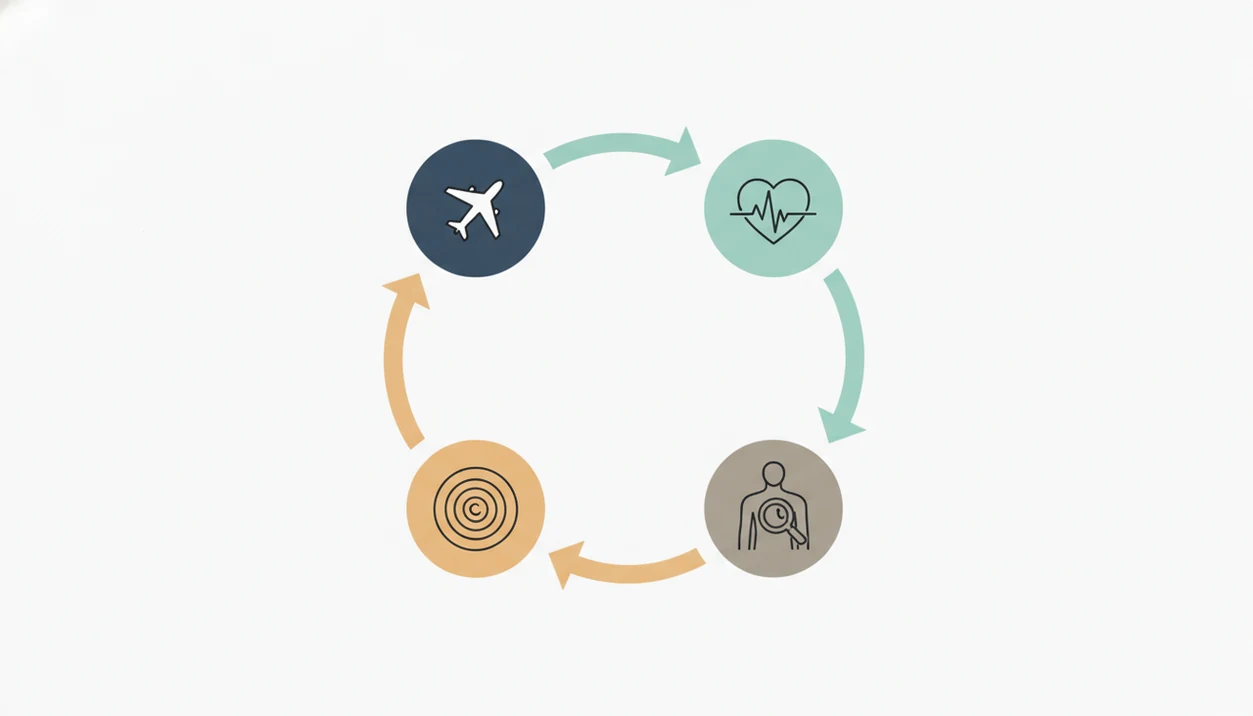
Anxiety sensitivity flying panic works through a feedback loop: sensation, threat interpretation, body scanning, adrenaline, stronger sensation, and then panic. The technical phrase is catastrophic misinterpretation, which means the brain gives a dangerous meaning to a sensation that may be uncomfortable but not harmful.
Here is the flight version. The engines spool for takeoff. Your shoulders press into the seatback. Your heart speeds up, so you scan harder. Then the seatbelt sign stays on, the wing flexes outside the window, and your brain says, “I’m trapped if this gets worse.” Adrenaline adds heat, shaking, nausea, and breath changes.
Monitoring every sensation feels like a safety job, but it usually increases fear. It tells the brain, “These sensations need surveillance.” Panic feels dangerous because it is loud in the body. However, panic attacks are usually time-limited, and the sensations often crest when you stop feeding the alarm with emergency meanings. For example, the NHS notes that most panic attacks last 5 to 20 minutes, although they can feel much longer while they are happening (source).
For many flyers, the next five minutes matter more than the whole flight.
Body Sensations Flight Anxiety Often Misreads
Body sensations flight anxiety misreads usually fall into two buckets: normal flight-environment sensations and panic-related sensations. Both can feel alarming, especially when you are seated, belted, and unable to step outside.
Normal flight sensations
Cabin pressure changes, aircraft movement, and noise can create sensations that nervous flyers interpret through a threat lens. Airplane cabins are pressurized, but pressure still changes enough for ears to pop or feel full. The FAA explains that aircraft cabin pressure changes during flight can affect trapped air spaces in the body, including the ears and sinuses (source).
Panic-related sensations
| Sensation | Often misread as | More likely explanation |
|---|---|---|
| Racing heart | Heart attack | Adrenaline and anticipatory anxiety |
| Tight chest | Medical emergency | Muscle tension or anxious breathing |
| Breathlessness | Suffocation | Overbreathing, breath-holding, or panic |
| Dizziness | Fainting | Anxiety, motion, or breathing changes |
| Nausea | Losing control | Stress response or motion sensitivity |
| Ear pressure | Something wrong with the plane | Cabin pressure change |
| Sweating | Panic is escalating forever | Normal sympathetic arousal |
| Trembling | Losing control | Adrenaline leaving the body |
| Feeling unreal | Going crazy | Derealization during high anxiety |
Use a medical check, not a fear loop, for new, severe, or unusual symptoms. A symptom guide such as flight anxiety symptoms can help separate common panic feelings from red flags.
Anxiety Sensitivity Flying vs Fear of Crashing
Anxiety sensitivity flying and fear of crashing can overlap, but they focus on different threats. One centers on panic symptoms, embarrassment, trapped feelings, or medical fear; the other centers on aircraft danger, turbulence, mechanical failure, or lack of control.
Neither pattern is “more real.” A flyer can fear both the plane and their own body reaction to being on the plane.
| Pattern | Fear focus | Typical thoughts | Common triggers | Helpful treatment emphasis |
|---|---|---|---|---|
| Anxiety sensitivity | Panic symptoms and body sensations | “What if I panic and can’t escape?” | Closed cabin door, takeoff sensations, long flights | CBT for symptom meanings, interoceptive exposure |
| Crash-focused flying fear | Aircraft safety and loss of control | “What if turbulence means danger?” | Turbulence, engine sounds, weather, turns | Aviation education, CBT, gradual flight exposure |
| Mixed pattern | Plane danger plus panic fear | “If I panic during turbulence, I won’t cope.” | Seatbelt signs, delays, bumps, unfamiliar aircraft | Combined safety education and body-sensation practice |
If turbulence is the main trigger, it may help to separate aircraft movement from danger using a focused fear of turbulence plan.
When Fear of Panic on Plane Applies
“Does fear of panic on plane episodes apply to me?” It may apply if you dread your own panic response more than the flight event itself.
Signs anxiety sensitivity is involved
You may notice pulse-checking at the gate, monitoring every breath after boarding, avoiding long flights, or choosing seats mainly because they feel easier to escape from. You may carry water, gum, medication, and a phone coping card, then still think, “What if none of this works?” The fear often intensifies when the gate screen shows delayed boarding, because waiting gives the body more time to scan.
This pattern can overlap with panic disorder or agoraphobia, especially when being trapped is central.
Signs another fear pattern may dominate
Anxiety sensitivity may be less central if your fear began after a frightening flight, a traumatic event, or a specific aviation-safety belief. It may also sit alongside a broader question like why am I scared of flying. Seek professional support if panic is severe, disabling, medically complicated, or spreading into other situations.
Evidence-Based Help for Anxiety Sensitivity Flying
Clinicians typically recommend CBT and exposure-based methods for specific phobias and panic-related fear, tailored to the person’s symptoms and health history. The most common medically supported way to reduce fear of panic during flying is CBT combined with gradual exposure and practice tolerating body sensations.
Clinical guidance supports this treatment emphasis: NICE lists CBT as a key psychological treatment for panic disorder symptoms (source), and the American Psychological Association describes exposure therapy as a way to help people approach feared cues safely instead of avoiding them (source).
CBT for catastrophic symptom thoughts
CBT helps you test thoughts like “Dizziness means I’ll faint” or “If I panic, I’ll lose control.” You write the thought in the Notes app before you open the airline app, then add a replacement: “This is adrenaline. I can ride the next two minutes.”
Interoceptive exposure before flying
Interoceptive exposure means deliberately practicing sensations such as a faster heart rate, mild breathlessness, or dizziness in a safe setting. Flight exposure then practices airports, boarding, sitting with the door closed, and eventually flying.
Tools like Fear of Flying Guide focus on evidence-based, practical help for nervous flyers, including causes, treatments, coping strategies, and tools, not vague reassurance or airline PR. Reassurance, alcohol, avoidance, and overreliance on sedatives may reduce distress briefly, but they do not directly retrain fear of sensations.
How to Apply Anxiety Sensitivity Skills Before and During a Flight
Use anxiety sensitivity skills by matching the coping action to the specific body sensation you fear, then practicing a calmer interpretation. The goal is not to force calm; it is to stop treating every sensation as emergency evidence.
- Name the main sensation before you choose a strategy: racing heart, dizziness, chest tightness, breathlessness, nausea, or feeling trapped.
- Label it as anxiety, cabin pressure, motion, adrenaline, or flight context rather than proof that something dangerous is happening.
- Reduce checking behaviors that keep the alarm alive, such as pulse monitoring, repeated symptom Googling, exit scanning, or watching other passengers for clues.
- Practice one brief interoceptive exercise before travel day, such as safely raising your heart rate for 30 seconds or spinning gently if dizziness is your fear, then letting the sensation settle.
- Use the same script onboard: “This is uncomfortable, not proof. I can ride the next two minutes,” while softening your shoulders and keeping your eyes on one ordinary object.
- Stop self-help and seek clinical or medical support if symptoms are new, severe, unusual, medically risky, or panic is disabling your travel or daily life.
Common Misconceptions About Body Sensations Flight Anxiety
A racing heart or dizziness on a plane does not always mean medical danger. It can mean your threat system is active, your breathing has changed, your muscles are braced, or your body is reacting to motion and cabin conditions.
Panic also does not mean you are “going crazy.” Panic can make reality feel thin or distant, but that feeling is a known anxiety symptom. The first steady breath outside the terminal often proves the point: the body alarm was intense, not permanent.
Another misconception is that anxiety must be fully eliminated before flying. For anxious flyers, tolerance is often more useful than total calm because it builds confidence under real conditions. Avoidance can feel safest today, but it usually makes the next booking harder.
Make the plan boring on purpose: notice, label, breathe normally, soften one muscle group, and wait two minutes before changing your plan.
Limitations
Self-help for anxiety sensitivity flying has limits. Use it as a starting point, not as a substitute for care when symptoms are severe.
- CBT and exposure do not work equally fast or fully for everyone.
- Research samples may not represent every nervous flyer, every culture, or every medical situation.
- Online self-help is not a substitute for individualized care in severe panic, trauma, agoraphobia, or complex health cases.
- Medication may reduce acute distress, but it does not necessarily change anxiety sensitivity itself.
- New, severe, worsening, or unusual physical symptoms should be medically assessed.
- Sedatives and alcohol can carry risks, especially when combined or used without medical guidance.
- Some flyers need a clinician, not another breathing tip, if panic is disabling or spreading beyond flights.
A review of flying phobia research reports that significant fear of flying affects a notable minority of the general population, with estimates ranging from 10% to 40% depending on definitions and samples source.
FAQ
What is anxiety sensitivity on a plane?
Anxiety sensitivity on a plane is fear of anxiety symptoms themselves during flying. The person may treat a racing heart, dizziness, breathlessness, or feeling trapped as a sign of danger.
Why do I panic when flying even if I know planes are safe?
You can know planes are safe and still panic because your body is reacting to being trapped, monitored, and highly alert. Flight cues such as takeoff, cabin noise, and seatbelt signs can trigger the panic loop.
Can a panic attack on a plane hurt me?
A panic attack feels intense, but it is usually time-limited and not inherently dangerous. New, severe, or unusual symptoms should be checked by a medical professional.
Why do I feel dizzy when I fly?
Dizziness during flying can come from anxiety, breathing changes, motion, stress, or cabin conditions. Seek medical care if dizziness is new, severe, one-sided, linked with chest pain, or otherwise unusual.
What should I do if I panic onboard?
Name the panic, put both feet on the floor, slow your movements, and give your body one small job such as holding a water bottle with both hands. Ask cabin crew for help if you feel unsafe or need medical support.
Does exposure therapy help fear of flying and panic?
Exposure therapy can help by teaching the brain that flight situations and body sensations can be tolerated. Interoceptive exposure targets fear of panic sensations directly.
Should I take medication before flying if I fear panic?
Medication decisions should be individualized with a clinician who knows your health history. Medication may reduce acute distress, but it may not change anxiety sensitivity by itself.