
Safety Behaviors Fear of Flying: What Helps, What Hurts, and What to Change
The term safety behaviors fear of flying refers to the extra rituals, rules, and avoidance patterns nervous flyers use to feel safer, even though many of them keep anxiety alive by teaching the brain that flying is only tolerable because of the ritual. The goal is not to drop every coping tool at once; it is to separate flexible support from rigid “must-do” behaviors and reduce the unhelpful ones gradually.
> Definition: Safety behaviors in fear of flying are anxiety-driven habits a person believes they need in order to prevent danger, panic, or loss of control during air travel.
TL;DR
- Helpful coping is flexible; unhelpful safety behavior feels mandatory.
- Avoidance fear of flying gives short-term relief but usually strengthens the fear loop.
- CBT and exposure work best when safety behaviors are reduced gradually and safely.
<h2 id="safety-behaviors-fear-of-flying-definition">Safety Behaviors Fear of Flying Definition and Common Examples</h2>
Safety behaviors in fear of flying are extra rituals, checks, or rules used to reduce anxiety, not actual aviation risk. They feel protective, but they often train your brain to believe the flight was only manageable because you performed them.
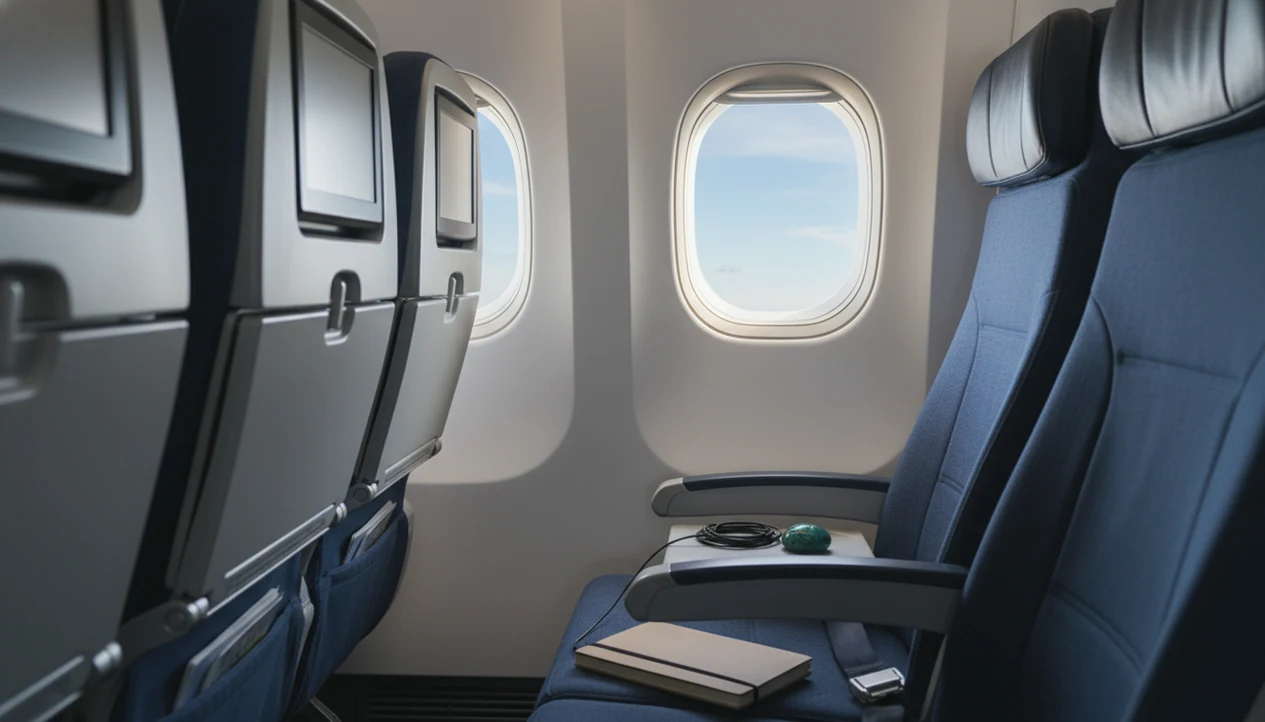
Common anxiety safety behaviors include only booking aisle seats, checking the wings, gripping both armrests during takeoff, repeated restroom trips before boarding, carrying a lucky object, praying in a rigid “if I stop, something bad happens” way, avoiding cloudy weather, or refusing certain airlines.
Normal safety is different. Following crew instructions, wearing your seatbelt, packing medication you’ve been prescribed, and getting to the airport on time are not the problem.
The test is simple. Is this a reasonable support, or does it feel like a rule you must obey before the plane can be safe?
<h2 id="five-facts-anxiety-safety-behaviors-flights">Five Facts About Anxiety Safety Behaviors on Flights</h2>
- Safety behaviors reduce fear briefly, but they can maintain fear by blocking new learning. The brain credits the ritual, not the aircraft or your coping.
- Avoidance fear of flying reinforces the phobia by making relief depend on not flying.
- CBT and exposure usually work best when unnecessary safety behaviors are reduced gradually, not ripped away all at once.
- Coping tools become safety behaviors when they are rigid, mandatory, or tied to preventing catastrophe.
- Fear of flying is common, so this is not personal weakness. In a U.S. community survey, 25% reported at least some fear of flying and 6.5% met criteria for flying phobia source. An international survey of 1,801 people found 28.8% reported fear of flying.
The boarding pass can sit in Apple Wallet and still feel threatening. That reaction is trainable.
<h2 id="flight-anxiety-loop-safety-behaviors-brain">Flight Anxiety Loop: How Safety Behaviors Train the Brain</h2>
Safety behaviors keep the flight anxiety loop running by pairing a trigger with a ritual and then rewarding the ritual with relief. The usual chain is trigger, threat prediction, safety behavior, temporary relief, then a stronger belief that danger was real.
Here is how it sounds in real time: “The engines changed pitch, so I need to grip the armrest until we level off.” The plane lands safely, but the brain gives credit to the gripping. It misses two better lessons: the plane was safe enough, and anxiety was tolerable.
That pattern is part fear conditioning and part avoidance learning. In plain English, your brain learns what to fear and what to escape. Exposure therapy tries to reverse that by letting you meet the trigger without the old ritual, in a planned way.
For many nervous flyers, learning the fear of flying causes makes this loop less mysterious.
<h2 id="helpful-coping-vs-flight-safety-behaviors">Helpful Coping Tools Versus Unhelpful Flight Safety Behaviors</h2>
Helpful coping supports the flight; rigid safety behavior becomes a condition for taking the flight. Ask: “Can I still fly if I cannot do this behavior?”
| Habit | Flexible coping | Rigid safety behavior |
|---|---|---|
| Seat choice | “I prefer an aisle if available.” | “I cannot fly unless I get aisle 12C.” |
| Breathing | “I’ll use paced breathing during takeoff.” | “If I stop counting breaths, I’ll panic or crash.” |
| Turbulence education | “I know bumps are normal air movement.” | “I must check turbulence maps every ten minutes.” |
| Planning | “I’ll pack early and charge my phone.” | “If packing is not exact, I cancel.” |
| Flight data | “I’ll check the gate once.” | “I must track the aircraft all night.” |
For a nervous flyer, paced breathing is often more useful than compulsive checking because it gives the body one small job without pretending to control the aircraft.
<h2 id="before-you-start-reducing-flight-safety-behaviors">Before You Start Reducing Flight Safety Behaviors</h2>
Before you change safety behaviors, make sure the plan is safe, specific, and not built during a panic spike. The first goal is not bravery; it is choosing one small experiment with the right support.
- Check whether you need professional guidance first. If your flying fear includes trauma reactions, severe panic, medical uncertainty, medication questions, alcohol or sedative reliance, or other substance concerns, talk with a qualified clinician before self-directed exposure work.
- Choose a calm planning window. Make decisions days before travel if possible, not while packing at midnight or on the morning of a difficult flight.
- Separate preparation from ritual. Charging your phone, packing prescriptions, and arriving on time are normal travel tasks. Rechecking the same weather map because your anxiety demands certainty is a different pattern.
- Pick one low-risk behavior to soften. Keep reasonable coping tools in place and choose one narrow target, such as delaying an app check or loosening your armrest grip for one minute.
- Decide your support plan. Know whether you will text a support person, use a clinician’s plan, or seek help if panic escalates beyond what you prepared for.
<h2 id="avoidance-fear-of-flying-cancellation-patterns">Avoidance Fear of Flying and Last-Minute Cancellation Patterns</h2>
“Why does avoiding flights make fear of flying worse?” Avoidance fear of flying means skipping, postponing, cancelling, or replacing flights to escape anxiety. It works for the next five minutes, then raises the price of the next flight.
A 12-hour drive can feel like the safer choice over a short flight. Not booking a family trip can feel responsible. Checking weather until you decide not to go can feel like research. But the brain learns, “I survived because I escaped.”
Specific phobias affect an estimated 9.1% of U.S. adults in a given year, according to NIMH source. U.S. transportation statistics have also found far lower passenger fatality rates in scheduled air travel than in passenger vehicle travel, about 90 times safer per mile in one comparison source.
Avoidance is understandable. It is also trainable, especially when you start small.
<h2 id="five-steps-track-reduce-flight-safety-behaviors">Five Steps to Track and Reduce Flight Safety Behaviors</h2>
Use this plan to reduce safety behaviors gradually, not to strip away every support before your next flight. Make the plan boring on purpose.
- List your rituals, rules, and avoidance patterns. Use the Notes app and write down seat rules, weather checking, airline avoidance, reassurance texts, and cancellation urges.
- Rate each behavior by relief and rigidity. Give each one a 0 to 10 score for “calms me” and “I feel I must do it.”
- Choose one low-risk behavior to soften first. Do not start with your hardest fear on a 6:40 a.m. flight.
- Run a small exposure experiment. Set a two-minute phone timer before checking the airline app, or loosen your armrest grip during one minute of climb.
- Review what happened and what your brain learned. Write the prediction, outcome, and next step before baggage claim distractions take over.
The most common medically supported way to reduce phobic avoidance is gradual exposure combined with new learning, not reassurance alone.
<h2 id="cbt-exposure-safety-behavior-reduction-flying">CBT, Exposure Therapy, and Safety Behavior Reduction for Flying</h2>
CBT for fear of flying targets catastrophic thoughts, body sensations, avoidance, and safety behaviors. It does not just tell you to “think positive” while your dry mouth and racing pulse are doing their own thing.
Exposure can include imaginal practice, airport visits, flight videos, simulators, jet bridge scripts, and real flights. Good exposure is not white-knuckling. It is planned practice where anxiety rises, peaks, and falls without the old ritual taking credit.
Clinicians typically recommend CBT and exposure-based methods for specific phobias because repeated, safe contact with the feared situation helps the brain update its threat predictions source.
Medication may reduce symptoms, but it does not teach the same coping learning on its own. If you have severe panic, trauma history, complex medical concerns, or substance use concerns, work with a qualified professional before changing your plan.
A clear what is aviophobia explanation can help you name the pattern before choosing treatment.
<h2 id="common-mistakes-anxiety-safety-behaviors">Common Mistakes When Changing Anxiety Safety Behaviors</h2>
Changing safety behaviors goes better when you avoid these common traps.
- The all-at-once drop: Removing every coping tool can overwhelm your nervous system. Start with one small, low-risk behavior.
- The planning panic: Treating all planning as pathological is too harsh. Packing gum in the front pocket is normal; believing it prevents disaster is different.
- The ritual swap: Stopping seat checking but compulsively tracking turbulence keeps the same loop alive in a new outfit.
- The calm-only scoreboard: Success is not only “I felt calm.” Success can be “I flew while anxious and used fewer rules.”
- The substance shortcut: Using alcohol or sedatives as the main safety behavior can create medical and learning problems, especially without professional guidance.
A comprehensive fear of flying resource should explain causes, treatments, coping strategies, and tools for nervous flyers, not hand you a giant list of rituals to perform perfectly.
<h2 id="progress-signs-reducing-flight-safety-behaviors">Progress Signs After Reducing Flight Safety Behaviors</h2>
Progress often looks like flying while anxious, not flying without anxiety. That can feel annoying, but it is still progress.
Look for fewer rigid rules, less checking, shorter recovery after turbulence, more willingness to book, and fewer last-minute cancellation urges. You might still notice the cart paused in the aisle during bumps, then return to your playlist sooner than last time.
Track predictions versus outcomes. Write: “I predicted I would panic if I did not check the wing. I did not check for five minutes. Panic rose, then dropped.” That is repeated disconfirmation: the feared event did not happen, and you coped.
Tools like Fear of Flying Guide can fit here as a fear of flying resource when you want aviation explanations beside CBT-style practice. FearOfFlying.com also works as a nervous flyer guide when you need a wider path, not one magic trick.
Limitations
Safety behavior work is useful, but it has limits. Do not turn this idea into another rule to punish yourself with.
- Reducing safety behaviors can temporarily increase anxiety before improvement appears.
- Some readers should work with a qualified mental health professional, especially with severe panic, trauma, compulsions, substance use, or medical concerns.
- Aviation safety facts may help, but they usually do not cure a phobia by themselves.
- Medication can reduce symptoms, but it may not resolve the underlying fear loop on its own.
- Not every coping tool is harmful. Flexible skills, like paced breathing or a realistic turbulence explanation, can be useful.
- Real flight disruption, turbulence, delays, and media coverage can still trigger fear during recovery.
- This article is educational and is not a substitute for diagnosis or treatment.
If your main fear is body sensations, the pattern may overlap with anxiety sensitivity flying, where normal panic feelings get misread as danger.
FAQ
What are safety behaviors in fear of flying?
Safety behaviors in fear of flying are anxiety-driven actions used to feel protected or in control during air travel. Examples include rigid seat rules, repeated checking, lucky objects, compulsive reassurance, or avoiding certain flights because they feel dangerous.
Are safety behaviors for flying always bad?
No. Flexible coping can help you get through a flight. A tool becomes a problem when it feels mandatory, is tied to preventing catastrophe, or makes you believe you cannot fly without it.
Is choosing an aisle seat a safety behavior?
Choosing an aisle seat can be normal comfort if you simply prefer more space or easier restroom access. It becomes a safety behavior when you believe you cannot cope, panic will be dangerous, or the flight cannot happen unless you get that seat.
Why does avoiding flights make fear of flying worse?
Avoiding flights gives fast relief, but it teaches the brain that escape was necessary for safety. Over time, the next flight can feel more threatening because the brain has not learned that anxiety can rise and fall during flying.
Should I stop my flying rituals immediately?
Usually, no. Gradual reduction is safer and more useful than suddenly removing every coping strategy. Start with one low-risk ritual, test it in a planned way, and review what actually happened.
Does exposure therapy for fear of flying mean forcing myself onto flights?
No. Good exposure therapy is planned, gradual, and focused on new learning. It may begin with images, sounds, airport visits, flight videos, or simulations before moving toward real flights.
Can medication treat a fear of flying?
Medication may reduce flight anxiety symptoms for some people, but it usually does not replace CBT or exposure learning. Discuss medication, alcohol use, sedatives, or medical concerns with a qualified clinician.
When should I get therapy for fear of flying?
Consider therapy if flying fear causes severe panic, repeated cancellations, major family or work limits, trauma reactions, compulsive checking, or reliance on substances. Professional support is also wise when medical concerns make self-directed exposure confusing.