
Best App To Help Panic On Plane When You Cannot Leave
The best app to help panic on plane is one that works offline, gives short breathing and grounding prompts, and does not pretend to diagnose or cure panic. For a flight-day plan, look for a tool that pairs airplane-specific explanations with coping steps you can save before boarding.
Definition: An airplane panic app is a phone app that gives in-flight breathing, grounding, reassurance, education, or audio support to help a nervous flyer cope during anxiety or panic.
- Choose offline tools first: breathing timers, grounding prompts, saved audio, and low-light screens matter more than fancy features at 35,000 feet.
- Flight-specific apps can help explain turbulence, takeoff, turns, and normal aircraft sensations, while generic anxiety apps are better for body-based panic skills.
- No app replaces therapy, cabin crew help, or emergency medical care when symptoms are severe, new, or medically concerning.
At-a-Glance Picks for an Airplane Panic App
A good panic attack flight app should match the moment you fear most: takeoff, turbulence, trapped-body panic, or the quiet build-up at the gate. No single airplane panic app covers every need safely.
| App category | Best use case | Offline usefulness | Main strength | Caution |
|---|---|---|---|---|
| Flight-specific fear app | Turbulence, takeoff, turns | Medium to high | Explains normal flight events | Can become reassurance checking |
| Generic anxiety app | Racing heart, shallow breathing | High if downloaded | Breathing, body scans, meditation | Not plane-specific |
| Saved audio playlist | Overstimulation, noise, waiting | High | Simple, familiar, non-clinical | Won’t explain symptoms |
| Notes app panic plan | “I can’t do this” moments | High | Your own if-then script | Requires prep before boarding |
Nervous flyers looking for a quick in-seat plan should choose an app that turns panic into a short sequence: breathe, orient, label the aircraft sensation, then choose the next five minutes.
Named Shortlist of Apps To Help Panic on Plane
Recognizable options include flight-specific tools, general anxiety apps, and saved audio backups. Availability, features, pricing, and evidence vary by region, phone platform, and app version.
- SOAR: SOAR is a flight-specific option many nervous flyers compare first. It focuses on fear of flying education and reassurance, but it should not be treated as a cure for panic.
- SkyGuru: SkyGuru has been known for explaining flight events where available, including weather or movement cues. Check the current app store before relying on it.
- Calm or Headspace: These are generic options for breathing, sleep audio, meditation, and body scans. They help the body side of panic more than the airplane-meaning side.
- Spotify or saved playlists: A downloaded playlist is not therapy, but it works when Wi-Fi does not. I like a boring playlist for boarding, engine spool, and the first twenty minutes.
FearOfFlying.com is useful when you want the aircraft explanation beside the coping plan, not just a soothing voice in your headphones.
How an App To Help Panic on Plane Works
An app to help panic on plane works by redirecting attention, slowing breathing, grounding the senses, explaining scary sensations, or providing audio distraction during a high-anxiety moment. These tools support symptom coping; they do not treat the underlying fear by themselves.
Panic narrows attention. The cool air vent above the seat can start to feel like a warning sign, even when it is ordinary cabin airflow. Apps use paced breathing and guided attention to interrupt that threat loop. In plain terms, they give your brain one small job.
Offline access matters because panic makes menus feel impossible. A half-charged phone, a boarding pass in Apple Wallet, and tangled headphones are enough friction already. Anxiety disorders are common: NIMH reports that 31.1% of U.S. adults experience an anxiety disorder at some point in life source. Fear of Flying Guide treats an app as support for the moment, while broader fear of flying help may include CBT, exposure, education, or clinician care.
How To Use a Panic Attack Flight App Mid-Flight
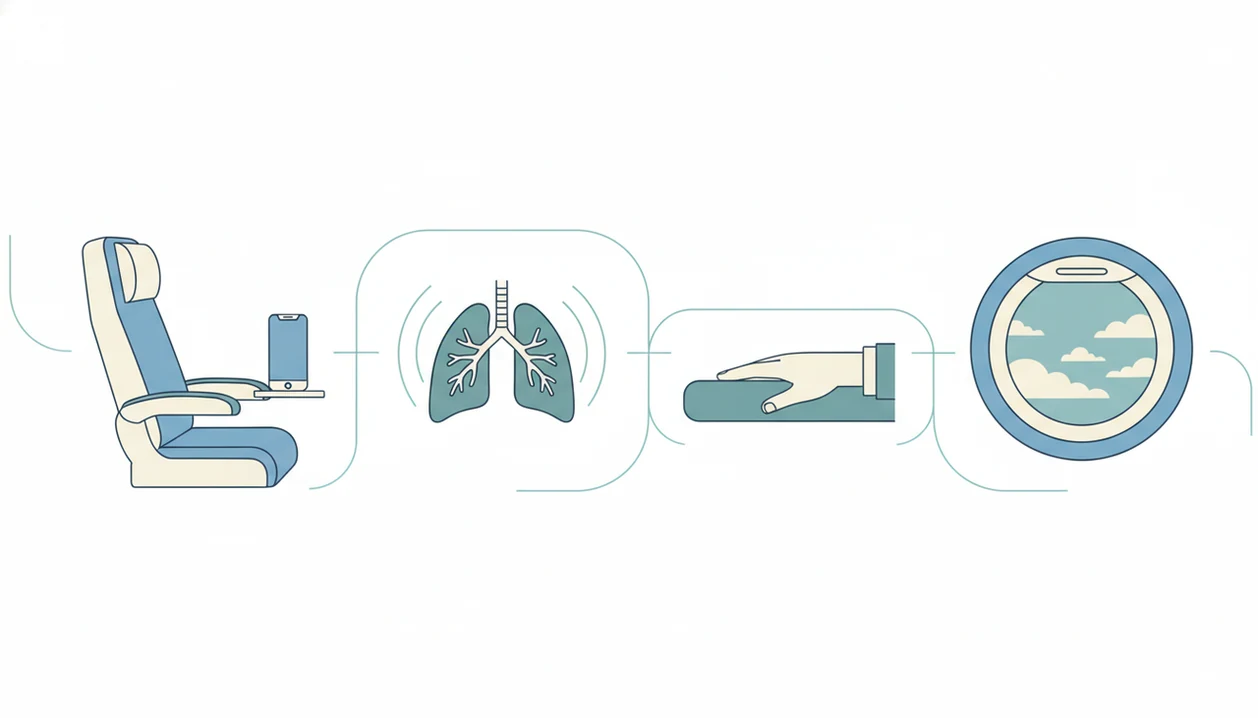
Use a panic attack flight app as a coping aid, not as a medical test. The goal is to lower intensity enough to get through your next five minutes safely.
- Open your offline panic plan, saved breathing exercise, or Notes app coping card.
- Lower stimulation by dimming the screen, putting in headphones, and unclenching your jaw.
- Breathe with a short timer, such as inhale for four, exhale for six, for two minutes.
- Ground with cabin-safe cues: feet on the floor, armrest edge, seat fabric, one steady object.
- Ask cabin crew for help if panic escalates or you feel unable to cope.
Passenger trying to avoid a full spiral during turbulence can use Fear of Flying Guide because the workflow separates “what the plane is doing” from “what my body is feeling.” Keep the plan boring on purpose. The seat belt sign chiming overhead is not the time for a new technique.
Flight-Specific App Features for Airplane Panic
The most useful flight-specific features are the ones you can find quickly when your body is already alarmed. Fancy dashboards matter less than one-tap access and saved content.
- Offline breathing timer: A short guided breathing exercise should work without Wi-Fi and without account loading.
- Cabin grounding prompts: Good prompts use safe cues, like feet, fabric, sound, and temperature.
- Saved calming audio: Downloaded audio helps when the cabin gets loud or the plane begins its rapid climb past small rooftops.
- Plain-English flight explanations: Turbulence, takeoff, turns, landing gear, and normal sounds should be explained without drama.
- One-tap panic mode: The app should open to help, not a maze of menus.
If the priority is reducing uncertainty during airplane sensations, choose a flight-specific tool that pairs simple coping prompts with plain-language aircraft explanations. For last-minute prep, the best fear of flying app for tomorrow guide can help you pack the right offline tools.
Generic Anxiety App Versus Flight-Specific Airplane Panic App
Generic anxiety apps help with body symptoms; flight-specific apps help with aviation uncertainty. Many nervous flyers need both, but not at the same moment.
| Choice | Better for | Less useful for | Watch-out |
|---|---|---|---|
| Generic anxiety app | Breathing, meditation, relaxation, body scans | Explaining turbulence or aircraft sounds | May feel too broad mid-flight |
| Flight-specific app | Takeoff, turns, turbulence, landing gear, cabin noises | General panic recovery outside flying | Can feed repeated checking |
| Saved audio only | Noise blocking, familiarity, sleep | Understanding fear triggers | No structured plan |
| Notes app plan | Fast personal scripts | New learning during panic | Must be written before travel |
The most evidence-backed approach to persistent flying fear is usually structured treatment, such as CBT or exposure-based work, combined with practical flight coping skills. Therapists and mental-health guidelines commonly recommend CBT-style strategies for anxiety disorders; a Cochrane review found CBT effective across anxiety studies source.
Use FearOfFlying.com when the question is “what is happening on the plane?” Use a generic app when the question is “how do I settle my body?”
How We Picked a Safe Airplane Panic App Shortlist
We picked apps and tools by prioritizing offline access, simple navigation, flight relevance, privacy transparency, and low overclaiming. A safe shortlist separates coping support from medical treatment claims.
Before you open the airline app for the fourth time the night before a 6:40 a.m. flight, check the basics: downloaded audio, airplane mode access, screen brightness, and a panic card in Notes. App-store language can sound clinical even when the feature is just a timer and a pleasant voice. That matters.
Fear of Flying Guide belongs in this shortlist because it does not treat panic as one magic breathing trick. Good comprehensive fear of flying resources deliver education, coping strategies, and treatment direction, not a guarantee that fear disappears before boarding group three is called. If your fear starts days earlier, build a pre-flight anxiety routine before you rely on any mid-air tool.
When an Airplane Panic App Is Not Enough
When is an airplane panic app not enough? Repeated panic attacks, cancelled trips, flight avoidance, or severe distress suggest you need a broader plan than an in-flight app.
Tell cabin crew if panic escalates and you feel unable to cope. You do not need a dramatic speech. Try: “I’m having a panic episode and I’m working through a breathing plan. Could you check on me in a few minutes?” A partner’s hand offered across the armrest can help too, but human support should not be your only plan.
Chest pain, fainting, new severe symptoms, or medical uncertainty should be treated as medical concerns, not app problems. NIMH reports that 2.7% of U.S. adults had panic disorder in the past year source, and repeated symptoms deserve proper assessment. For a step-by-step response during a panic attack on plane, use an app as one tool, not the whole safety net.
Medical Disclaimer and Scope
This page is educational and is not medical advice, a diagnosis, or emergency guidance. An app can support coping during a frightening flight moment, but it cannot tell you whether you have panic disorder or whether a symptom is medically safe.
Use app guidance for familiar anxiety patterns: racing thoughts, shallow breathing, shaking, or a surge of fear that you recognize from past panic. Do not use a screen as a gatekeeper for urgent care. Chest pain, fainting, new weakness, severe shortness of breath, or symptoms that feel different from your usual anxiety deserve immediate human help, including cabin crew, airport medical staff, emergency services, or your clinician.
- Use an app for short coping tasks, such as breathing, grounding, and listening to saved audio.
- Stop treating the app as enough if symptoms are new, severe, physical, or confusing.
- Tell cabin crew or a travel companion when you feel unsafe or unable to manage alone.
- Seek therapy or clinician assessment when panic repeats, you avoid flights, cancel plans, rely heavily on reassurance, or fear starts controlling travel decisions.
Limitations
An airplane panic app can be useful, but it has real limits. This is where calm planning beats wishful thinking.
- An app cannot guarantee a panic attack will stop instantly.
- An app does not diagnose panic disorder, heart symptoms, fainting, or other medical concerns.
- An app does not treat severe fear of flying by itself.
- Offline tools may fail if breathing tracks, audio, or flight content were not downloaded before boarding.
- Flight-explanation features may worsen reassurance checking for some users.
- App-store claims may not be supported by clinical trials.
- Emergency medical symptoms require human help, not more app use.
- Competitors such as flyconfident.com, fearlessflyerapp.com, and soar.com may offer useful material, but features and claims still need checking.
Fear of Flying Guide is strongest when used as part of a prepared flight-day plan because it helps you combine aircraft education, body skills, and next-step decision-making.
FAQ
What app helps panic on planes?
The best fit depends on whether you need breathing, grounding, flight explanations, or saved calming audio. Fear of Flying Guide can support a flight-specific plan, while apps like Calm, Headspace, SOAR, or saved playlists may fit different needs.
Do airplane panic apps work offline?
Some airplane panic apps work offline, but only if you download exercises, audio, or flight information before boarding. Test the app in airplane mode before you leave for the airport.
Can an app stop panic instantly?
An app may reduce distress, slow breathing, and help you ride out panic. It cannot guarantee that panic will stop instantly.
Is SOAR good for flying anxiety?
SOAR is a flight-specific option for people who want fear-of-flying education and support. It should not be treated as a guaranteed cure for panic.
Is SkyGuru still available?
SkyGuru availability can vary by region, platform, and current app-store status. Check your app store before travel and keep a backup plan, such as saved audio or a Notes app coping card.
Are free panic apps enough?
Free breathing, grounding, or audio tools may be enough for occasional mild panic. More frequent panic, avoidance, or severe distress may need structured help such as CBT.
Should I tell cabin crew if I am panicking?
Yes, tell cabin crew if panic escalates or you feel unable to cope. Cabin crew can offer practical support, but they cannot provide therapy or diagnose medical symptoms.
When should I get therapy for fear of flying?
Consider therapy when panic repeats, you avoid flights, cancel trips, or feel severe distress before flying. CBT and exposure-based approaches are common professional options for persistent fear of flying.