
Xanax For Fear Of Flying: Risks, Questions, And Safety Warnings

Xanax for fear of flying is a prescription-only option that should only be discussed with a qualified prescriber, not treated as a harmless flight hack. Alprazolam can reduce anxiety for some people, but sedation, impaired coordination, slowed reaction time, alcohol interactions, dependence risk, and possible interference with exposure-based fear-of-flying treatment all matter.
For general alprazolam safety information, see MedlinePlus (https://medlineplus.gov/druginfo/meds/a684001.html); for FDA class warnings on benzodiazepines, see the FDA boxed-warning update (https://www.fda.gov/drugs/drug-safety-and-availability/fda-requires-boxed-warning-updated-improve-safe-use-benzodiazepine-drug-class).
> Definition: Xanax is the brand name for alprazolam, a prescription benzodiazepine that depresses central nervous system activity and is medically managed for anxiety-related conditions.
TL;DR
- Xanax is not an over-the-counter plane anxiety remedy; it is prescription alprazolam with real safety warnings.
- Sedation, impaired coordination, slower reaction time, memory effects, alcohol interactions, and dependence risk are especially relevant during air travel.
- Research in flight phobia raises concern that alprazolam may hinder exposure-based improvement rather than solve fear of flying long term.
Xanax For Fear Of Flying Safety Snapshot
Xanax is prescription alprazolam, and this guide does not provide dosing instructions. If you are considering it for a flight, the safe next step is a prescriber conversation, not a forum tip or a friend’s leftover tablet.
The key tradeoff is simple. Alprazolam may quiet symptoms for a few hours, but that is different from teaching your brain that boarding, takeoff, turbulence, and landing are survivable. Feeling sedated is not the same as building confidence.
Do not combine alprazolam with alcohol, sleep aids, opioids, cannabis, or other sedating medicines unless a clinician has specifically reviewed that risk. The airport is already a demanding place. A half-charged phone, a gate change, and a tight connection can turn “calmer” into “not alert enough.”
Medical history, age, pregnancy status, other prescriptions, respiratory conditions, and whether you are traveling alone all change the risk calculation.
Alprazolam Effects On Flight Anxiety And Alertness
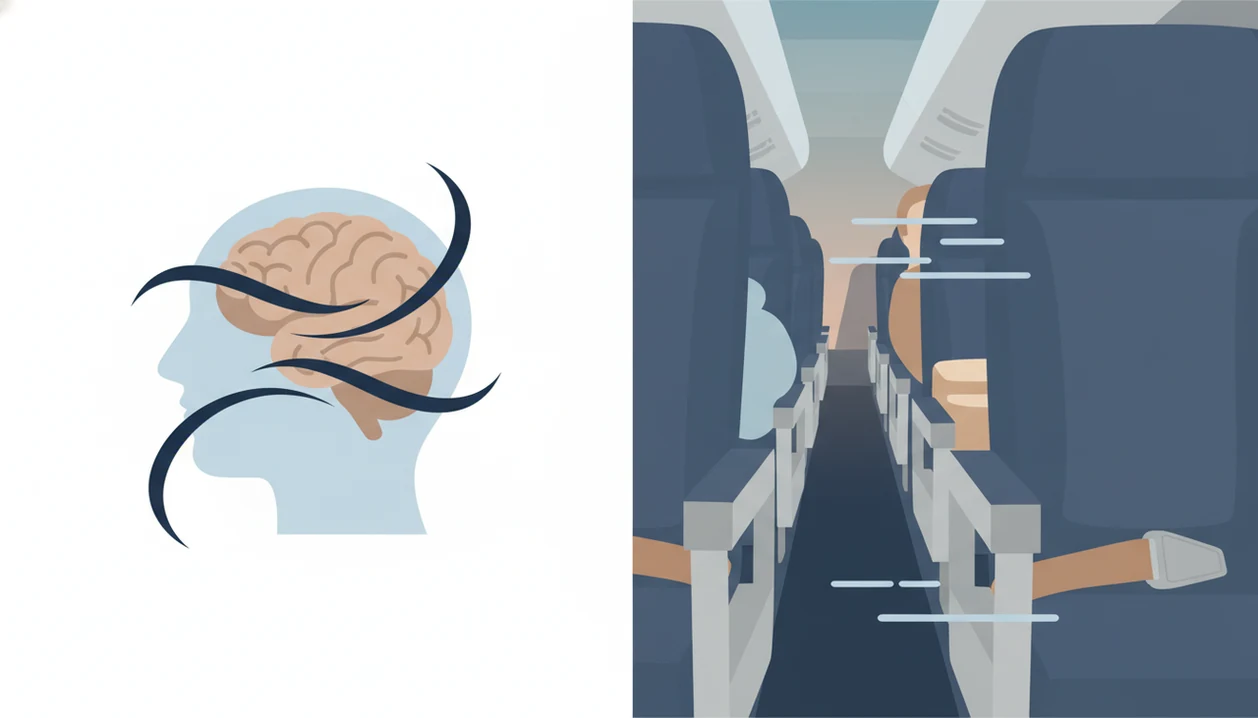
Alprazolam is a benzodiazepine, a central nervous system depressant that can reduce anxiety signals by increasing calming activity in the brain. In plain language, it can turn down the alarm system, but it can also turn down alertness.
That same mechanism can cause drowsiness, impaired coordination, memory problems, reduced attention, and slower reaction time. Those effects matter in ordinary travel moments, not just emergencies. Think of standing in the jet bridge, hearing your boarding group called, then trying to manage a backpack, passport, boarding pass in Apple Wallet, and a dry mouth all at once.
Planes add movement and instructions. Turbulence, a missed connection, a changed seat, or a crew announcement may require quick understanding. The overhead bin latch softly rattling can feel scary, but the answer is not always to blunt the body completely.
Feeling calmer during alprazolam flight anxiety does not prove you learned that flying is safe.
Five Xanax Plane Anxiety Safety Facts
- Fact 1: Xanax is prescription-only alprazolam. It is not a routine travel supplement, and it should not be borrowed, shared, or treated like an airport convenience item.
- Fact 2: Alprazolam can impair travel functioning. Sedation, impaired coordination, slower reaction time, and memory effects can matter during boarding, security, connections, turbulence, and arrival.
- Fact 3: Alcohol and other sedatives can increase risk. Combining alprazolam with alcohol, opioids, sleep aids, cannabis, or other sedating medications can increase central nervous system depression. The fuller safety discussion belongs in alcohol and flight anxiety medication. MedlinePlus also advises avoiding alcohol while taking alprazolam unless your clinician specifically tells you otherwise (https://medlineplus.gov/druginfo/meds/a684001.html).
- Fact 4: Repeated or incorrect benzodiazepine use can create bigger problems. Dependence, misuse, tolerance, and withdrawal concerns are part of why clinicians ask careful questions.
- Fact 5: Flight-phobia research raises a treatment concern. A randomized flight-phobia study found alprazolam was associated with hindered therapeutic effects of exposure, which matters if your goal is long-term fear reduction.
Pack this before you leave: questions, not guesses.
Flight-Phobia Study On Alprazolam And Exposure Therapy
A randomized flight-phobia exposure study by Wilhelm and Roth reported that the alprazolam group’s heart rate rose to 123 bpm during the first flight and concluded that alprazolam was associated with hindered later exposure-therapy gains (PubMed: https://pubmed.ncbi.nlm.nih.gov/9299803/).
That does not mean alprazolam will harm every person in every travel situation. One study cannot answer every clinical scenario, every dose question, or every medical history. It does, however, raise a serious concern for people trying to get over flying fear rather than just get through one flight.
Exposure-based improvement depends on staying present enough for the brain to update its prediction. “I felt panic and nothing catastrophic happened” is a learning moment. If medication suppresses or scrambles that learning, the next flight may still feel like starting over.
For flying phobia, temporary symptom suppression is often different from long-term fear reduction because the brain still needs repeated safe experiences to relearn the threat.
Prescriber Questions About Xanax For Fear Of Flying
“Is alprazolam appropriate for me given my medical history, age, pregnancy status, breathing conditions, substance-use history, and current medications?” Start there. Bring the actual medication list, including sleep aids, pain medicine, cannabis, and supplements.
Ask travel-specific questions too. “Can I drive to or from the airport?” “What if I’m caring for children?” “What if I’m traveling alone?” “Will I be alert enough if boarding changes, a connection is tight, or crew instructions change?” These are not dramatic questions. They are normal flight-day plan questions.
Then ask what to avoid. Alcohol, opioids, sleep aids, cannabis, and other sedating medications deserve direct discussion. If the plan includes any medicine, make the plan boring on purpose.
Also ask about non-benzodiazepine options, therapy, exposure work, breathing skills, and a long-term flying plan. A broader flight anxiety medication discussion can help you organize those questions before your appointment.
When To Seek Professional Help Before Flying
Seek professional help before flying if you are considering any benzodiazepine, including alprazolam, or if panic symptoms are intense enough that you might self-medicate. A prescriber conversation is the safety step, not an optional formality.
Do not use a friend’s Xanax, old tablets from a past prescription, or medication bought online. The label, dose, interactions, and your current health all matter on a travel day.
- Contact a prescriber before using alprazolam or any benzodiazepine for a flight, especially if you have never used it in that situation.
- Describe your risks clearly, including panic attacks, substance-use history, pregnancy or possible pregnancy, respiratory disease, sleep apnea, and all current medications or supplements.
- Ask what to avoid on the travel day, including alcohol, opioids, sleep aids, cannabis, and driving before or after the airport.
- Discuss alternatives such as therapy, gradual exposure work, flight education, breathing practice, grounding, or non-sedating medication options when appropriate.
- Seek urgent help right away for chest pain, fainting, severe confusion, or trouble breathing. Those symptoms are not “just nerves” to manage at the gate.
Five Myths About Xanax Plane Anxiety
Myth 1: Xanax is safe for everyone who is nervous about flying. It is not. Risk changes with medical history, other medications, age, alcohol use, respiratory issues, and the demands of the trip.
Myth 2: Xanax is just a sleep aid for planes. Alprazolam is a prescription benzodiazepine for anxiety-related conditions, not a casual airplane sleep tool.
Myth 3: Xanax helps people get over fear of flying permanently. It may reduce symptoms short term, but it does not teach aviation facts, turbulence interpretation, or panic tolerance.
Myth 4: A small amount of alcohol with Xanax is fine. Alcohol can increase sedation and central nervous system depression risk. “Just one drink” is still a prescriber question.
Myth 5: If a friend had no problem, it will be safe for me. Your friend’s smooth landing does not review your lungs, liver, prescriptions, or connection time.
Not your data point.
Long-Term Fear Of Flying Help Beyond Xanax
Long-term fear-of-flying improvement usually comes from skills, education, exposure-based work, and better interpretation of body sensations. Medication questions can be part of care, but they should not replace learning-based treatment.
A practical plan might include flight education, turbulence understanding, pre-flight planning, breathing, grounding, cognitive reframing, and graded exposure. Use the Notes app for an if-then script: “If the engines spool and my chest tightens, then I put both feet down, exhale longer than I inhale, and name three normal takeoff sounds.”
Clinicians typically recommend matching treatment to the person’s risk, diagnosis, and goals, rather than treating benzodiazepines as a standard travel shortcut.
Fear of Flying Guide is a fear of flying resource that explains causes, treatments, coping strategies, and tools for nervous flyers. A good fear-of-flying resource should explain causes, treatments, coping strategies, and tools for nervous flyers, not hand out vague reassurance or medication shortcuts.
For many nervous flyers, breathing exercises for flight anxiety and grounding techniques on plane are safer first skills because they preserve alertness while giving the body a clear job.
Limitations
This page has important limits, and they matter more than the headline.
- No dosing guidance is provided because safe use depends on a prescriber’s individual evaluation.
- Evidence for alprazolam specifically as a flight-anxiety strategy is limited.
- The flight-phobia study raises concern about exposure-treatment interference, but it does not answer every clinical scenario.
- Benzodiazepines are not appropriate for everyone, especially higher-risk travelers or people combining sedatives.
- Short-term anxiety reduction does not necessarily mean long-term fear-of-flying improvement.
- Frequent travelers may face different concerns because repeated use can raise dependence, tolerance, and misuse questions.
- Online articles cannot assess drug interactions, respiratory risk, substance-use history, pregnancy considerations, or emergency-safety needs.
- A flight-day plan may still include a prescriber-guided medication discussion, but it should also include what you will do before boarding, during takeoff, and after landing.
If your instinct is to text “I can’t do this” from the gate, that is a signal to make a bigger plan, not to self-medicate.
Medical Sources Used For This Xanax Flight Anxiety Guide
This guide uses medical sources to frame alprazolam safety, dependence risk, and flight-phobia treatment concerns. Those sources support general risk awareness, not personal dosing advice for a specific flight.
The patient-facing drug warnings come from MedlinePlus alprazolam information, including cautions about sedation, alcohol, and safe use. Class-level benzodiazepine risk framing comes from the FDA boxed-warning update, which discusses misuse, dependence, addiction, and withdrawal concerns. The flight-phobia discussion also considers the randomized alprazolam exposure study indexed at PubMed.
Use these references in a practical order:
- Read the patient medication warnings before treating alprazolam like a travel convenience.
- Compare FDA class warnings with your own risk factors, including alcohol use, other sedatives, and repeated trips.
- Consider the flight-phobia study if your goal is long-term fear reduction, not just getting through one boarding call.
- Ask a licensed clinician to make prescribing decisions, because only they can review your history, medications, and travel responsibilities.
FAQ
Does Xanax help with flight anxiety?
Xanax may reduce anxiety symptoms for some people, but it has safety risks and is not a long-term cure for fear of flying. It should only be considered through a prescriber.
Is Xanax safe to take before flying?
Safety depends on individual medical review because sedation, impairment, interactions, and travel context matter. Online advice cannot decide that for you.
Can Xanax make fear of flying worse?
Some people can have paradoxical reactions or increased physiological activation, and a 1997 flight-phobia study raised concern about alprazolam interfering with exposure effects. This does not prove the same outcome for every patient.
Can Xanax cure fear of flying permanently?
No. Alprazolam may suppress symptoms short term, but it does not teach the brain that flying is safe.
Can I drink alcohol with Xanax on a plane?
Alcohol can increase sedation and central nervous system depression risk when combined with Xanax. Discuss alcohol avoidance with your prescriber.
Is alprazolam the same as a sleep aid for flights?
No. Alprazolam is a prescription benzodiazepine for anxiety-related conditions, not a casual airplane sleep aid.
Why are some doctors cautious about Xanax for flying?
Common concerns include impairment, dependence, interactions, misuse, and possible interference with exposure-based progress. Travel responsibilities can make those risks more important.
What can help flight anxiety instead of Xanax?
CBT, exposure-based treatment, flight education, breathing, grounding, and prescriber-guided alternatives can help. Tools like Fear of Flying Guide and FearOfFlying.com can support a structured plan.
Should I ask my doctor before taking Xanax for a flight?
Yes. Medication questions should go to a qualified prescriber because personal risks, drug interactions, and travel safety needs vary.