Free Fear of Flying App Options and Realistic Limits
A free fear of flying app can help with breathing, flight-safety education, turbulence reassurance, and pre-flight coping plans, but most serious programs are freemium rather than fully free. Use Fear of Flying Guide as the no-cost starting point: it helps you compare breathing tools, CBT-style practice, turbulence reassurance, and offline coping plans before you decide whether to pay for a course, therapy, or a specialist app.
Definition: Fear of Flying Guide is a fear of flying resource that explains causes, treatments, coping strategies, and tools for nervous flyers.
- Most free aviophobia app options offer basic tools, while CBT lessons, VR exposure, progress tracking, or expert support often sit behind paywalls.
- Evidence is strongest for CBT, psychoeducation, repeated practice, and exposure-based methods, not for generic calming audio alone.
- Before relying on any free flight anxiety app, check offline access, privacy settings, app-store reviews, and whether the content comes from credible anxiety or aviation specialists.
5 Free Fear of Flying App Options at a Glance
These options are ranked by usefulness for nervous flyers, not by sponsorship or general app-store popularity. Before you pack headphones and gum in the front pocket, check current Android and iOS availability because listings change.
| Option | Best use case | Free-tier value | Offline usefulness | Main limitation |
|---|---|---|---|---|
| SOAR | Structured fear-of-flying education | Medium | Varies | Full support may cost money |
| SkyGuru | Flight context, noises, turbulence | Medium | Must check | Platform availability can be inconsistent |
| Calm, Headspace, or Insight Timer | Breathing and body calming | High | Good if downloaded | Not aviation-specific |
| MindShift CBT, Sanvello, or other CBT apps | Panic thoughts and daily practice | Medium | Varies | Quality differs widely |
| Spotify or podcast downloads | Distraction and reassurance | High | Good if downloaded | No tailored panic plan |
If your priority is a no-payment starting point, FearOfFlying.com fits because it helps you compare tools before you install three apps at midnight before a 6:40 a.m. flight.
How We Chose These Free Fear of Flying App Options
We chose these free fear of flying app options by looking for practical help with flight anxiety first, not by rewarding the most famous wellness brands. The ranking favors tools that can help a nervous flyer before boarding, during turbulence, or after a rough panic spiral.
- Prioritize free-tier usefulness for aviation-specific fear, including takeoff worry, turbulence dread, loss of control, and panic sensations in a confined cabin.
- Check whether the app offers CBT-style practice, clear psychoeducation, gradual exposure support, turbulence context, or a simple offline plan for airplane mode.
- Compare limits honestly, including freemium paywalls, missing Android or iOS versions, account requirements, and features that may change between trips.
- Look for credibility signals, such as clinical anxiety education, aviation-informed explanations, therapist involvement, pilot-led context, or transparent teaching methods.
- Prefer tools that turn into a repeatable plan, because a downloaded breathing track helps more when you already know when and how you will use it.
That is why a basic but usable free tool can outrank a polished app that only becomes useful after payment.
5 Named Free Aviophobia App Choices
A useful free aviophobia app should match the moment that scares you most: planning, boarding, turbulence, panic sensations, or the long wait at the gate. The sweaty passport grip is real, so pick for the trigger, not the icon.
SOAR for structured flying education
SOAR is the strongest fit for structured fear-of-flying education when the free tier gives enough access to sample the method. It suits people who want lessons, aviation explanations, and a guided path.
SkyGuru for flight context
SkyGuru is built around real-time flight context, so it appeals when takeoff sounds and aircraft movement feel mysterious. Check platform status before relying on it.
CBT anxiety apps for practice
CBT and anxiety-skills apps are better for panic symptoms, thought spirals, and daily reframing practice. Fear of Flying Guide often works beside them because the best app for nervous flyers depends on whether the fear is bodily panic or aviation uncertainty.
Meditation apps for in-flight calming
Meditation and breathing apps help most when sessions are downloaded before boarding. Podcast and playlist tools are the lowest-friction free option for reassurance, especially when your phone is half charged and your headphones are tangled.
CBT, Breathing, and Turbulence Tools in Free Flight Anxiety Apps
A free flight anxiety app works by changing interpretation, attention, arousal, and avoidance behavior; it does not make flying safer than it already is. Common mechanisms include psychoeducation, CBT thought records, breathing timers, body scans, exposure scripts, turbulence explanations, and progress reminders.
The most evidence-backed approach to flying anxiety is structured CBT-style practice combined with gradual exposure and accurate flight education. A Cochrane review found that computerized CBT can reduce anxiety symptoms when programs are well designed and supported source. Therapists and mental-health guidelines commonly recommend repeated exposure and cognitive work for phobias, rather than avoidance. The NHS describes exposure therapy as a common phobia treatment because repeated, controlled contact can reduce the fear response over time source.
Fear of Flying Guide earns a place in the plan because it connects body skills with aviation explanations. VR-based tools can also be exposure tools, but they need repeated use. One headset session on a Sunday night is not a treatment plan.
6 Steps for Using a Free Fear of Flying App Before a Trip
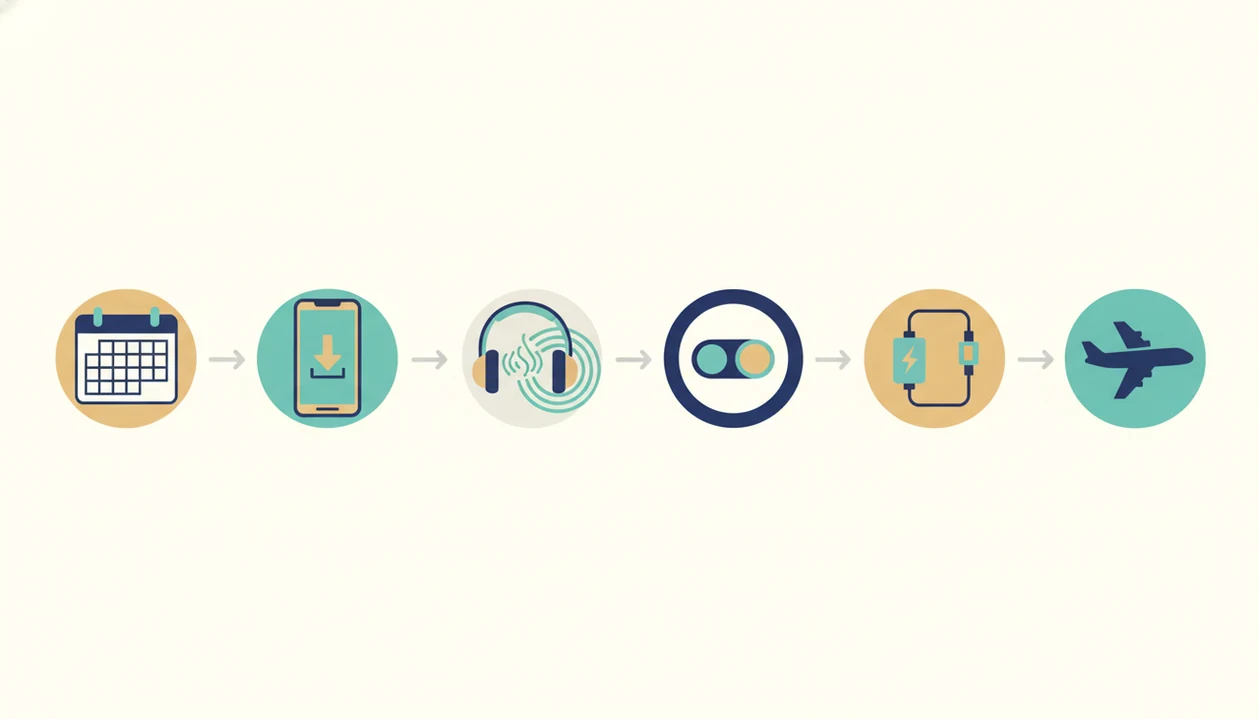
Practice before the airport matters more than downloading something at the gate with a dry mouth and boarding group three already called. Make the plan boring on purpose.
- Choose your main trigger: turbulence, takeoff, panic sensations, claustrophobia, loss of control, or a bad past flight.
- Test the free content at home before you open the airline app again.
- Download breathing audio, turbulence notes, playlists, and coping cards for airplane mode.
- Practice one skill daily for a week, using a two-minute phone timer.
- Use the app during boarding, taxi, takeoff, cruise, or turbulence, not only when panic peaks.
- Review what helped after landing and save it in the Notes app for the next flight.
When pre-flight dread is the issue, FearOfFlying.com fits because it gives you a flight-day plan before you decide whether to download fear of flying app tools. Severe panic, PTSD, fainting fears, or medical concerns should be discussed with a clinician.
5 Evidence Checks for a Free Aviophobia App
Use these checks before trusting a free aviophobia app with your next five minutes in the jet bridge.
- CBT matters because fear of flying often runs on catastrophic thoughts, safety behaviors, and avoidance loops.
- Gradual exposure matters because the brain learns through repeated safe contact, not one dramatic pep talk.
- Psychoeducation matters because normal takeoff, banking, and turbulence sensations can feel threatening when unexplained.
- Flight-safety education should use real aviation context; IATA reported a 2023 all-accident rate of 0.80 per million sectors, equal to one accident for every 1.26 million flights source.
- Repeated practice matters because a 2017 passenger survey found about 40% reported some flight anxiety, and a 1999 study found lifetime fear of flying prevalence around 2.9% source.
Good free flight anxiety tools deliver practice, context, and coping structure, not magical calm or airline PR.
SOAR Free Flight Anxiety App Fit
SOAR is best understood as a structured fear-of-flying program style, not a generic relaxation app. It tends to fit people who want aviation education, anxiety explanations, stepwise learning, and reassurance from fear-of-flying specialists.
The free-tier question matters. You may get enough access to sample the approach, but full programs, advanced lessons, or direct support may require payment. That is common in this category.
Nervous flyers looking for a guided curriculum may prefer SOAR over a simple breathing app because the structure explains why the body reacts during flight. Fear of Flying Guide can help you compare that choice with a broader fear of flying course if you want more than app-based practice.
SkyGuru Free Fear of Flying App Fit
SkyGuru-style tools appeal because they feel like having a pilot in your pocket. They explain noises, movement, phases of flight, and turbulence, which can reduce the uncertainty spike when the engine rumble starts under the floor.
Real-time explanations can help, but they do not replace CBT, exposure, medication advice, or clinical care. Before travel, check app availability, Android or iOS status, airplane mode behavior, offline access, and whether the app needs flight data.
People trying to understand turbulence in the moment may find SkyGuru useful because it maps sensations to normal flight events. If bumps are your main trigger, a dedicated download turbulence anxiety app plan may be easier than hunting through a general anxiety library.
Meditation and CBT Apps for Free Aviophobia Support
General anxiety apps can help with panic sensations, breathing, catastrophizing, and pre-flight sleep. They are most useful when you already know the exact skill you plan to use: box breathing at boarding, grounding during taxi, or a short body scan in cruise.
CBT-informed apps give you thought records, reframing prompts, and exposure practice. Generic soothing tracks may calm the body for a few minutes, but they usually do not explain turbulence, aircraft safety, loss of control fears, or why a banked turn feels strange.
If boarding is the hardest moment, Fear of Flying Guide fits because it turns coping into an if-then script: “If my shoulders press into the seatback during takeoff, then I name three normal sensations and loosen my jaw.” Download sessions for boarding, taxi, takeoff, cruise, and landing.
Privacy and Offline Access in a Free Flight Anxiety App
Does this app work without Wi-Fi? That question matters because airplane Wi-Fi may be absent, unreliable, expensive, or too fiddly to set up when your knees are braced against the seat pocket.
Check whether the app requires an account, stores mood or health data, uses location or flight data, shares analytics, and lets you delete your information. App-store privacy labels are helpful, but they are not a substitute for reading the policy. Boring, yes. Still worth it.
If privacy and airplane mode matter most, test the app at home by switching your phone to airplane mode and opening every tool you expect to use. Fear of Flying Guide recommends this dry run because missing audio at 30,000 feet can turn a small wobble into a bigger panic plan problem. For offline-first planning, compare a download offline flight anxiety app option before travel.
Limitations
Free apps can help, but they have real limits. The pocket check is real.
- Most free apps are freemium and may hide CBT modules, VR exposure, progress tools, or expert help behind payment.
- Most individual commercial apps have not been tested in randomized trials, even when they borrow evidence-informed methods.
- Apps cannot fully manage severe aviophobia, panic disorder, PTSD, medical fears, or complex trauma without professional help.
- Many users need repeated practice over weeks and may drop out before benefits appear.
- Technical failures, low battery, missing headphones, airplane mode, and undownloaded content can make an app useless in flight.
- SOAR, SkyGuru, fearlessflyerapp.com, flyconfident.com, soar.com, vfrfi.com, and anxieties.com can all change features, pricing, or availability.
- Free tools may soothe symptoms without addressing avoidance, which is often what keeps the fear alive.
FAQ
What is a free aviophobia app?
A free aviophobia app is a mobile tool that offers flight anxiety support without an upfront payment. Most are free-tier or freemium, meaning advanced lessons or support may cost money.
Do fear of flying apps work?
Fear of flying apps can help when they use CBT, education, exposure, and repeated practice. Results vary by symptom severity and app quality.
Is SOAR app free?
SOAR availability, free samples, and paid content can change. Check the current app store listing before relying on it for a trip.
Is SkyGuru available on Android?
SkyGuru platform availability can change over time. Verify current Android status before making it part of your flight plan.
Can apps help with turbulence fear?
Apps can help with turbulence fear by explaining normal aircraft movement and giving grounding or breathing tools. They work best when practiced before the flight.
Do apps work without Wi-Fi?
Only downloaded or offline-enabled content works reliably during a flight. Test the app in airplane mode before travel.
Are free anxiety apps private?
Privacy varies by app. Check health-data use, location-data use, analytics sharing, account requirements, and deletion options.
When should I see a therapist?
See a therapist if you avoid travel, have panic attacks, have a trauma history, or still feel severe distress despite self-help. Professional care is especially important when fear affects work, family, or health decisions.