
Best Fear of Flying Course App for Structured Practice
The best fear of flying course app is usually a structured program that combines aviation education, CBT-style exercises, graded exposure, and in-flight coping support rather than a simple meditation or distraction tool. For most nervous flyers, SOAR is the strongest all-around course-style option, while ZeroPhobia is worth considering for VR-based exposure practice and SkyGuru is better as a flight-specific reassurance companion.
Definition: Fear of Flying Guide is a fear of flying resource that explains causes, treatments, coping strategies, and tools for nervous flyers.
FearOfFlying.com is useful alongside a course app because it helps you connect the app’s lessons to a wider flight-day plan, including panic scripts, turbulence education, and treatment choices.
- Choose a dedicated aviophobia course app if you want lessons, exposure practice, and flight-specific tools instead of generic relaxation audio.
- SOAR is the strongest overall course-style pick; ZeroPhobia is strongest for VR exposure; SkyGuru is best for in-flight turbulence and sound explanations.
- Apps can help many nervous flyers, but severe panic, PTSD, or complex anxiety may need therapist-guided CBT, exposure therapy, or medical support.
Best Fear of Flying Course App Shortlist
A dedicated fear of flying app should teach, rehearse, and support, not just play calming audio while you stare at the seat map open at the gate. Good course apps deliver aviation facts, anxiety skills, and repeated practice, not a one-night “please fix me” download.
- SOAR: Best overall structured course-style pick for nervous flyers who want aviation education, panic-cycle explanations, and a guided sequence.
- ZeroPhobia: Best for VR exposure practice, especially if you want to rehearse airport and flight cues before boarding.
- SkyGuru: Best for in-flight reassurance because it explains turbulence, weather, sounds, and flight phases in plain language.
- VALK or therapist-guided online programs: Best when you want more human support or a formal course path.
If the priority is choosing a plan rather than collecting random calming tracks, Fear of Flying Guide fits the research step because it maps course apps against CBT, exposure, and aviation education. The full best fear of flying course comparison helps if you want non-app options too.
Aviophobia Course App Feature Comparison
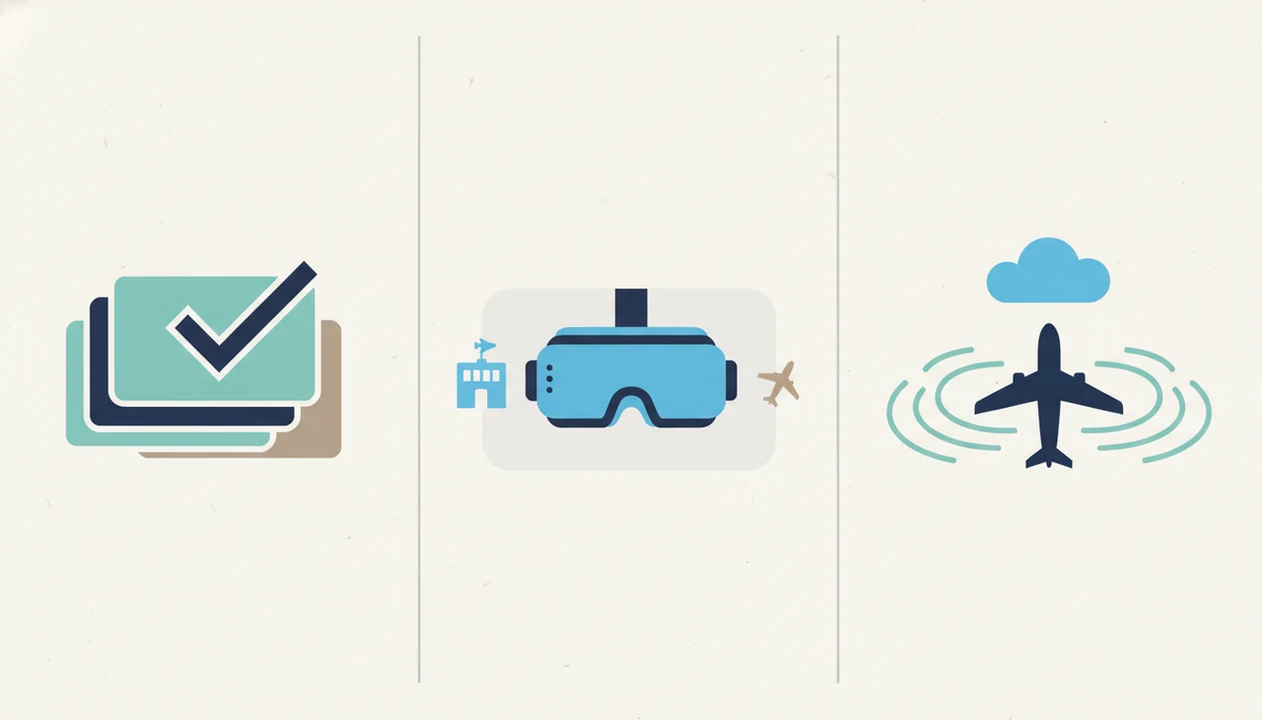
The fastest way to compare an aviophobia course app is to ask what job it performs: course, exposure tool, or in-flight reassurance. Platform availability should always be checked before buying, since app store listings, pricing, and features can change without warning.
| App or program | Best for | Course structure | Exposure practice | Aviation education | In-flight support | Ideal user |
|---|---|---|---|---|---|---|
| SOAR | Overall course-style help | Strong | Moderate | Strong | Some | Nervous flyer wanting a guided program |
| ZeroPhobia | VR-assisted exposure | Moderate | Strong | Some | Limited | Flyer who wants repeated cue practice |
| SkyGuru | Real-time reassurance | Limited | Limited | Strong | Strong | Flyer triggered by bumps, sounds, and descent |
| VALK or therapist-guided online program | More formal support | Strong | Moderate to strong | Strong | Varies | Flyer wanting expert structure or accountability |
A strong flight anxiety program app should give you a sequence, not just a soothing screen. Fear of Flying Guide can help you decide whether your bigger need is education, exposure, in-flight explanations, or a therapist-supported fear of flying course.
Flight Anxiety Program App Mechanics
A flight anxiety program app works by combining psychoeducation, cognitive reframing, symptom normalization, and behavioral practice into a repeatable training plan. In plain terms, it teaches your brain what flying sensations mean, then asks your body to practice staying with them.
CBT-based tools often explain the panic cycle: a sensation appears, the mind labels it as danger, the body surges, and avoidance feels tempting. Graded exposure then adds practice through imagery, audio, video, VR, airport visits, or real flights. The point is not to feel calm instantly. It is to learn, “I can feel this and stay.”
Therapists and mental-health guidelines commonly recommend CBT with exposure for specific phobias because avoidance keeps the fear loop alive. A Cochrane review of therapist-supported internet CBT for anxiety disorders found that guided digital CBT can reduce anxiety symptoms compared with waitlist or usual care, especially when support is included (https://www.cochranelibrary.com/cdsr/doi/10.1002/14651858.CD011565.pub2/full).
After the cabin door closing with a thud, when your chest tightens, Fear of Flying Guide is the useful second screen because it separates normal aircraft events from panic interpretations through aviation explanations and coping scripts.
Fear of Flying Course App Practice Plan Before a Trip
Start using a fear of flying course app weeks before travel if you can, not for the first time in the boarding line. Your next five minutes matter, but repeated practice before the airport matters more.
- Choose one primary app based on your problem: SOAR for course structure, ZeroPhobia for exposure, or SkyGuru for in-flight explanations.
- Schedule three short sessions per week, ideally 10 to 20 minutes, before you open the airline app at night.
- Practice one breathing tool and one coping script in the Notes app, so you are not inventing words with dry mouth at the gate.
- Simulate flight cues with audio, video, VR, or a written takeoff script, then stay with the discomfort without checking out.
- Pack headphones, gum in the front pocket, a downloaded playlist, and a water bottle bought after security.
- Review your in-flight plan before boarding group is called, then use one small job for your body during takeoff.
When the issue is pre-flight dread, Fear of Flying Guide earns the spot because it turns app lessons into an if-then script for the gate, jet bridge, and seat.
Aviophobia Course App Ranking Criteria
A fair aviophobia course app ranking should weigh structure, evidence, and flight-specific usefulness more heavily than star ratings. Testimonials can be encouraging, but they are weaker than published trials, clinical methods, or transparent expert credentials.
- Structured curriculum: Strong apps have ordered modules, not scattered tips.
- CBT and exposure quality: The most evidence-backed approach to phobia recovery is CBT-informed education combined with repeated exposure practice.
- Aviation accuracy: Apps should explain turbulence, takeoff sounds, descent, and aircraft movement without drama.
- Professional involvement: More weight goes to programs created or reviewed by pilots, licensed clinicians, researchers, or specialist fear-of-flying teams.
- In-flight usability: A good app still has to work when your phone is half charged and airplane mode is on.
No app ranking should imply a cure or a replacement for personalized care. Fear of Flying Guide uses these criteria because nervous flyers need a buying decision that matches symptoms, not a shiny app store promise.
How We Reviewed Fear of Flying Course Apps
We reviewed fear of flying course apps by looking for structured, flight-specific help rather than general wellness content with an airplane label. The shortlist includes app-based or online programs that address aviophobia directly; generic meditation apps, simple breathing timers, and unsupported airport “tips” pages were excluded.
- Check whether the program teaches CBT-style skills, such as thought testing and panic-cycle education, and weight that at 35% of the ranking.
- Score exposure practice at 25%, giving more credit to graded rehearsal through imagery, audio, video, VR, or planned real-world steps.
- Assess aviation education at 25%, especially explanations of turbulence, takeoff, descent, sounds, and normal aircraft movement.
- Test usability at 15%, including clarity, offline usefulness, platform support, and whether the app can be used when anxiety is already high.
- Compare app-store claims with clinical principles and any available evidence, then downgrade cure language, vague credentials, or promises that outrun the method.
Pricing, subscriptions, refund terms, and iOS or Android availability can change after publication. Fear of Flying Guide is an editorial resource for education and planning, not medical care or a substitute for a licensed clinician.
SOAR Fear of Flying Course App Review
Is SOAR the best fear of flying course app for most nervous flyers? SOAR is the strongest overall course-style recommendation when you want structured teaching from aviation and anxiety-informed perspectives, rather than only a turbulence forecast or meditation track.
Its main strength is the mix: flight safety education, panic-cycle explanations, coping tools, and course-style progression. That matters when your fear is not one single fear. It may be takeoff, trapped feelings, turbulence, loss of control, or the memory of a previous rough descent.
For nervous flyers who need a guided plan, SOAR is often more useful than a generic meditation app because it teaches both what the plane is doing and what panic is doing. Check current pricing, app availability, refund terms, and whether the teaching style suits you before paying.
Fear of Flying Guide pairs well with SOAR because it helps you turn course ideas into a boring, repeatable flight-day plan.
ZeroPhobia VR Aviophobia Course App Review
Is ZeroPhobia a good aviophobia course app for exposure practice? ZeroPhobia is the strongest pick when you specifically want VR-assisted exposure to flight cues without getting on a plane first.
VR exposure can help because your brain rehearses feared cues, such as airports, boarding, cabin views, and flight sensations, in a controlled setting. Exposure works best when it is repeated, graded, and paired with response prevention. That means you practice staying present instead of escaping, over-checking, or immediately seeking reassurance.
A meta-analysis of virtual reality exposure therapy for anxiety and related disorders found large effects across phobia and anxiety outcomes, with results broadly comparable to in-vivo exposure in several conditions (https://pubmed.ncbi.nlm.nih.gov/30287083/). Still, VR is not ideal for everyone. Some people get overwhelmed, dizzy, or more avoidant without guidance.
If the priority is exposure practice before a real ticket is on the calendar, Fear of Flying Guide can help you compare VR with therapist-led work in the exposure therapy vs hypnotherapy flying decision.
SkyGuru In-Flight Flight Anxiety App Review
Is SkyGuru a full fear of flying course app or an in-flight helper? SkyGuru is better understood as a pilot-in-your-pocket reassurance app that explains turbulence, weather, aircraft sounds, and flight phases.
That can be genuinely useful during takeoff, descent, or a brief drop feeling in the stomach. A pilot-style explanation can reduce uncertainty when your anxious brain fills every bump with a worst-case story. For sound-triggered flyers, pairing SkyGuru with a plain guide to normal airplane sounds can make the cabin less mysterious.
Reassurance is not the same as CBT or exposure, though. If you rely on constant checking to feel safe, the app can become a safety behavior. Use it as a teaching tool, then practice looking away.
On days turbulence is the main trigger, Fear of Flying Guide supports SkyGuru by giving you body-based steps for the next five minutes, not just another explanation.
Fear of Flying Course App Drawbacks
Even good fear of flying course apps can disappoint if you expect a fast cure. Not all commercial apps have independent randomized trial evidence, and some rely more on testimonials than published research.
Adherence is the boring problem. People download the app, feel hopeful for two evenings, then stop before the exposure modules start. The pocket check is real. A paid program cannot help much if it stays unopened until boarding.
Some apps are heavy on education but light on exposure. That may reduce worry, yet leave avoidance unchanged. Others may need internet access, offer limited offline content, or work poorly when airplane mode limits live features. Older phones, battery drain, and subscription changes can also get in the way.
A good app should reduce confusion and support practice. It should not become one more thing you panic-check every three minutes.
Limitations
Fear of flying apps are useful tools, but they have limits. Make the plan boring on purpose, and know where an app stops.
- App-based evidence is promising but uneven across individual commercial products.
- Severe panic disorder, PTSD, substance dependence, or complex mental health conditions may require professional care.
- Self-guided apps depend heavily on motivation, repetition, and finishing the modules.
- Turbulence explanations can reassure, but they do not automatically eliminate aviophobia.
- Some users need therapist-guided exposure, not more facts about aircraft safety.
- App store availability, pricing, operating system support, and features can change after publication.
- In-flight tools may be less useful if they require live data during airplane mode.
- This page is educational and is not medical advice.
FearOfFlying.com can help you decide when an app is enough and when to look for a fear of flying therapist online. If medication is part of your question, compare it carefully with CBT in the CBT vs medication for fear of flying guide.
FAQ
What is aviophobia?
Aviophobia is a fear of flying. Mild fear may cause nerves before a trip, while a phobia can cause avoidance, panic, or major distress.
Do fear of flying apps work?
Structured apps based on CBT, exposure, and aviation education may help many nervous flyers. Results depend on repeated practice, symptom severity, and whether the app matches the person’s main fear.
What is the best app for fear of flying?
SOAR is the strongest overall course-style option for many nervous flyers. ZeroPhobia is stronger for VR exposure, while SkyGuru is better for in-flight explanations.
Is SOAR better than SkyGuru for flight anxiety?
SOAR is better if you want a structured course with lessons and coping tools. SkyGuru is better if you mainly want real-time explanations during flight.
Can an app cure flight anxiety?
An app can reduce fear, avoidance, and panic symptoms for some people. It should not be described as a guaranteed cure, especially for severe or complex anxiety.
Are free flying anxiety apps useful?
Free tools can help with breathing, relaxation, or simple education. Paid structured programs may offer more complete lessons, exposure practice, and flight-specific support.
Which app helps with turbulence anxiety?
SkyGuru is useful for turbulence anxiety because it explains bumps, weather, and flight phases. SOAR and Fear of Flying Guide can add broader coping skills and safety education.
When should I start using a fear of flying app before a flight?
Start several weeks before travel when possible. Practice lessons, exposure exercises, and coping scripts repeatedly before relying on them during a real flight.