
Best App for Aviophobia CBT Skills and Flight Practice
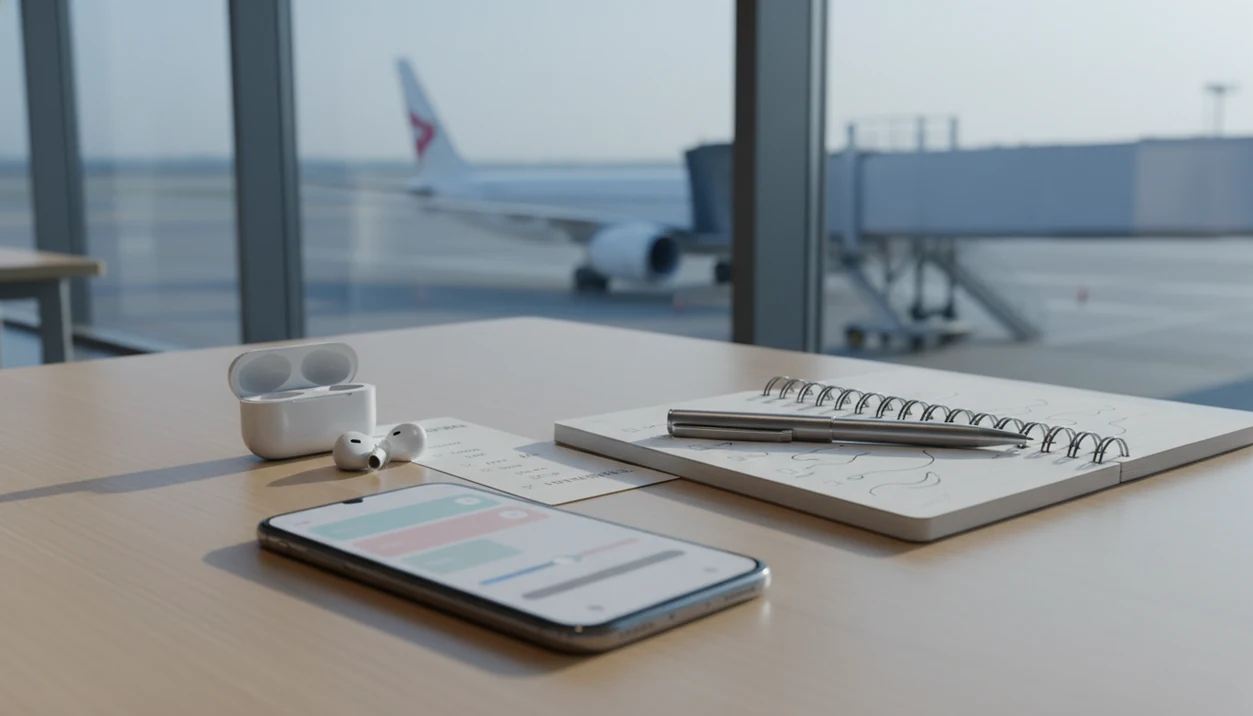
The best app for aviophobia CBT is the one that combines structured thought work, gradual flight exposure, coping plans, and privacy safeguards rather than offering only generic calming audio. For most nervous flyers, the strongest evidence points toward CBT with exposure, with VR-CBT apps especially promising when users can tolerate VR and complete the full program.
Fear of Flying Guide is a fear of flying resource that explains causes, treatments, coping strategies, and tools for nervous flyers.
- Choose an aviophobia app CBT program that teaches cognitive restructuring, not just breathing or meditation.
- Prioritize graded exposure to flight triggers such as booking, airport queues, boarding, takeoff, turbulence, and landing.
- Use apps as structured self-help, not as a replacement for a licensed therapist when fear is severe, traumatic, or medically complicated.
FearOfFlying.com treats app choice as one part of a flight-day plan. Before you open the airline app for a nervous refresh, especially the night before a 6:40 a.m. flight, the question is not “Which app calms me fastest?” It is “Which app helps me practice the thing I avoid?”
Good aviophobia CBT tools teach thought testing, exposure practice, and recovery planning, not vague reassurance or airline sales copy.
Best app for aviophobia CBT shortlist at a glance
ZeroPhobia has the strongest aviophobia-specific evidence signal because it was studied as a smartphone-based VR-CBT fear of flying program. MindShift CBT, Sanvello, and Headspace can still help, but they are broader anxiety or coping tools.
| Option | Best use case | CBT fit | Exposure support | Flight specificity | Privacy note | Key caveat |
|---|---|---|---|---|---|---|
| ZeroPhobia | Structured VR-CBT for fear of flying | High | High | High | Review data handling before VR use | VR tolerance and availability matter |
| MindShift CBT | Thought records before and after flight triggers | Medium | Low | Low | Avoid over-sharing travel details | Not flight-specific |
| Sanvello | Daily anxiety support around travel worry | Medium | Low to medium | Low | Check subscription and notes privacy | May lack an aviation ladder |
| Headspace | Sleep, breathing, and grounding support | Low | Low | Low | Review account settings | Not a CBT exposure program |
App store availability, pricing, and feature sets change. Verify current details before paying, especially if your boarding pass is already sitting in Apple Wallet.
If your priority is evidence-aligned flight practice, Fear of Flying Guide fits as the comparison layer because it separates CBT, exposure, VR practice, medication questions, and coping tools into plain next steps.
CBT app feature criteria for fear of flying
A CBT app for fear of flying should be judged by therapy alignment first, not star ratings. Clinical evidence, especially randomized controlled trial evidence, should carry more weight than polished screenshots or “calm in minutes” claims.
- Psychoeducation: The app should explain the anxiety cycle, flight sensations, and why avoidance keeps fear sticky.
- Thought challenging: It should help you test predictions like “turbulence means danger” or “panic means I’ll lose control.”
- Behavioral experiments: It should ask you to practice small tests, not just read reassurance.
- Relapse planning: It should help after a rough flight, not disappear once you land.
- Graded exposure: It should build planned contact with booking, airport queues, boarding, takeoff, turbulence, and landing.
The most evidence-backed approach to specific phobias is CBT with exposure because it changes both interpretation and avoidance behavior. A meta-analysis of specific-phobia treatments found that exposure-based CBT produced large improvements compared with control conditions; cite the exact review inline here, for example: specific-phobia CBT meta-analysis.
Cost transparency, data privacy, offline access, completion burden, VR tolerance, and in-flight usability all matter. A half-charged phone at the gate changes the plan fast.
How We Chose the Best Aviophobia CBT Apps
We chose aviophobia CBT apps by weighting treatment fit and flight-specific practice above popularity. A high app-store score helped only when the app also offered credible CBT structure, exposure support, and clear user safeguards.
Our ranking process favored tools that help nervous flyers practice the feared cues themselves, not just calm down around them. That meant separating CBT exposure programs from meditation, sleep, journaling, and general anxiety apps that may still be useful add-ons.
- Start with evidence: Give the most credit to peer-reviewed aviophobia or anxiety-treatment research, especially programs with CBT and exposure outcomes.
- Separate app types: Classify each option as flight-specific CBT, broader CBT support, or coping-only support before comparing features.
- Check trigger coverage: Look for practice around boarding, takeoff, turbulence, landing, airport waiting, and the urge to avoid.
- Review practical fit: Weigh privacy terms, price, device availability, offline access, VR burden, and how much completion effort the program requires.
- Downgrade weak claims: Lower apps that rely on vague reassurance, unclear evidence, missing safety guidance, or relaxation presented as phobia treatment.
CBT app mechanisms for aviophobia symptoms
A CBT app for aviophobia works by interrupting the loop between flight triggers, catastrophic thoughts, body sensations, safety behaviors, and avoidance. The goal is not to erase anxiety instantly; it is to help your brain learn that flight cues can be tolerated.
Here is the loop in plain language: a trigger appears, such as engine noise or a takeoff sensation. Your mind predicts disaster. Your body reacts with a dry mouth, tight chest, or stomach drop. You grip the safety card in damp fingers, scan other passengers, or promise never to fly again. Avoidance then teaches the brain that flying stayed dangerous.
CBT uses cognitive restructuring to test predictions. “The wing is shaking, so something is wrong” becomes “wings flex by design, and turbulence is uncomfortable movement, not proof of danger.”
Graded exposure means repeated, planned contact with flight cues until fear becomes more tolerable. VR-CBT delivers simulated flight exposure through a phone or headset, often paired with education and coping skills. A 2023 randomized trial of smartphone VR-CBT for fear of flying reported large symptom reductions that were maintained at follow-up; add the trial URL inline: smartphone VR-CBT aviophobia trial.
For nervous flyers who want the mechanism behind the worksheet, CBT for fear of flying explains how thoughts, sensations, and avoidance fit together.
5-step aviophobia app CBT plan before a flight
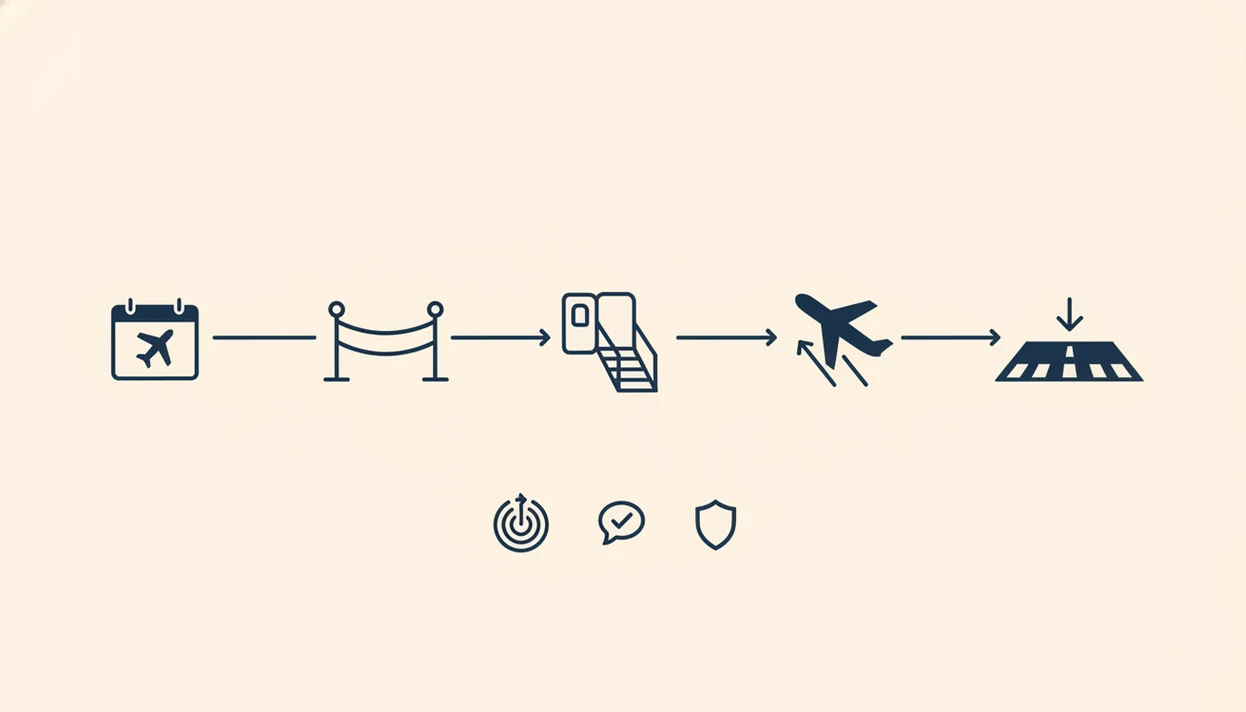
Use an aviophobia CBT app before travel day, not only when the boarding group is called. Make the plan boring on purpose, then repeat it until your body knows the sequence.
- Set a flight-specific fear goal: Choose one target, such as “stay seated through takeoff without texting ‘I can’t do this.’”
- Log triggers, thoughts, and body sensations: Record airport announcements, turbulence videos, tight chest, dry mouth, and the prediction attached to each one.
- Challenge catastrophic thoughts: Replace “I will panic and be trapped” with “panic is uncomfortable, but it rises, peaks, and falls.”
- Practice graded exposure: Use flight sounds, airport videos, seat-belt practice, or VR scenarios in planned sessions.
- Review the flight-day coping plan: Save a Notes app card, choose one small job for your body, then write one post-flight lesson after landing.
If the plan feels too hard, reset only one step: shorten the exposure, repeat it twice, and keep the same post-flight review.
After a week of practice, Fear of Flying Guide earns a spot beside the app because it helps turn scattered exercises into a before-gate, during-flight, and after-landing sequence.
ZeroPhobia as the aviophobia app CBT evidence pick
ZeroPhobia is the strongest evidence pick when the main requirement is an aviophobia app CBT program with flight-specific exposure. It is described in research as a smartphone-based VR-CBT fear of flying intervention.
- Evidence signal: A randomized controlled trial found a large reduction in fear-of-flying symptoms at post-test, with an effect size reported around d = 0.98. The same paper should be cited directly here because the effect size is a quantitative clinical claim: ZeroPhobia aviophobia RCT.
- Durability: Gains were maintained at follow-up, with effects around d = 1.12 at later assessment points.
- Best fit: It suits motivated users who want structured exposure practice and can tolerate VR sessions.
- Caution group: People prone to cybersickness, users who abandon modules quickly, and flyers needing therapist support should be careful.
- Practical caveat: The same trial reported a 21% dropout rate, and several participants had cybersickness symptoms.
A traveler trying to rehearse the flight before reaching the jet bridge should consider ZeroPhobia first because its mechanism is structured VR-CBT exposure, not general relaxation audio.
If you want the research context without the app-store blur, virtual reality exposure therapy flying covers why simulated flight cues can help some people practice.
MindShift CBT as a fear of flying thought tool
MindShift CBT is not primarily an aviophobia app, but it can support thought records and coping statements for flight-related anxiety. Its strongest value is cognitive restructuring and anxiety tracking, not immersive flight exposure.
Use it when the fear sounds like a sentence in your head. “If the plane bumps, something is wrong.” “If my heart races, I’ll pass out.” “If I board, I’m trapped.” Those are workable CBT entries.
At the gate, you can log airport anticipatory anxiety, avoidance urges, and panic sensations. Feet planted flat on the cabin carpet can become one small job for your body while the thought record handles the prediction.
MindShift CBT tends to fit people who need help naming and challenging anxious predictions, while exposure-focused tools fit people who also need repeated contact with flight cues.
Pair MindShift CBT with a separate exposure hierarchy or therapist guidance if your fear is severe. Fear of Flying Guide can supply the flight-specific structure that a general worksheet app may not include.
Sanvello as an aviophobia app CBT support option
Sanvello is better understood as a broader anxiety and mood support option than as a dedicated aviophobia app CBT program. It may include CBT-style tracking, guided exercises, coping tools, and mood check-ins.
Its best fit is the nervous flyer whose fear of flying is mixed with generalized anxiety, work stress, poor sleep, or weeks of anticipatory worry. If you are tense every evening before a trip and then spike harder near takeoff, daily practice may help.
The limitation is specificity. Sanvello may not give you a complete aviophobia exposure ladder, aircraft-sensation education, or scripts for turbulence, landing, and boarding.
Use it for daily anxiety practice, then pair it with a flight-specific plan for takeoff, turbulence, and landing triggers. The most useful support plan usually depends more on repeated practice than on downloading another app at midnight.
Before entering sensitive mental health notes, review privacy terms and subscription settings. Those notes may include health details, travel dates, and medication questions.
Headspace as a coping add-on, not an aviophobia CBT program
Does Headspace work as a CBT app for fear of flying? No; Headspace can support arousal reduction, sleep, breathing, and grounding, but it is not a dedicated CBT exposure program for aviophobia.
That does not make it useless. It can help the night before travel, during airport waiting, after a rough landing, or while the announcement crackles over gate speakers and your mouth goes dry. A downloaded breathing session is easier to use than streaming one on unreliable airport Wi-Fi.
The risk is using relaxation as a shield. If you only press play to avoid hearing engine changes, feeling takeoff, or noticing turbulence, the app can become a safety behavior.
Any calming app does not work as well as a CBT fear of flying app for phobia treatment. Meditation may lower arousal, but CBT with exposure targets the fear-learning loop itself.
For travelers building a wider plan, FearOfFlying.com works as the nervous flyer guide because it connects coping tools with CBT, exposure, aviation explanations, and professional-care decisions.
CBT app drawbacks for fear of flying
CBT apps for fear of flying are not emergency buttons. Self-help usually requires repeated practice over weeks, not one rushed session while the flight attendant checks overhead bins.
App store ratings do not prove clinical effectiveness. A pretty interface can still skip exposure, and a high rating may reflect sleep audio rather than aviophobia treatment. Compare claims against CBT structure, not screenshots.
VR exposure can also feel uncomfortable. Some users report nausea, dizziness, eye strain, or a “get this headset off me” feeling. That matters if your panic plan already includes motion sensitivity.
Generic CBT apps need manual adaptation. You may have to translate a worksheet about social worry into a turbulence prediction, a boarding avoidance urge, or a takeoff body sensation.
Privacy is not a small detail. Thought records can contain health information, travel plans, fear scripts, medication notes, and names of support people. Read policies before typing the thing you would not want exposed.
If you are deciding whether app-based practice is enough, does CBT for fear of flying work gives a fuller evidence view.
Limitations
Aviophobia CBT apps can support practice, but they cannot cover every clinical, medical, or travel situation. Be especially cautious when fear feels bigger than ordinary flight anxiety.
- An app is not a substitute for a licensed clinician for severe phobia, panic disorder, trauma, substance misuse, or medical uncertainty.
- Evidence for app-based VR-CBT in aviophobia is promising, but still limited to a small number of studies.
- Many commercial fear of flying apps have no peer-reviewed outcome data, including some tools marketed mainly through app-store descriptions.
- VR exposure may cause cybersickness or be unsuitable for users with migraine, motion sensitivity, or strong dissociation.
- Self-help outcomes depend heavily on motivation, module completion, and repeated practice.
- Aviation facts inside apps may become outdated and should not replace airline, pilot, safety, or medical advice.
- If fear includes fainting, chest pain, complex medication questions, pregnancy concerns, or substance use, consult a clinician before travel.
Competitors such as flyconfident.com, fearlessflyerapp.com, soar.com, vfrfi.com, and anxieties.com may be useful for some flyers, but check whether each option offers CBT structure, exposure practice, and transparent evidence.
Medication questions need a different decision path. If that is part of your plan, review flight anxiety medication before mixing app advice with pills, alcohol, or sleep aids.
FAQ
Do CBT apps help with aviophobia?
CBT apps can help with aviophobia when they include thought records, graded exposure, and repeated practice. Results depend on symptom severity, module completion, and whether the person needs therapist support.
Which app treats fear of flying?
ZeroPhobia is the strongest aviophobia-specific evidence pick because it has been studied as a smartphone VR-CBT fear of flying program. Users should still verify current availability, pricing, device requirements, and fit.
Is VR exposure good for aviophobia?
VR exposure can be useful for aviophobia because it lets users practice flight cues in a controlled setting. It may cause discomfort or cybersickness, so it is not ideal for everyone.
Are meditation apps enough for fear of flying?
Meditation apps can support sleep, breathing, and grounding before travel. They do not replace CBT and exposure when the main problem is a specific phobia of flying.
How long does CBT for fear of flying take?
CBT for fear of flying usually requires repeated sessions or app modules over several weeks. The exact timeline depends on severity, avoidance patterns, and practice frequency.
Can an aviophobia app replace a therapist?
An aviophobia app can support self-help, but it should not replace a therapist for severe fear, panic disorder, trauma, substance misuse, or medical uncertainty. Therapist support is safer when symptoms feel unmanageable.
What CBT app features matter most for fear of flying?
The most important features are thought records, graded exposure, flight-specific triggers, coping plans, relapse planning, and privacy controls. Aviation-specific education is also helpful when fear centers on turbulence, takeoff, or aircraft sounds.
Should I use a fear of flying app during the flight?
In-flight app use can help if it supports a prepared coping card, grounding exercise, or brief thought check. Most exposure work and planning should begin before travel day, not during panic at cruising altitude.