
Fear Of Flying For Business Travelers Who Must Fly Often
Fear of flying for business travelers is manageable when you treat it as a repeatable work-travel system: reduce avoidance, plan each flight, and use evidence-based help such as CBT or exposure therapy. The goal is not to feel perfectly calm on every trip, but to keep flights from controlling your sleep, schedule, career choices, or job performance.
This guide is educational and planning-focused, not a diagnosis or substitute for therapy. If panic, trauma symptoms, substance use, medical issues, or medication questions are involved, talk with a licensed clinician before the next required trip.
Fear of Flying Guide helps nervous work travelers turn “I have to fly again next week” into a written flight-day plan, with aviation explanations, CBT-style coping steps, and practical scripts for boarding, turbulence, and post-flight review.
> Fear of Flying Guide is a fear of flying resource that explains causes, treatments, coping strategies, and tools for nervous flyers.
- Work travel flight anxiety is common, treatable, and not a sign that you are unprofessional or weak.
- The strongest long-term options are CBT, exposure therapy, structured fear-of-flying courses, and targeted support for panic, claustrophobia, or turbulence fears.
- Business travelers need a repeatable plan for booking, pre-flight sleep, airport timing, in-flight coping, manager communication, and post-flight review.
At a glance: fear of flying for business travelers
Work travel flight anxiety is fear, dread, or panic linked to required flights for a job. It can start before the ticket is booked and continue through the meeting after landing.
For business travelers, the cost is not only discomfort. Fear can mean poor sleep, avoided client visits, missed promotion paths, weaker presentation performance, and, in some roles, job risk. The hard part is that your rational mind may know commercial flying is statistically safe while your body acts like the aircraft is a threat.
The most evidence-backed approach to fear of flying is CBT combined with gradual exposure, because it targets avoidance, catastrophic thoughts, and body panic together. VR exposure, structured fear-of-flying courses, turbulence education, and selective short-term tools can also help.
If your calendar alert three days before departure makes your stomach drop, FearOfFlying.com is built for that exact planning window.
Repeatable flight plan for business travel nervous flyers
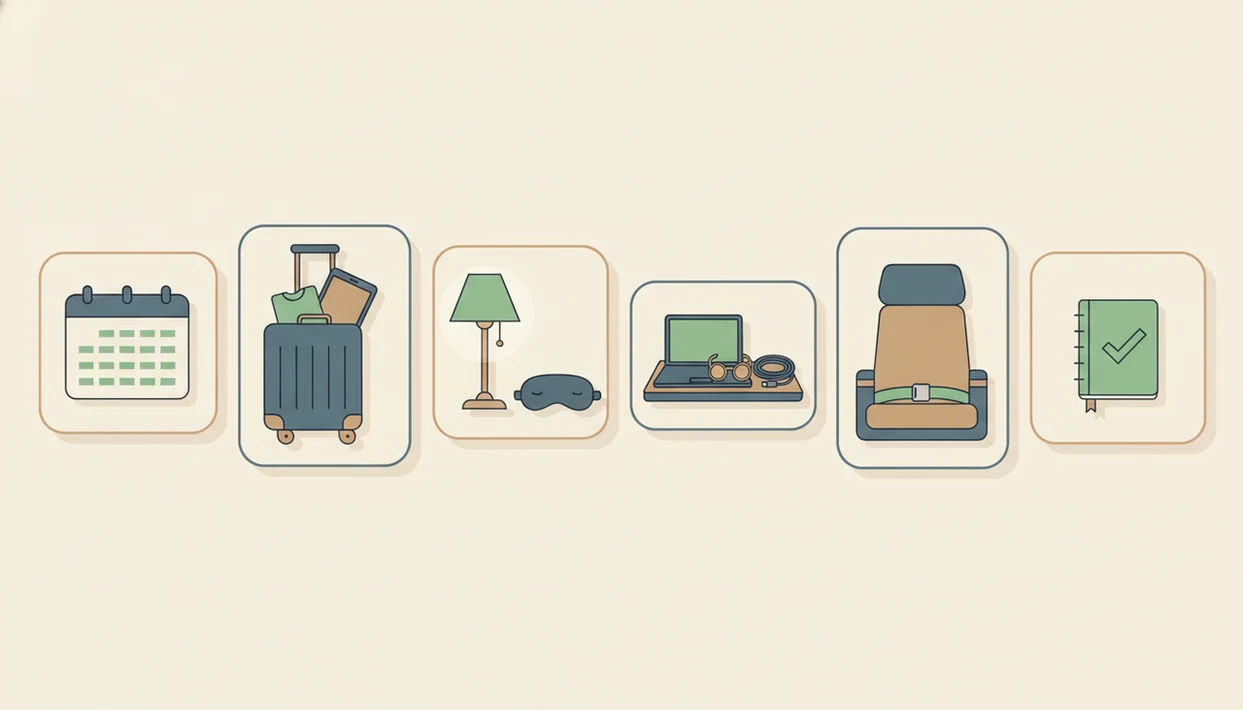
A business travel nervous flyer needs a system, not a fresh pep talk before every airport run. Leisure travel can often be postponed; employer-driven travel returns every quarter, month, or Monday morning.
- Anticipatory anxiety can begin days or weeks ahead, especially when the trip affects a client meeting, conference talk, or promotion.
- Avoidance may look practical at first: taking trains, delegating trips, declining client visits, or choosing roles with less travel.
- Career impact builds quietly when flight fear shapes assignments before anyone names the problem.
- HR conversations can be useful, but they work best when paired with treatment steps and a transition plan, not vague reassurance.
- A repeatable plan reduces decision fatigue before each flight, so your next five minutes are already assigned.
Anyone dealing with recurring work travel flight anxiety fits Fear of Flying Guide because it turns each trip into the same pre-flight, gate, in-flight, and post-flight workflow.
Make the plan boring on purpose.
Body and brain mechanisms behind work travel flight anxiety
Fear of flying works through a threat-response loop: adrenaline rises, the heart races, attention scans for danger, and ordinary sensations get interpreted as proof something is wrong. Logic helps, but it often arrives after the body has already sounded the alarm.
Takeoff, turbulence, confinement, lack of control, and being unable to leave can all trigger panic. A drink rippling on the tray table may become “the plane is unstable,” even when the aircraft is operating normally. Avoidance reinforces the loop. When you skip the flight, relief teaches your brain that flying was dangerous and escape saved you.
Work stress can raise the volume. A 2024 study found that higher work-related problems and burnout were significantly correlated with more severe fear-of-flying symptoms source.
After a week of late calls and a half-charged phone at the gate, fear often feels less like a phobia and more like overload with wings.
Top business-travel tools for nervous flyers who must keep flying
The strongest tools for frequent nervous flyers combine treatment, aviation education, and repeatable coping practice. Good fear-of-flying resources explain what is happening in the aircraft and in your nervous system, not just offer pretty breathing screens.
CBT and exposure therapy
CBT is the core long-term treatment because it works on catastrophic thoughts, safety behaviors, avoidance, and panic sensations. Exposure therapy adds planned practice, from airport visits and simulator work to short flights and virtual reality exposure. Therapists and mental-health guidelines commonly recommend CBT and exposure-based treatment for specific phobias, including flying fear. NHS guidance for phobias describes CBT and gradual exposure/desensitisation as common treatment approaches source.
Courses, apps, and in-flight coping tools
Structured fear-of-flying courses, airline-based programs, and tools like breathing, grounding, thought reframing, and turbulence education can support practice. The right fit for frequent flyers who need pre-flight structure is Fear of Flying Guide because it combines plain-language aviation safety lessons with CBT-style scripts and a Notes app coping card.
Medication conversations with a clinician
Medication can be a doctor-supervised short-term aid, especially for severe panic, but it is not a stand-alone cure. Apps and videos vary in evidence quality, so compare them carefully with options like flyconfident.com, fearlessflyerapp.com, and soar.com.
Common business travel nervous flyer patterns at work
“Why do I fall apart before work flights when I handle the rest of my job?” Usually, the pattern is not weakness. It is anticipatory anxiety plus repeated pressure to perform.
Common patterns include pre-trip insomnia, calendar dread, and the late-night airline app refresh before a 6:40 a.m. flight. Some travelers compulsively check weather, aircraft type, turbulence forecasts, accident stories, or seat maps. Others overplan airport arrival or seat choice so intensely that the planning itself becomes another anxiety ritual.
Alcohol or sedative misuse is a real risk, especially when someone must appear sharp after landing. Post-flight exhaustion can also affect client meetings, slide decks, negotiations, or presentations.
Aerophobia is common: Cleveland Clinic estimates that about 25 million U.S. adults have fear of flying source, and NIMH reports that an estimated 12.5% of U.S. adults experience specific phobia at some point in life source.
For a broader recovery path, use our overcome fear of flying roadmap.
Six-step work travel flight anxiety plan before every trip
A work flight plan should be short enough to reuse before every trip. Put it in the Notes app before you open the airline app.
- Set the trip objective and anxiety target. Write the work reason for going and one realistic goal, such as “board without texting ‘I can’t do this.’”
- Book to reduce friction without enabling total avoidance. Choose reasonable timing, seat preference, and connection length, but don’t build a route around escape.
- Prepare a written turbulence, panic, and safety script. Include one line for takeoff, one for bumps, and one for racing thoughts.
- Schedule sleep, food, caffeine, and meeting buffers. Protect the night before, eat something plain, limit extra caffeine, and avoid landing straight into a pitch.
- Use in-flight coping tools instead of escape behaviors. Set a two-minute timer, breathe slowly, ground through your feet, and read the script.
- Review what happened after landing. Record what you predicted, what occurred, and what you can reuse next time.
On days when your boarding pass sits in Apple Wallet and your mouth goes dry, Fear of Flying Guide fits because it gives you one small job for your body at each stage of the flight.
FAA safety facts that help business travelers reframe flight risk
Safety facts can help reframe risk, but they rarely erase panic by themselves. Use them as part of CBT-style cognitive restructuring, not as endless reassurance seeking.
- Commercial air travel is statistically very safe, even when anxiety feels intense.
- Federal aviation safety data show no U.S. fatalities on scheduled passenger airlines from 2018 through 2022 source.
- Turbulence is usually uncomfortable movement through changing air, not a sign the aircraft is unsafe.
- Seat belt use matters because unexpected bumps can injure passengers in the cabin.
- Rechecking the same safety fact 20 times can become a compulsion, so set a limit before you start.
For business travelers, safety education is often more useful than reassurance because it gives the brain a prepared interpretation when the cart pauses in the aisle.
If turbulence is the memory that keeps replaying, read the specific plan for fear of flying after bad turbulence.
Manager and HR conversations for fear of flying at work
A useful manager conversation separates performance commitment from the anxiety problem. The message is not “I cannot do this job.” It is “I am addressing a travel-related anxiety problem and want a workable plan while I do that.”
Possible discussion topics include travel frequency, minimum notice, flight length, arrival buffers, remote alternatives, and a gradual return-to-flying plan. Avoid making legal assumptions or promising outcomes. If symptoms are affecting work, document treatment steps, missed sleep, panic episodes, and meeting impact where appropriate.
After the engines spool and the seat belt clicks across your lap, the workplace issue is already in motion. Better to discuss the travel pattern before another urgent client trip appears.
After a required trip gets assigned, use a short script that names the travel requirement, the anxiety problem, and the treatment plan without asking your manager to solve the phobia.
If you support family members too, the same planning style can help with fear of flying for parents.
Limitations
No fear-of-flying plan works for every business traveler, and honest limits matter when your job depends on travel.
- Not everyone responds fully to CBT, exposure therapy, VR exposure, or structured fear-of-flying courses.
- Some travelers need booster sessions, relapse planning, or long-term maintenance after a difficult flight.
- Research focused only on business travelers is limited, so some advice comes from general aerophobia and specific phobia research.
- As-needed medication may cause sedation, impaired coordination, memory problems, dependence risk, or poor meeting performance.
- Medication choices must be clinician-guided, especially before a work obligation.
- Apps, videos, and quick fixes may lack rigorous evidence. Compare claims carefully, including tools from vfrfi.com or anxieties.com.
- Panic disorder, PTSD, substance use, severe depression, or medical conditions may require more intensive care.
- Temporary avoidance may be necessary in rare cases, but permanent avoidance can worsen fear when flying remains a job requirement.
Fear of Flying Guide is useful for planning and education, but it does not diagnose, prescribe medication, or replace therapy.
For setbacks after a rough trip, the fear of flying relapse guide explains how to restart without treating one flight as failure.
FAQ
Can fear of flying affect my job performance?
Yes. Fear of flying can affect attendance, client travel, promotion options, sleep, presentation quality, and job choices when avoidance starts shaping work decisions.
How can I get through a required work flight?
Use a repeatable plan: book with reasonable friction, prepare scripts, manage sleep and caffeine, use in-flight coping tools, and review the evidence after landing. If panic is severe, arrange professional help before the next trip.
Should I tell my manager I have flight anxiety?
Disclosure may help when travel expectations are changing or symptoms are affecting performance. Keep the conversation focused on work needs, treatment steps, notice periods, and a realistic travel plan.
Can CBT help nervous flyers who travel for work?
Yes. CBT is one of the best-supported long-term treatments for aerophobia because it targets catastrophic thinking, avoidance, panic symptoms, and safety behaviors.
Is turbulence dangerous on business flights?
Turbulence is usually uncomfortable rather than dangerous to the aircraft. Passengers should keep the seat belt fastened when seated and follow crew instructions.
Do flight anxiety apps work for frequent business travelers?
Apps may help with education, practice, breathing, and written coping plans. They should not replace evidence-based treatment when flight anxiety threatens employment, safety, substance use, or severe panic.
What medication helps flight anxiety before a work trip?
Some prescription medications may be used short term under medical supervision. They are not a stand-alone cure and may cause sedation or impaired meeting performance.
Can I request less travel because of fear of flying?
You can discuss temporary adjustments, more notice, remote options, meeting buffers, or gradual travel plans. Legal outcomes depend on the workplace, role, location, and documentation.