
Fear Of Flying Relapse After A Better Flight
A fear of flying relapse is a setback, not a failure: your anxiety has returned after progress, but your previous skills and successful flights still count. Restart with a short, planned recovery routine instead of avoiding flights or judging yourself.
Definition: Fear of flying relapse is the return of significant flight anxiety after a period of improvement, calmer flying, or successful treatment for aviophobia.
TL;DR
- Relapse can happen after stress, a long gap between flights, turbulence, or scary aviation news.
- Avoidance usually keeps flight anxiety strong, while gradual exposure helps rebuild confidence.
- CBT, exposure practice, and booster sessions can help you restart without going back to square one.
Fear Of Flying Relapse Definition And 10-Minute Reset
Fear of flying relapse is the return of significant flight anxiety after a period of improvement, calmer flying, or successful treatment for aviophobia. It can feel like your flight anxiety came back overnight, even if you had a better flight last month or last year.
Relapse is common in specific phobias. It does not mean therapy failed, your coping skills vanished, or your calmer flights “didn’t count.” Stress, a long gap since flying, turbulence, illness, poor sleep, or aviation news can all wake the alarm system again.
For clinical context, the National Institute of Mental Health describes specific phobia as intense fear or avoidance of a specific object or situation, with exposure-based therapy commonly used in treatment plans (https://www.nimh.nih.gov/health/topics/anxiety-disorders).
Try a 10-minute reset: open your Notes app, write “This is a setback, not proof,” list two past flights you completed, then choose one small job for your body. Sip water. Unclench your jaw. Set a two-minute phone timer.
Make the plan boring on purpose.
Why Flight Anxiety Came Back After A Better Flight
Your brain can reactivate old threat predictions around booking, airports, takeoff, turbulence, or feeling trapped. A better flight creates useful learning, but it doesn’t erase every fear association.
Maybe you were fine until the airline app opened at 11:40 p.m. for a 6:40 a.m. flight. Then the checking started. Seat map, weather, aircraft type, repeat. That does not mean you are broken. It means your nervous system is scanning again.
Stress lowers tolerance for normal flight sensations. Burnout, grief, work pressure, illness, caffeine, and poor sleep can make a normal engine sound feel like danger. A bumpy flight can also become a fresh trigger, especially if the seat belt sign chimed and your body stored that moment as “proof.”
A temporary spike is uncomfortable but workable. An aviophobia setback is more serious when you avoid travel, lose sleep for weeks, or panic at the thought of booking.
How Fear Of Flying Relapse Works In The Brain
Fear of flying relapse works through threat prediction, body-sensation fear, and avoidance relief. In plain English, your brain guesses danger, your body reacts, and escape feels rewarding.
- Threat prediction: The brain treats cues like boarding passes, jet bridges, takeoff thrust, or turbulence as warnings.
- Body-sensation fear: A racing heart, dry mouth, or tight chest can become “evidence” that something is wrong.
- Avoidance relief: Canceling a flight reduces anxiety fast, which teaches the brain that escape caused safety.
- Exposure learning: Exposure works by creating new learning, not by deleting all fear from memory.
- Recovery target: Treatment aims for manageable discomfort, not a guarantee of zero anxiety.
The most common medically supported way to weaken phobias is exposure-based practice combined with skills that reduce catastrophic interpretation. Clinicians typically recommend CBT or exposure therapy when fear causes avoidance or major impairment. The American Psychological Association describes exposure therapy as a structured way to face feared cues safely until anxiety becomes more tolerable and less controlling (https://www.apa.org/ptsd-guideline/patients-and-families/exposure-therapy).
Before Restarting After An Aviophobia Setback
“Is this a mild wobble, a moderate relapse, or a severe setback?” Start there before booking the next test flight.
Rate the problem honestly. Mild means you feel dread but can still plan. Moderate means you are checking, reassurance-seeking, and losing sleep. Severe means panic, canceled travel, work disruption, or daily life shrinking around the fear.
Before you open the airline app, check the basics: sleep, stress load, caffeine, recent panic attacks, health worries, and how much pressure is attached to the upcoming trip. A work presentation after landing can make the whole flight feel loaded. For frequent work trips, the plan may need to be more structured, like the steps in fear of flying for business travelers.
Self-help tools can be useful, but they may not be enough for severe relapse. Get professional support if panic is intense, avoidance is escalating, or your life is getting smaller.
5 Steps To Restart After A Fear Of Flying Relapse
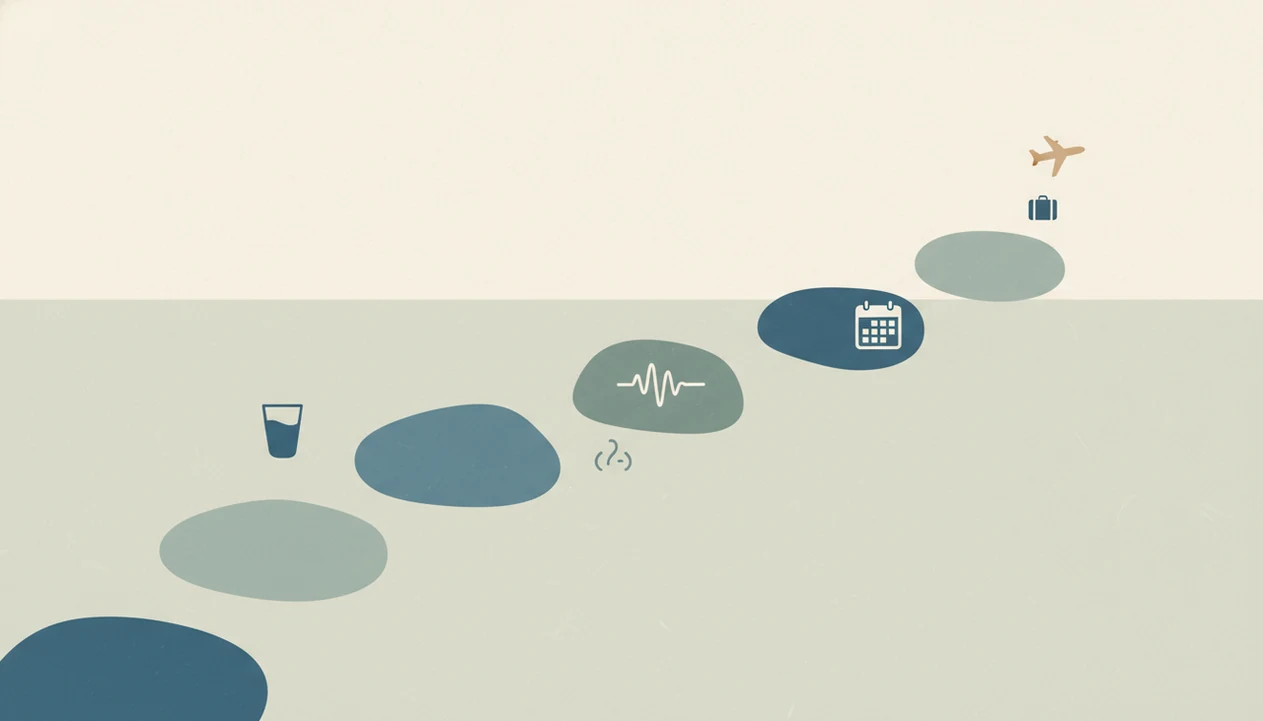
Use this restart plan when fear returns after progress. Keep it short enough to repeat on a tired weekday.
- Name the setback without shame. Write, “My fear has spiked again, and I’m restarting practice.”
- Review previous successful flights and coping skills. List flight numbers, routes, or moments you handled, even if you were anxious.
- Rebuild gradual exposure. Watch takeoff videos, visit the airport, practice booking, sit with a boarding pass in Apple Wallet, or choose a short flight.
- Practice during flight sensations. Don’t wait to feel calm first; rehearse breathing, grounding, and scripts while the engines spool or the cabin moves.
- Schedule a booster session. If anxiety stays high, book CBT or exposure support before avoidance becomes the default.
This sequence mirrors common relapse-prevention logic in CBT: label the pattern, reduce avoidance, repeat graded exposure, and add professional support when symptoms remain impairing (https://www.nhs.uk/mental-health/talking-therapies-medicine-treatments/talking-therapies-and-counselling/cognitive-behavioural-therapy-cbt/).
For a wider recovery path, use an overcome fear of flying plan that includes education, exposure, coping scripts, and follow-up practice.
CBT, Exposure Therapy, And Medication For Fear Of Flying Relapse
CBT, exposure therapy, and medication can all have a role after relapse, but they do different jobs. CBT changes how you interpret danger. Exposure gives your brain new evidence. Medication may lower symptoms for a specific flight.
| Option | What it targets | Useful for | Main caution |
|---|---|---|---|
| CBT | Catastrophic thoughts, safety behaviors, body-sensation fear | Rebuilding confidence after relapse | Needs practice between sessions |
| Exposure therapy | Repeated contact with flying triggers | Teaching the brain anxiety is tolerable | Feels uncomfortable at first |
| Medication | Short-term physical anxiety symptoms | Selected flights or severe distress | Does not teach flying safety learning by itself |
| Benzodiazepines | Rapid calming | Short-term medical use when prescribed | May interfere with exposure learning for some people |
Exposure therapy is widely used for phobias because it helps the nervous system learn through experience. Medication can help some people board, but by itself it usually does not prevent relapse.
If medication is part of your flight plan, discuss timing, alcohol avoidance, connection logistics, and dependence risk with a prescriber; NHS guidance notes that benzodiazepines such as diazepam are generally intended for short-term use because they can cause dependence (https://www.nhs.uk/medicines/diazepam/).
5 Common Mistakes After Flight Anxiety Came Back
Avoid these five traps after flight anxiety came back. They make relapse feel bigger than it is.
- The verdict mistake: Deciding the relapse proves you cannot fly turns one spike into an identity.
- The cancellation mistake: Canceling all future flights without a replacement exposure plan gives avoidance the final word.
- The numbing-only mistake: Using alcohol or sedatives as the only strategy skips new learning.
- The doom-scroll mistake: Reading incident threads at midnight trains your brain to rehearse danger.
- The zero-anxiety mistake: Demanding complete calm before booking keeps the goal unreachable.
Tools like Fear of Flying Guide can help you turn the next flight into a checklist, not a character test. A good fear of flying resource should explain causes, treatments, coping strategies, and tools for nervous flyers, not sell certainty or pretend turbulence will never feel uncomfortable.
Signs Your Aviophobia Setback Is Improving
Your aviophobia setback is improving when you return to functioning faster, even if anxiety still shows up. Recovery is not measured by a perfectly calm body.
Look for practical signs: you book without repeated checking, stay with anxiety instead of escaping, ask for reassurance less often, and recover faster after panic spikes. You may still grip your passport too tightly at the gate. Fine. The question is whether you still board, breathe, and follow the next step.
Track distress ratings before, during, and after each exposure. Use 0 to 10. Write down what you predicted, what happened, and what you learned. Each completed exposure is data, not a pass/fail test.
If turbulence was the trigger, a focused plan for fear of flying after bad turbulence can keep one rough flight from becoming the whole story.
When To Get Professional Help For Fear Of Flying Relapse
Get professional help when fear of flying is causing canceled travel, panic attacks, substance reliance, or a smaller life. Self-help is reasonable for a mild wobble, but individualized care is safer when anxiety is escalating or interfering with work, family, health, or basic routines.
A CBT therapist can help with catastrophic predictions and reassurance loops. An exposure specialist can build a graded plan for airports, booking, takeoff, and turbulence cues. A physician can check medical concerns that mimic anxiety, and a psychiatrist can advise on medication when symptoms are severe or complicated.
- Notice the red flags. Count canceled trips, avoided opportunities, panic episodes, alcohol or sedative dependence, and daily-life restriction.
- Choose the right support. Start with CBT or exposure therapy for phobia patterns; add medical or psychiatric input if panic, medication, or health fears are central.
- Use self-help selectively. Keep practicing if you are still functioning, sleeping, and boarding with manageable distress.
- Escalate quickly. Seek urgent support now if anxiety overlaps with self-harm thoughts, crisis, unsafe substance use, or severe impairment.
Limitations
Self-help can restart progress after relapse, but it has limits. Be honest about what your plan can and cannot do.
- Some people still feel moderate anxiety during flights after good CBT or exposure therapy.
- Long-term research specifically on fear of flying relapse rates is limited.
- Severe relapse may need a qualified mental health professional, not self-guided tools alone.
- Medication can reduce short-term distress, but it usually does not prevent relapse by itself.
- No strategy can make flying turbulence-free or feel 100% risk-free.
- Panic disorder, depression, substance use, trauma symptoms, or medical fears need individualized care.
- Parents helping a child may need a separate plan, especially when reassurance becomes a loop; fear of flying for parents covers that situation more directly.
FearOfFlying.com and similar education tools can support practice, but they are not a substitute for therapy, medical advice, or urgent mental health care.
FAQ
Why did my flight anxiety return after I had a good flight?
Flight anxiety can return after stress, a long gap between flights, turbulence, poor sleep, or renewed threat associations. A good flight reduces fear learning, but it does not erase every trigger.
Is an aviophobia relapse normal during recovery?
Yes, setbacks can happen during phobia recovery and do not erase previous progress. Relapse means your plan needs restarting, not that recovery failed.
Am I back at square one if my fear of flying came back?
No, you are not back at square one. Previous successful flights and coping skills can usually be reactivated with structured practice.
Should I avoid flying until I feel completely calm again?
Total avoidance can keep fear strong because the brain learns that escape created safety. Gradual exposure is usually a better recovery path when it is safe and realistic.
Can CBT help after a fear of flying relapse?
Yes, CBT can help after relapse by addressing catastrophic thoughts, safety behaviors, and fear of body sensations. Booster sessions are often useful when symptoms return.
Can turbulence trigger a fear of flying relapse?
Yes, turbulence can trigger renewed anxiety, especially after a frightening flight. It does not mean the aircraft was unsafe or that your recovery is permanently lost.
Do sedatives or alcohol prevent flight anxiety from coming back?
Sedatives may reduce short-term symptoms when prescribed, but they do not teach the brain new safety learning by themselves. Alcohol is not a durable relapse-prevention strategy.
When should I get professional help for fear of flying again?
Get professional help if you are canceling important travel, having severe panic, relying on substances, or feeling impaired in daily life. Fear of Flying Guide can support education, but severe symptoms need individualized care.
Restart without shame
Fear of Flying Guide can help you rebuild confidence with calm aviation education, CBT-style tools, exposure planning, and guidance on when to involve a professional. If your anxiety has returned, start with one small next step rather than trying to force a perfect flight.
Get fear of flying help