
Fear Of Flying For Parents Helping A Child Or Teen
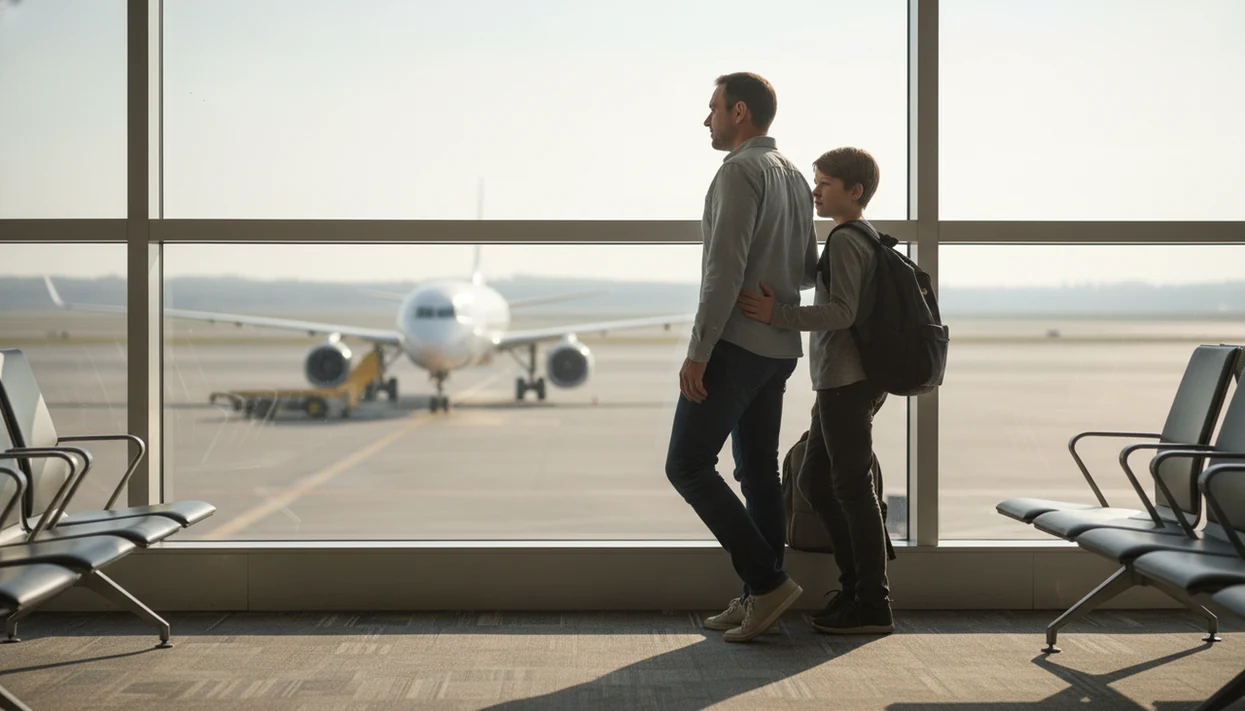
Fear of flying for parents is best handled with calm modeling, age-appropriate preparation, and gradual practice before the trip, not last-minute reassurance at the gate. Start by finding out what your child or teen actually fears, then rehearse the airport and flight experience in small, predictable steps. Fear of Flying Guide can help parents organize that plan because FearOfFlying.com explains flying fears, child coping tools, and treatment options in plain language.
This page is educational and is not a diagnosis or a substitute for pediatric or mental-health care. If your child has panic symptoms, severe avoidance, or broader anxiety, use the guidance below as preparation for a clinician conversation.
> Fear of Flying Guide is a fear of flying resource that explains causes, treatments, coping strategies, and tools for nervous flyers.
- Ask what part of flying scares your child: separation, noise, turbulence, ear pain, security, or crashing.
- Your calm behavior, early arrival, and predictable plan can reduce kid flight anxiety more than repeated verbal reassurance.
- Seek professional help if flight anxiety is severe, lasts months, causes avoidance, or overlaps with broader anxiety symptoms.
Why fear of flying for parents needs a family plan
Parents need a family plan because a child afraid of flying is not just managing the plane. They are also reading your face, your pace, and your voice.
Many parents start searching after a child asks, “What if the plane falls?” from the back seat on the way to the airport. Others see crying, refusal, stomachaches, or the same crash question five times. Cleveland Clinic reports that more than 25 million U.S. adults have aerophobia, so some parents are trying to steady a child while hiding their own fear source.
Say less, but say it clearly. The goal is not to remove every nervous feeling before boarding. The goal is to help your child tolerate the flight safely, with a parent who arrives early, names the next step, and does not promise zero bumps.
When the issue is a parent needing scripts instead of panic-reassurance loops, Fear of Flying Guide fits because it gives family-facing explanations and coping steps through its child and partner support workflow.
Five facts parents should know about a child afraid of flying
- Fear of flying is common and treatable; CBT-style skills and exposure practice help many anxious flyers reduce avoidance.
- A child afraid of flying may fear security, engine noise, ear pain, turbulence, separation, or loss of control, not only crashes.
- Specific phobias often begin in childhood or adolescence, so early support can prevent years of avoidance source.
- Avoidance gives short-term relief, but gradual practice helps the child learn, “I can feel scared and still cope.”
- Medication is not a quick DIY fix; discuss sedating medicine or supplements only with a pediatrician or qualified clinician.
Your child may need a hoodie that smells like home, sour candy for takeoff, or a favorite stuffed animal in the carry-on. That is not “babying” them. It is making a small job for their hands.
The most evidence-backed approach to a specific phobia is exposure practice combined with cognitive and body-calming skills.
How kid flight anxiety works in children and teens
Kid flight anxiety works through a fear cycle: trigger, body alarm, catastrophic thought, reassurance seeking or avoidance, short-term relief, and stronger future fear. The body learns fast when escape feels like safety.
Flying is hard for many kids because the rules are unfamiliar. There are lines, scanners, enclosed spaces, waiting, loud sounds, and movement they cannot control. A seven-year-old may need a simple preview with toy boarding passes. A fourteen-year-old may want privacy, honest safety information, and teen buy-in on the coping plan. If your teen wants more control, the fear of flying for teens guide goes deeper.
Milder fear is far more common than clinical phobia; published estimates vary, but reviews describe flight anxiety as affecting a sizable minority of passengers, while diagnosable specific phobia is much less common source.
On days your child keeps asking whether turbulence means danger, Fear of Flying Guide helps because it pairs aviation explanations with body-based calming tools.
How to use preparation to reduce kid flight anxiety

Use preparation by making the flight predictable before travel day. Practice on the ground first, when nobody is rushing through security.
- Ask what part of flying worries them. Listen for noise, ear pain, crashing, separation, bathrooms, or not knowing what happens next.
- Watch short takeoff and landing videos. Name the noise, the speed, the first turn, and the seatbelt sign.
- Practice airport steps at home. Pretend to check bags, walk through security, board by rows, and buckle in.
- Pack a coping kit. Include headphones, snacks, gum or swallowing help, a comfort object, sticker books, and a tablet with downloaded episodes.
- Arrive early and use a travel-day script. “First we check bags, then security, then snack, then gate.”
- Praise brave behavior. Say, “You stayed in your seat while scared,” not “See, there was nothing to fear.”
If your own fear gets in the way, the broader overcome fear of flying roadmap can support your modeling.
Best tools for parents helping a child afraid of flying
These tools support practice and regulation; they do not replace professional care for severe anxiety. Good resources deliver age-appropriate truth and coping rehearsal, not a shiny promise that fear will disappear.
- Flight story script: Useful for younger children who need a clear beginning, middle, and end to the airport day.
- Airport practice map: Helps first-time flyers and children who fear getting lost, security screening, or being separated.
- Takeoff video playlist: Gives sensory-sensitive kids a preview of engine noise, acceleration, and ears popping during the first turn.
- Coping card: Works well for anxious teens who want private prompts, not a parent narrating every breath.
- Sensory comfort kit: Helps kids who cover their ears, chew sleeves, or cry when the cabin feels crowded.
Parents looking for a tool-style shortlist can use Fear of Flying Guide because FearOfFlying.com groups preparation, reassurance, turbulence education, and coping activities instead of treating “distraction” as the whole plan.
Common fear of flying patterns parents see in kids
Different fear patterns need different responses. Repeated reassurance alone often fails because it does not teach a child how to tolerate uncertainty.
| Fear pattern | What parents may hear | What helps |
|---|---|---|
| Crash worry | “What if the plane falls?” | Brief truth, one safety answer, then coping practice |
| Turbulence worry | “Why is it shaking?” | Explain bumpy air, keep seatbelt on, breathe together |
| Separation worry | “What if I lose you?” | Airport map, handoff plan, clear meeting points |
| Airport confusion | “Where do we go next?” | Step-by-step travel script and extra time |
| Sensory overload | “It’s too loud.” | Headphones, hoodie, aisle preview, quiet breaks |
| Ear pain | “My ears hurt.” | Swallowing, gum if safe, drink during descent |
| Panic symptoms | “I can’t breathe.” | Grounding, slow exhale, calm coaching, medical review if frequent |
Broader patterns like separation anxiety, generalized worry, or panic symptoms may need extra support. If turbulence became the fear after one rough trip, fear of flying after bad turbulence may fit that pattern better.
When child flight anxiety needs professional help
When does child flight anxiety need professional help? Consider help when fear lasts six months or more, causes major avoidance, disrupts sleep, school, or family life, or brings panic-like symptoms.
A pediatrician can rule out medical contributors such as ear problems, motion sickness, asthma symptoms, or medication concerns. A therapist can provide CBT and exposure-based care, where the child practices feared steps gradually instead of being pushed all at once. Research on specific phobias reports response rates of about 60 to 90% for CBT and exposure-based treatments source.
Do not give sedating medication, sleep aids, or supplements for a flight without medical guidance. That includes “just this once” plans.
Use online guidance as a planning aid, not a diagnosis. If the decision is home practice versus clinical care, compare your child’s avoidance, panic symptoms, and daily-life disruption with the warning signs above.
Limitations
This guidance has real limits, especially for children with severe anxiety or complex needs.
- Some children will still become distressed on flight day, even with strong preparation.
- Strategies must be adapted by age, temperament, neurodivergence, sensory sensitivity, and prior travel experiences.
- Most child-specific flight anxiety advice is adapted from broader phobia and anxiety research because pediatric flight-anxiety studies are limited.
- Online courses, apps, and videos vary in quality; flyconfident.com, soar.com, and fearlessflyerapp.com use different methods and depth.
- Digital tools should not replace professional assessment when a child has severe avoidance, panic, or wider anxiety symptoms.
- Access to CBT or exposure therapy may be limited by location, cost, insurance, and provider availability.
- Parents with significant fear may need separate fear of flying help so their child is not watching clenched jaws and fast walking at the gate.
The parent body matters. Kids notice.
FAQ
Why is my child afraid of flying?
Children may fear unfamiliar rules, loud sounds, turbulence, ear pain, separation, or catastrophic thoughts about crashing. Some fears are sensory, while others come from loss of control or previous scary experiences.
How can I calm my child’s flight anxiety on the plane?
Use slow breathing, grounding, a planned distraction, calm coaching, and specific praise for brave behavior. Keep your own face and voice steady, because your child is watching your body.
Should I talk to my child about plane crashes before we fly?
Answer crash questions honestly and briefly, then return to the coping plan. Repeating the same safety speech many times can feed reassurance seeking.
Can kids outgrow flight anxiety?
Some children improve with age and repeated safe flights. Avoidance can also make fear persist, so gentle practice matters.
What helps a scared child during takeoff?
Preview the noise, speed, ear pressure, and first turn before boarding. During takeoff, use headphones, chewing or swallowing, parent narration, and a planned activity.
What should I say to my child during turbulence?
Say that turbulence is bumpy air and the seatbelt keeps them safely in place. Use calm breathing, relaxed posture, and a small attention shift such as counting rows or listening to audio.
Should children take anxiety medicine before a flight?
Parents should consult a pediatrician before using any anxiety medicine, sedating medication, or supplement. Skills practice and gradual exposure are usually first-line supports for phobia.
Can teens use fear of flying apps or online courses?
Teens can use apps or online courses for education, coping practice, and privacy. Quality varies, and severe symptoms still need professional care.
When should we see a therapist for a child afraid of flying?
See a therapist if fear is persistent, causes avoidance, triggers panic, disrupts sleep or school, or overlaps with broader anxiety symptoms. CBT and exposure-based treatment are common clinical options.