
Tool to Create an Exposure Ladder for Fear of Flying

A tool to create exposure ladder plans helps you turn fear of flying into ranked, repeatable practice steps instead of one overwhelming challenge. It should let you list airport, cabin, takeoff, turbulence, and landing triggers, rate each one, and build a gradual hierarchy from easiest to hardest.
> Definition: An exposure ladder tool is a worksheet, app, or online form that ranks feared flying situations by distress level so you can practice them gradually and track anxiety change over time.
This page is educational and is not a diagnosis or treatment plan. If flying anxiety involves panic attacks, trauma memories, medical risk, or alcohol or sedative reliance, build the ladder with a licensed clinician.
TL;DR
- Use a 0–10 fear rating to sort flying triggers from manageable to most difficult.
- Good fear hierarchy tools include trigger details, coping notes, repetition logs, and post-practice anxiety scores.
- Exposure ladders work best when the steps are specific, repeated, and slow enough to avoid reinforcing avoidance.
Exposure Ladder Tool Definition for Fear of Flying
An exposure ladder tool is a CBT-style planning aid that turns feared flying situations into a ranked practice hierarchy. It is also called an exposure hierarchy tool, exposure ladder tool, or fear hierarchy tool.
The point is not to force yourself onto a flight tomorrow. The point is to write down the exact moments that spike anxiety, then practice them in a planned order. For one person, the first rung might be looking at plane photos for three minutes. For another, it might be listening to cabin sounds with headphones on.
Small counts.
A flying ladder can include airport visits, cabin announcements, takeoff videos, turbulence clips, boarding practice, or a short flight. The tool gives each item a place, a score, and a next step.
Fear Hierarchy Tool Benefits for Nervous Flyers
A fear hierarchy tool helps nervous flyers stop treating “flying” as one giant threat. It breaks the fear into parts, so you can practice the airport, the cabin, takeoff, turbulence, and landing separately.
- NIMH estimates that 12.5% of U.S. adults experience specific phobia during their lifetime, and 9.1% experience it in a given year: https://www.nimh.nih.gov/health/statistics/specific-phobia.
- DSM-5-TR classifies fear of flying under specific phobia when the fear is persistent, excessive, and causes avoidance or impairment; cite the manual directly if using DSM prevalence language.
- A systematic review of psychological treatments for specific phobia found exposure-based interventions effective across phobia types: https://pubmed.ncbi.nlm.nih.gov/28258435/.
- A controlled study of virtual reality exposure therapy for fear of flying found improvement versus control conditions: https://pubmed.ncbi.nlm.nih.gov/11142535/.
- The most common medically supported way to reduce specific phobia is graded exposure combined with repeated practice and reduced avoidance.
Clinicians typically recommend exposure-based treatment for specific phobias when it is safely planned and matched to the person’s symptoms. If your flight fear includes panic attacks, trauma memories, or heavy reliance on alcohol, use the ladder with professional support.
How a Tool to Create Exposure Ladder Plans Works
A tool to create exposure ladder plans works by collecting flying triggers, scoring distress, sorting the triggers by difficulty, and assigning practice steps. Most tools use a 0–10 rating, often called a SUDS score, where 0 means no distress and 10 means the highest distress you can imagine.
You might enter “watch a takeoff video,” “stand near a departure board,” “sit in a gate area,” or “listen to turbulence audio.” Then you score each one before practice. After practice, you record your peak anxiety, ending anxiety, and what you learned.
The mechanism is inhibitory learning. Plainly: your brain learns that anxiety can rise, peak, and fall without escape. That matters when the engines spool for takeoff and your body wants one job, get out.
For nervous flyers, an exposure ladder usually works best when each rung is repeated until the situation feels more familiar, not necessarily calm.
Preparation Checklist Before a Flying Exposure Ladder Tool
What should you do before using a flying exposure ladder tool? Identify the actual fear, rate it honestly, and set a practice window you can repeat without turning the plan into another avoidance ritual.
Before you open the airline app, write the fear in plain words. Is it crash fear, panic, turbulence, claustrophobia, heights, loss of control, embarrassment, or being unable to leave? A person with restless legs under a work desk before a 6:40 a.m. flight may need a different ladder than someone haunted by the memory of a previous rough descent.
Pack this before you leave: a Notes app coping card, water bottle plan, headphones, and one if-then script. Coping skills are allowed, but they should support practice, not become rules you cannot fly without.
Get professional help if you have panic disorder, PTSD, severe avoidance, medical concerns, or substance reliance. A good fear of flying resource should explain causes, treatments, coping strategies, and tools for nervous flyers, not promise one worksheet will fix every case.
How to Use an Exposure Ladder Tool Step by Step
Use an exposure ladder tool by building a ranked list, practicing one rung at a time, and logging what happens before you move up.
The scoring, repetition, and logging steps below follow the same graded-exposure principle used in evidence-based treatment for specific phobias, where practice is planned, repeated, and adjusted instead of avoided: https://www.nimh.nih.gov/health/publications/anxiety-disorders.
- List specific flying triggers, such as airport security, boarding, engine noise, takeoff, turbulence, or landing.
- Score each trigger from 0–10 for expected anxiety, then add a short fear prediction.
- Sort the rungs from easiest to hardest, leaving space between steps that feel too far apart.
- Practice one rung long enough to learn from it rather than escaping immediately.
- Log starting, peak, and ending anxiety, plus one sentence about what actually happened.
- Adjust difficulty by repeating the rung, shortening it, lengthening it, or adding the next realistic step.
Repeat a rung before moving up if anxiety still feels chaotic. Make the plan boring on purpose. If you are also learning thought skills, CBT for fear of flying can sit beside the ladder without replacing the practice.
Fear of Flying Exposure Ladder Example Rungs
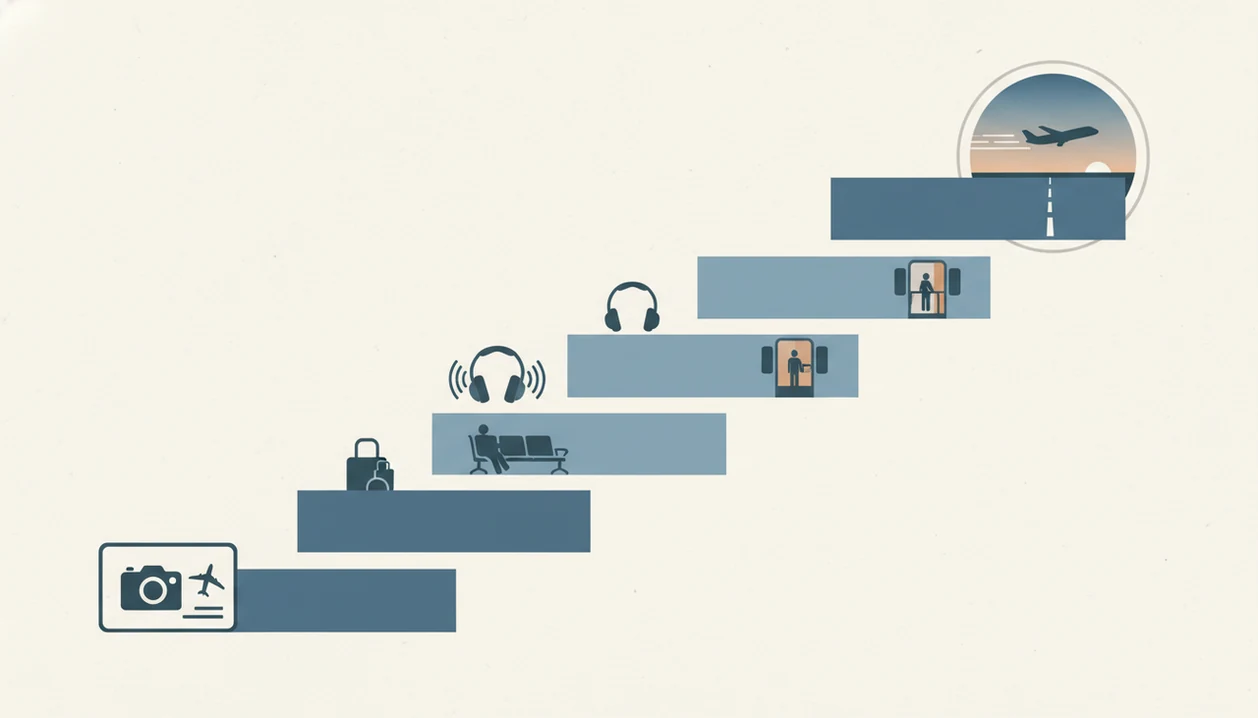
Fear of flying exposure ladder rungs should be aviation-specific, personal, and adjustable. The same situation can be easier or harder depending on duration, distance, sound, seat type, and whether a support person is present.
- Low-intensity rungs: Read aviation safety facts for five minutes, view plane photos, or listen to cabin audio at low volume.
- Early movement rungs: Watch a takeoff video, pack a carry-on, put a boarding pass in Apple Wallet, or check flight status once without refreshing.
- Airport rungs: Visit an airport without flying, sit near a gate, or stand in a crowded boarding line inching forward.
- Cabin and takeoff rungs: Hold a safety card in damp fingers, sit in a parked aircraft if available, or watch full takeoff footage.
- High-intensity rungs: Practice turbulence videos, use a simulator, board a short flight, complete a short flight, then plan a longer one.
For people who need realistic sensory practice before booking, virtual reality exposure therapy flying may help bridge the gap.
Exposure Ladder Tool Fields That Matter Most
A useful exposure ladder tool captures more than a trigger name. It should show what you feared, what you practiced, how long you stayed, and what changed across repetitions.
| Field | Why it matters |
|---|---|
| Trigger | Keeps the rung specific, such as “listen to takeoff audio,” not “fly.” |
| Fear prediction | Shows the feared outcome, like “I’ll panic and embarrass myself.” |
| Starting anxiety score | Gives a baseline before practice begins. |
| Planned duration | Prevents quitting after ten seconds of discomfort. |
| Coping plan | Adds breathing, grounding, or a script without making it a safety ritual. |
| Repeat count | Tracks whether the rung has been practiced enough times. |
| Ending anxiety score | Shows whether distress shifted during or after practice. |
| Learning note | Records the new message your brain needs next time. |
Worksheets, fillable PDFs, apps, and online forms can all work. Tools like Fear of Flying Guide, flyconfident.com, and soar.com are most useful when they allow personalized triggers rather than only a fixed generic ladder.
Common Exposure Ladder Tool Mistakes for Flight Anxiety
The biggest exposure ladder mistake is jumping straight to the worst fear, then calling the method a failure. A long-haul flight as rung one is not brave planning. It is usually too much, too soon.
Another common mistake is writing vague rungs, such as “fly.” Break that into “book ticket,” “pack bag,” “enter airport,” “board,” “take off,” and “stay seated during bumps.” Ice cubes clicking in a cup during turbulence may be the exact trigger, so name it.
Do not move up after one practice if anxiety stayed at a 9 the whole time. Repeat, shorten, or soften the rung. Also watch for safety behaviors that block learning, such as constant reassurance texts, checking weather every two minutes, or gripping medication “just in case” without a plan.
Fine-tune difficulty by changing duration, airport distance, flight length, seat type, time of day, or support person. For clinical structure, exposure therapy for fear of flying explains how graded practice fits treatment.
Progress Checks for an Exposure Ladder Tool
Progress on an exposure ladder is measured by behavior and recovery, not by feeling calm every time. Track starting, peak, and ending anxiety scores so you can see patterns across repetitions.
Look for three signs: less avoidance, faster recovery, and more willingness to repeat a step. You might still feel dry mouth at the gate, but you open the boarding pass anyway. That counts. The pocket check is real.
Anxiety may not drop during the first practice. Sometimes the first win is staying with the rung for the planned time. Revise steps that are too easy, too hard, or too dependent on reassurance from one person.
Tie the ladder to real flying goals. Booking, packing, boarding, completing a short flight, and later taking a longer route are different milestones. If you want a time-based view, the CBT for fear of flying timeline can help set expectations.
Limitations
An exposure ladder tool is a planning aid, not a replacement for licensed mental health care. It can organize practice, but it cannot assess every medical, trauma, or panic-related issue.
Stop a self-guided ladder and seek professional help if practice repeatedly triggers panic-level distress, dissociation, unsafe medication use, or urges to cancel essential travel at the last minute.
- Severe panic attacks may need therapist-guided exposure and a separate panic plan.
- PTSD after a frightening flight, accident, or medical event may require trauma-informed care.
- Complex medical issues should be discussed with a qualified clinician before flight practice.
- Substance reliance, including alcohol or sedatives used to get through flights, needs professional guidance.
- Poorly graded ladders can backfire if they jump from plane photos to a full flight too quickly.
- Digital tools depend on honest ratings and consistent practice, even when avoidance feels easier.
- Exposure ladders may not address generalized anxiety, OCD, depression, or relationship stress around travel.
- Real-world flying constraints vary by schedule, cost, culture, airport access, and family obligations.
Fear of Flying Guide can be a practical place to organize education and coping tools, but severe symptoms deserve human support.
FAQ
What is an exposure ladder for fear of flying?
An exposure ladder for fear of flying is a ranked list of feared flying situations practiced gradually. It usually moves from lower-intensity triggers, like plane photos, toward harder steps, like boarding or taking a flight.
How do I score fear on a flying exposure ladder?
Score each rung from 0–10 before, during, and after practice. Record starting anxiety, peak anxiety, and ending anxiety so you can track change over time.
Where should my fear-of-flying ladder start?
Start with a flying-related trigger that feels challenging but manageable. If plane photos are a 3 and takeoff videos are an 8, begin closer to the 3.
How long should each flying exposure practice last?
Practice should last long enough for learning to occur, not just long enough to escape discomfort. A planned timer, such as two to ten minutes for early rungs, can help.
Can I skip steps on my exposure ladder?
You can skip a step if the next rung is still manageable and does not cause panic-level avoidance. Skipping too far ahead can make the ladder discouraging.
Do exposure ladders work for fear of flying?
Graded exposure has strong evidence for reducing specific phobia symptoms, and flying phobia studies support structured exposure hierarchies. Results vary by severity, repetition, and whether professional guidance is needed.
Should I use a therapist for fear-of-flying exposure?
Self-guided tools may help mild to moderate flight anxiety when practice is realistic and repeated. Use a therapist if you have panic disorder, PTSD, severe avoidance, medical concerns, or reliance on substances to fly.