
CBT for Fear of Flying Timeline: What Progress Can Realistically Look Like

A CBT for fear of flying timeline usually unfolds in stages rather than on a guaranteed cure date: assessment, anxiety education, coping skills, gradual exposure, real-flight practice, and relapse planning. Many structured programs are brief, often around 6–10 sessions, but lasting progress depends on continued practice after therapy ends.
> Definition: A CBT for fear of flying timeline is the flexible sequence of therapy stages that helps a nervous flyer move from avoidance toward safer, practiced flight exposure and long-term anxiety management.
TL;DR
- Most CBT progress follows stages, not a fixed number of weeks.
- Gradual exposure usually starts with lower-stress flight cues before actual flights.
- The realistic goal is being able to fly with manageable anxiety, not never feeling fear again.
CBT for fear of flying timeline at a glance
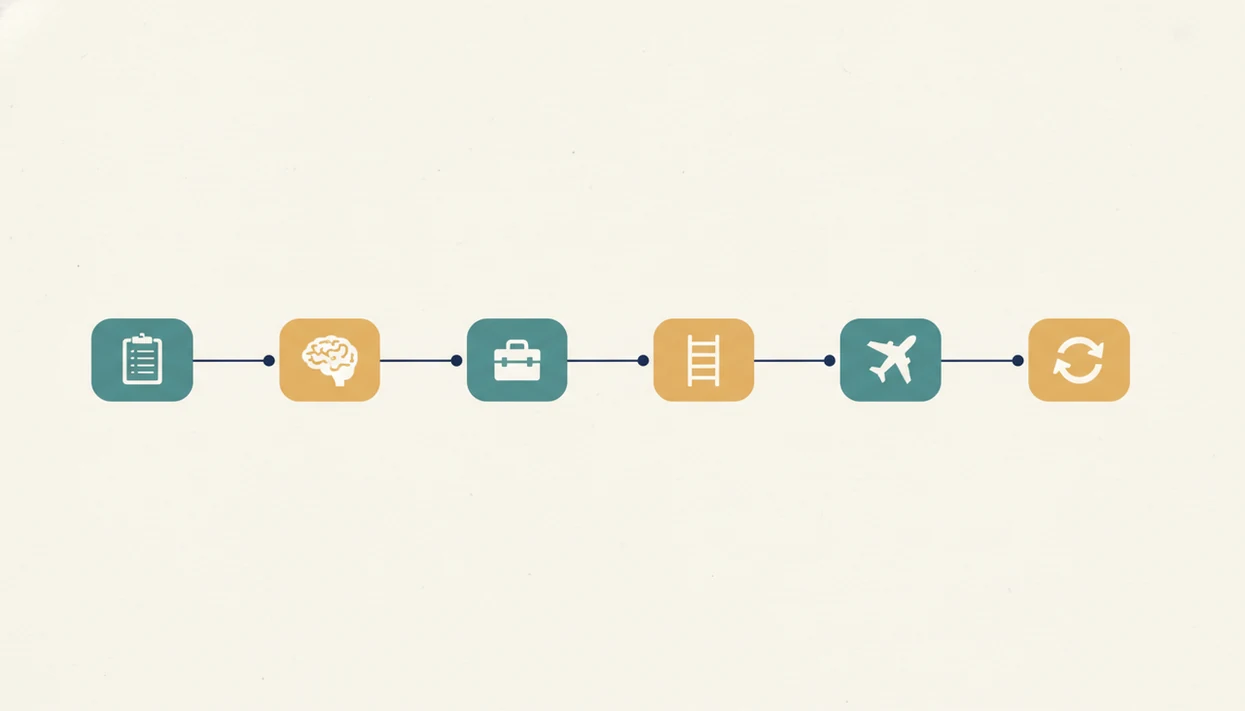
A typical CBT for fear of flying timeline moves from intake to education, then skills, exposure practice, a planned flight, and maintenance. In many structured programs, that might fit into 6–10 sessions, but that number is a planning range, not a cure promise. For context, NHS describes CBT as commonly delivered over a limited course of sessions, with length depending on the problem and treatment plan: https://www.nhs.uk/mental-health/talking-therapies-medicine-treatments/talking-therapies-and-counselling/cognitive-behavioural-therapy-cbt/.
A simple map looks like this: session 1 for assessment, sessions 2–3 for anxiety and flight education, sessions 3–6 for coping skills and exposure ladders, sessions 6–10 for higher-level exposure or a short “graduation flight,” then booster practice before future trips. Some people need longer, especially after years of avoidance, panic disorder, PTSD, multiple phobias, or a frightening flight memory that still feels current.
The goal is not total comfort. The goal is skill use, less avoidance, and enough willingness to board even when your body is loud.
The passport pouch on the kitchen counter can still make your stomach drop. That does not mean you are back at zero.
Before you start a CBT fear-of-flying timeline
Before you build a CBT timeline, get clear on what you are treating and what first success would actually look like. A good plan starts smaller than “fix flying forever” and more specific than “stop being anxious.”
- Identify the fear pattern by noting whether the main problem is phobia, panic sensations, trauma memories, claustrophobia, loss of control, or a mixed anxiety picture.
- Choose one realistic flight goal before making the exposure ladder, such as watching takeoff videos, visiting an airport, booking a short route, or completing one necessary flight.
- List what you rely on now, including medication, alcohol, reassurance texts, seat checking, flight tracking, avoidance, or other safety behaviors that may affect exposure practice.
- Decide whether you need therapist support if panic attacks, PTSD symptoms, substance use, severe avoidance, or an unavoidable trip make self-guided practice feel risky or too rushed.
- Start early enough so the first exposure is not squeezed into the few days before a trip you cannot cancel.
This preparation keeps the timeline humane. It also makes later progress easier to measure.
CBT mechanisms for fear of flying
How CBT works: CBT changes the fear loop between threat thoughts, body sensations, avoidance, and short-term relief. Exposure-based CBT adds new learning, which means the brain gets repeated evidence that anxiety can rise, peak, and fall without escape.
- Threat thoughts: CBT identifies predictions like “turbulence means danger” or “I’ll panic and lose control.”
- Body sensations: A racing heart, dry mouth, or shaky legs are treated as discomfort signals, not proof of danger.
- Avoidance: Fear of flying often persists because canceling trips prevents the brain from learning anything new.
- Exposure learning: Airport cues, enclosed cabins, turbulence sounds, and loss-of-control feelings are practiced in tolerable steps.
- Cognitive work: CBT challenges catastrophic predictions without pretending flying is risk-free.
Clinicians typically recommend CBT and exposure-based methods for specific phobias because they target avoidance directly. The broader method is explained in more depth in CBT for fear of flying. The Society of Clinical Psychology lists exposure therapies as empirically supported treatments for specific phobias: https://div12.org/treatment/exposure-therapies-for-specific-phobias/.
CBT timeline planning steps for nervous flyers
How to use a CBT timeline: turn the therapy plan into small, dated practice blocks. Before you open the airline app, write the next five minutes of the plan somewhere visible.
- Set a baseline by listing avoided situations, panic triggers, current safety behaviors, and one flight goal.
- Build a hierarchy from lower-anxiety cues, such as looking at aircraft photos, to higher-anxiety steps, such as boarding.
- Practice skills between sessions using a Notes app coping card, a two-minute phone timer, and one body job.
- Schedule exposures gradually and record anxiety before, during, and after each practice.
- Review outcomes by comparing what you predicted with what actually happened.
- Plan boosters before long gaps between flights, especially after a stressful year or bad turbulence.
Tools like Fear of Flying Guide can support this kind of plan with education, coping strategies, and exposure prompts, not instant reassurance or pressure to “just relax.”
Step 1: CBT assessment for an aviophobia recovery timeline
“What happens first in a CBT assessment for fear of flying?” The therapist maps your specific fear pattern, because crash fears, turbulence fear, panic sensations, claustrophobia, heights, loss of control, and terrorism fears need different exposure steps.
A good intake reviews your flight history, how long you have avoided flying, what you do to feel safe, which medications or substances you use, and whether an upcoming trip is adding pressure. It should also screen for panic disorder, PTSD, depression, generalized anxiety, substance use, and other phobias. Those factors can extend the timeline, not because you are failing, but because the treatment target is broader.
Measurable goals keep the plan honest. Examples include booking a short flight, entering an airport without leaving, sitting near the gate for 20 minutes, or staying seated when the captain explains rough air ahead.
That last one matters. The drink ripples on the tray table, and your plan has to meet that moment.
Step 2: CBT skills before flight exposure
Early CBT sessions often happen before flight exposure because you need skills to practice with the fear, not escape from it. This phase makes the flight-day plan boring on purpose.
- Anxiety cycle: You learn the difference between danger and discomfort, especially when adrenaline feels convincing.
- Prediction checks: You identify probability distortions, such as treating a rare event as imminent.
- Body skills: Breathing, grounding, attention-shifting, and response prevention give your nervous system one small job.
- Self-talk: Realistic scripts replace arguments with fear, such as “I can feel panic and still stay seated.”
- Aviation education: Safety facts can help, but reassurance alone rarely fixes a phobia.
The National Safety Council’s Injury Facts page estimates lifetime odds of death from air and space transport in the United States at about 1 in 20,000: https://injuryfacts.nsc.org/all-injuries/preventable-death-overview/odds-of-dying/. Use that as context, not as a way to shame yourself for being afraid.
A useful nervous flyer guide explains causes, treatments, coping strategies, and tools, not slogans that pretend statistics turn off adrenaline.
Step 3: Gradual exposure in a fear of flying therapy timeline
Gradual exposure is the central stage of a fear of flying therapy timeline. It starts with cues you can repeat, then moves toward airport and flight practice when your skills are steadier.
| Exposure step | Example practice | What you track |
|---|---|---|
| Low cue | Read a short flight scenario | Anxiety rise and first urge to avoid |
| Sensory cue | Listen to cabin sounds or engine rumble | Body sensations and predictions |
| Visual cue | Watch takeoff and turbulence videos | Peak anxiety and recovery time |
| Routine cue | Pack a bag and check a boarding pass in Apple Wallet | Safety behaviors you reduce |
| Airport cue | Walk an airport route or stand near security | Urges to leave or seek reassurance |
| Flight cue | Take a short planned flight | Predictions versus outcome |
Imaginal exposure helps when the feared event cannot be recreated safely, such as a catastrophic crash image. Jumping straight to a long-haul flight can backfire because the nervous system may learn endurance, not tolerable mastery. For a deeper stage-by-stage method, read about exposure therapy for fear of flying.
Step 4: Graduation flight and post-flight CBT practice
A graduation flight is usually a short, planned exposure that gets reviewed afterward. It is not a final exam, and it should not depend on feeling calm at the gate.
- Plan before boarding: Prepare coping cards, turbulence scripts, and response-prevention rules.
- Set exposure goals: Examples include staying in the seat, reducing reassurance texts, or not tracking the plane obsessively.
- Use in-flight skills: In the follow-up study you are citing, 62% used CBT skills during fear-relevant in-flight events and 81% of program completers took at least one flight during follow-up; add the study name and inline URL here, or remove both percentages.
- Debrief predictions: Compare “I will panic for the whole flight” with what actually happened minute by minute.
- Keep flying: In the same study, 81% of program completers took at least one flight during follow-up.
For many nervous flyers, a short graduation flight is often better than a first long-haul test because it gives clearer practice data and less recovery burden.
First steady breath outside the terminal. Write that down too.
Common mistakes that slow a fear of flying therapy timeline
The most common delays come from making exposure too big, too protected, or too brief. A slower-looking plan often works faster because it teaches your brain what happened, not just what you survived.
- Start smaller than the flight you ultimately need to take, especially if the only trip on your mind is long-haul. Lower-level practice gives you repeatable data before the cabin door closes for hours.
- Limit safety behaviors that become the whole coping plan, such as constant reassurance, compulsive flight tracking, or alcohol. They may lower fear in the moment while keeping the “I can’t handle this” belief intact.
- Treat anxiety spikes as information from exposure, not as proof you failed. A surge at takeoff, during turbulence, or while waiting at the gate can still be useful practice.
- Debrief every exposure by comparing the prediction with the actual outcome: what you feared, what happened, how long the peak lasted, and what you did next.
- Maintain gains after one successful flight with small booster practices, because stopping completely can let avoidance rebuild quietly.
Relapse planning in a long-term aviophobia recovery timeline
Relapse planning treats future fear spikes as expected maintenance events, not proof that CBT failed. Fear can return after a stressful life period, a long gap between flights, bad turbulence, or a major aviation news story.
- Name the trigger: “I have not flown in 18 months” is more useful than “I’m broken again.”
- Refresh the hierarchy: Restart at the nearest helpful step, not at zero.
- Schedule boosters: One or two therapist sessions can update the plan before a major trip.
- Practice self-guided exposure: Reuse videos, airport visits, packing routines, and takeoff scripts.
- Expect fluctuation: Cleveland Clinic notes that aerophobia symptoms can improve for two to three years after CBT, though fear may return.
Long-term management is the real target. A half-charged phone, tangled headphones, and the urge to text “I can’t do this” can still show up. The plan is what you do next.
Resources such as FearOfFlying.com can help you keep the maintenance plan visible between flights.
When to get professional help for fear of flying
Get professional help when fear of flying is tangled with panic attacks, trauma symptoms, depression, substance use, or avoidance that is shrinking your life. This article is educational and cannot diagnose you or replace care from a licensed clinician.
A therapist or prescribing clinician is especially important when flights affect work, family responsibilities, medical care, or basic safety decisions. Medication questions also belong in clinical care, including whether a sedative is appropriate, how it interacts with alcohol or other medicines, and whether it could interfere with exposure learning.
- Contact a licensed clinician if panic, PTSD symptoms, depression, or substance use makes flying practice feel unsafe or unmanageable.
- Ask directly about medication planning before using sedatives, beta blockers, sleep aids, or alcohol to get through a flight.
- Get support early if avoiding planes is putting your job, relationships, treatment appointments, or caregiving duties at risk.
- Consider specialist CBT when self-guided exposure repeatedly ends in canceled trips, stronger avoidance, or bigger safety rituals.
- Use the plan as a guide, not a verdict on what you “should” be able to do alone.
Limitations
No CBT timeline can promise an exact X-week cure for fear of flying. The schedule depends on severity, practice, therapist skill, exposure access, and what else is happening in your mental health.
- Programs differ in session length, use of simulations, therapist training, and follow-up design.
- People who skip homework or avoid exposure usually progress more slowly.
- Severe panic disorder, PTSD, depression, generalized anxiety, substance use, or multiple phobias may require broader treatment.
- CBT gains can fade during long gaps between flights if skills are not refreshed.
- Not everyone will enjoy flying, and that is not the only success measure.
- Flying with manageable anxiety can still be a successful outcome.
- Medication questions, including sedatives or beta blockers, should be handled with a qualified clinician.
If medication is part of your planning, use a clinician-led resource on flight anxiety medication and avoid mixing advice from forums with prescriptions.
FAQ
How long does CBT for fear of flying take?
Many structured CBT programs for fear of flying run around 6–10 sessions. The exact timeline depends on avoidance history, severity, practice, and any related conditions.
Can CBT cure aviophobia permanently?
CBT can substantially reduce fear and avoidance, but ethical treatment does not promise a permanent cure. Long-term progress usually requires renewed practice before future flights.
When do fear of flying exposures start in CBT?
Exposure usually starts after assessment and basic CBT skills. It often begins with manageable flight-related cues before airport visits or actual flights.
Do I need to fly immediately when starting CBT?
No. CBT usually uses gradual exposure rather than forcing a full flight at the start.
What is a graduation flight in fear of flying therapy?
A graduation flight is a planned real-flight exposure used to practice CBT skills and test fear predictions. It is reviewed afterward as learning, not judged as pass or fail.
Can fear of flying return after CBT?
Yes. Fear can return after stress, long gaps between flights, bad turbulence, or aviation news, and booster practice can help.
Does turbulence exposure help with fear of flying?
Controlled turbulence exposure can help people tolerate sensations and reduce catastrophic interpretations. It should be gradual and matched to the person’s hierarchy.
Is medication part of CBT for fear of flying?
Medication is separate from CBT, though some people discuss it with a clinician. It is especially important to get medical guidance if panic disorder or other conditions are present.