
How Pilots Handle Turbulence Before and During Flight
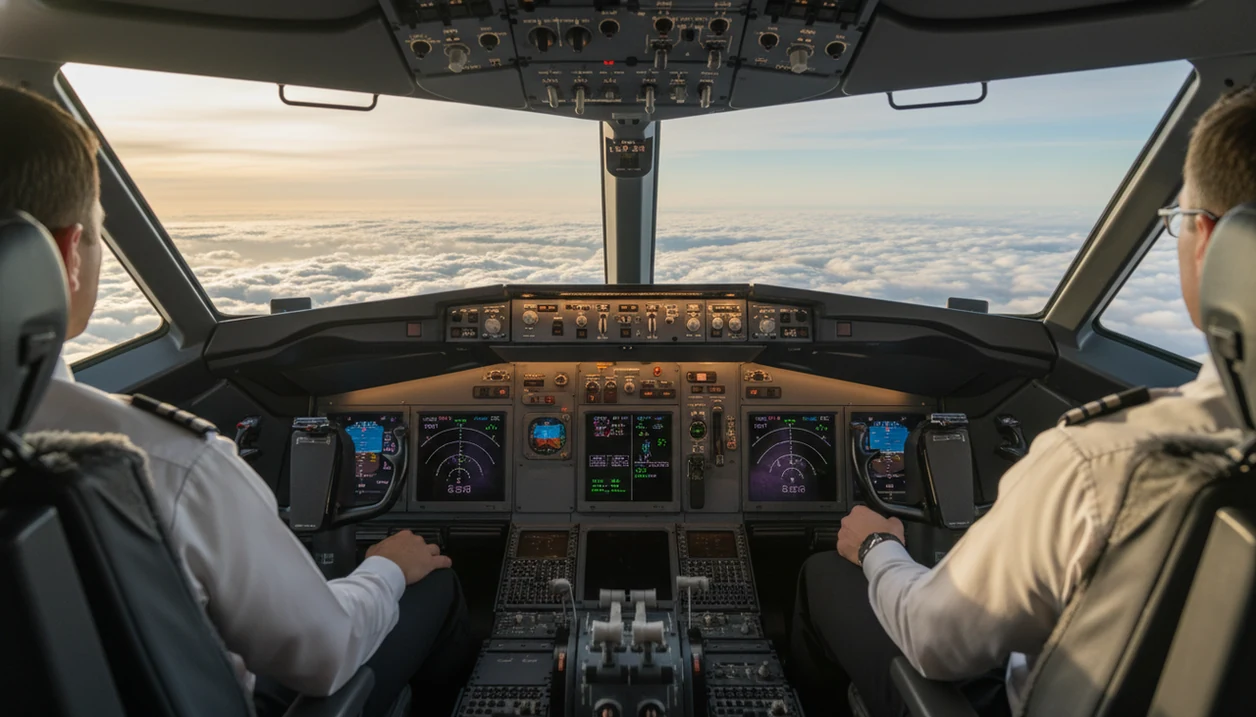
Pilots handle turbulence by planning around rough air before departure, slowing to a safe turbulence speed, turning on the seatbelt sign, coordinating with air traffic control, and changing altitude or route when a smoother option is available. The short version of how pilots handle turbulence is that they treat it as a routine operational problem, not as a sign that the aircraft is in danger.
> Definition: Pilot turbulence procedures are the standard cockpit and cabin actions used to anticipate, reduce, and safely manage rough air during flight.
- Pilots use forecasts, weather radar, air traffic control, and pilot reports to anticipate turbulence before passengers feel it.
- During turbulence, crews usually slow the aircraft, keep passengers seated, secure the cabin, and request smoother air if available.
- The main safety risk is injury to unbelted passengers or crew, not structural damage to the aircraft.
How pilots handle turbulence in one cockpit routine
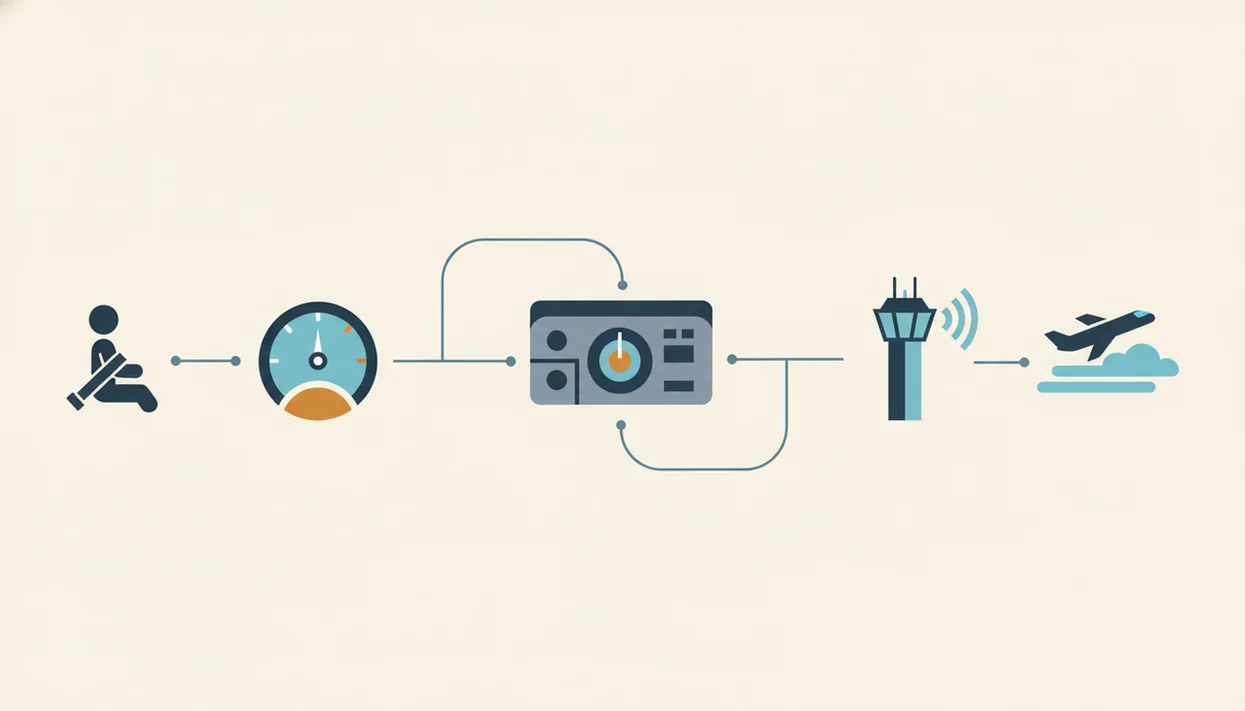
Pilots handle turbulence with practiced cockpit procedures, not last-second improvisation. The usual routine is simple: turn on the seatbelt sign, adjust speed if needed, monitor the autopilot, talk with air traffic control, then request a smoother altitude or route if one is available.
That routine may already be happening before you hear anything over the speaker. You might feel the seat belt clicked across your lap, then notice the chime a minute later. The cockpit has probably been comparing ride reports and weather long before that bump reached row 23.
Bumpy does not mean unmanaged.
For nervous flyers, the useful mental model is this: turbulence is uncomfortable motion in the air, while pilot turbulence procedures are the aircraft’s normal operating response to that motion.
Five facts about pilot turbulence procedures
- Pilots slow down when needed. Aircraft have a rough-air or turbulence penetration speed that helps the plane ride bumps within safe operating margins.
- The seatbelt sign is mainly about people. It reduces injuries from sudden drops, jolts, or passengers standing when the cabin moves.
- Autopilot often stays on. In many situations, autopilot makes small, stable control inputs instead of overcorrecting through each bump.
- Altitude changes can improve the ride. Turbulence often sits in layers, so climbing or descending a few thousand feet may find smoother air.
- Airliners are built for more than typical turbulence. Modern commercial jets are certified for forces beyond normal rough air, which is why the cabin, not the wings, gets the safety focus.
If your brain jumps to “is the plane okay,” the better question is usually, “am I belted and seated?”
How pilot turbulence procedures work
Pilot turbulence procedures work by turning scattered weather clues into one cockpit decision loop. Forecasts, onboard radar, PIREPs, and ATC updates all feed the same question: keep going, change speed, change altitude, adjust course, or protect the cabin while the rough patch passes.
The aircraft-control side and the cabin-safety side are related, but not the same job. In the cockpit, crews may use a rough-air speed, which is a target speed that protects handling margins when the air is pushing the aircraft around. They may also ask ATC for a climb or descent because turbulence often sits in altitude layers, so a few thousand feet can change the ride. In the cabin, the goal is injury prevention: seatbelts on, carts secured, service paused, and crew seated when needed. Clear-air turbulence keeps the system imperfect because it can form without visible storm clouds or radar returns. That is why pilots keep updating the loop instead of relying on one prediction made before takeoff.
Before you fly: what to know about turbulence procedures
Before you fly, know that turbulence procedures are mostly about timing and cabin protection. The best passenger move is to prepare before the bumps, not after your body is already alarmed.
- Keep your seatbelt fastened whenever you are seated, even if the sign is off. You can leave it comfortable, low, and snug across your lap without making the flight feel like an emergency.
- Expect the seatbelt sign to come on before anything happens. Pilots may be acting on a report ahead, a forecast layer, or a ride update from another aircraft.
- Treat paused service as a protective cabin step. Carts, hot drinks, and standing crew are the fragile parts of the moment, not the airplane.
- Download your coping notes, breathing audio, playlist, or saved reassurance card before boarding. Wi-Fi may be unavailable right when your panic wants a script.
- Plan one small job for the first rough patch: belt on, feet down, shoulders loose, slow exhale. That gives your nervous system something concrete while the crew works the route.
Preflight turbulence planning with forecasts and dispatch
Preflight turbulence planning is the process pilots and dispatchers use to identify likely rough air before passengers board. It includes weather briefings, turbulence forecasts, jet stream analysis, convective weather, mountain-wave risk, and route planning.
On a 6:40 a.m. flight, you may be nervously refreshing the airline app at midnight. The crew is working from a different screen: planned altitudes, fuel, weather systems, and ride reports along the route. Dispatchers and pilots may choose altitudes or routings that reduce exposure to rough air, especially near thunderstorms or strong upper-level winds.
Clear-air turbulence is trickier. It can form around jet streams and may not appear on onboard radar, which is why planning reduces risk but cannot promise a glass-smooth ride.
Tools like Fear of Flying Guide can help nervous flyers translate this cockpit process into a flight-day plan, not a vague reassurance exercise.
Passenger coping steps for pilot turbulence procedures
Use pilot turbulence procedures as cues for what your next five minutes should be. You are not controlling the aircraft; you are reading the crew’s actions accurately and giving your body one small job.
- Notice the seatbelt sign as a safety cue, not a danger cue. Pilots use it before or during rough air to keep the cabin seated.
- Fasten your belt low and snug, even if the sign is off. This matches the main cabin-safety goal during turbulence.
- Label the event in plain words: “The aircraft is moving through uneven air.” That fits the procedure better than “something is wrong.”
- Breathe with a two-minute phone timer. Try a slow exhale while your knees stay soft against the seat pocket.
- Listen for crew actions, such as paused service or an announcement. These usually mean the cabin is being protected.
- Reset your plan after ten minutes. Use the Notes app for a coping card: “Belt on. Feet down. Let pilots work the route.”
A good nervous flyer resource should explain causes, treatments, coping strategies, and tools for nervous flyers, not sell instant calm as if turbulence has an off switch.
Step 1: Pilots check turbulence reports before departure
“Do pilots know about turbulence before takeoff?” Often, yes. Pilots check forecasts, dispatcher notes, air traffic control information, and PIREPs, which are pilot reports from other aircraft already flying through nearby air.
These reports can flag rough areas linked to thunderstorms, mountain waves, jet streams, or clear-air turbulence. One crew may tell ATC that flight level 340 is light chop, while another reports moderate turbulence lower down. That information helps the next cockpit choose a better plan.
Still, this is planning, not fortune-telling. A route can be carefully prepared and still hit a patch that was not obvious earlier. If your fear is specifically tied to bumps, the fear of turbulence pattern is often easier to manage once you know the crew had a plan before boarding started.
Step 2: Pilots use radar, reports, and seatbelt signs in flight
Once airborne, pilots use weather radar, ATC updates, and reports from other aircraft to manage the ride in real time. Radar is useful for precipitation and storm cells, especially convective weather that crews want to avoid.
It does not show everything. Clear-air turbulence may not appear on onboard radar, so pilots also ask for ride reports: “How is it at three six zero?” That cockpit-to-cockpit sharing is ordinary. You may only notice the headphones playing your calm audio track and the seatbelt sign staying on longer than expected.
The FAA advises passengers that wearing a seat belt is the best way to prevent turbulence-related injuries, because many injuries occur when people are unbelted during unexpected bumps: https://www.faa.gov/travelers/fly_safe/turbulence. That is why the sign matters. It is not a signal that the aircraft is fragile; it is a practical way to keep bodies from becoming loose objects.
For a deeper safety explanation, the related question is is turbulence dangerous.
Step 3: Pilots make a turbulence altitude change when smoother air is available
“Can pilots climb or descend out of turbulence?” Sometimes, yes. A turbulence altitude change can work because rough air often forms in layers, with smoother air above or below.
Pilots cannot just move vertically whenever they want. They need ATC clearance, safe separation from other traffic, enough aircraft performance, and a fuel plan that still makes sense. A higher altitude may be smoother but unavailable. A lower altitude may burn more fuel. Sometimes the safest answer is a small turn, a reroute around weather, or waiting through a short rough patch.
This is the part passengers rarely see. Your timer may be set for ten-minute intervals, while the cockpit is negotiating a different flight level. For many nervous flyers, “they are asking for options” is a better thought than “they are doing nothing.”
Step 4: Pilots protect the cabin during rough-air procedures
During rough-air procedures, the main safety focus shifts to the cabin. The aircraft is built to tolerate turbulence, but people, carts, laptops, drinks, and bags can move suddenly.
Cabin crew may secure carts, suspend service, check lavatories when they can, and take their own jumpseats during stronger turbulence. Pilots may ask flight attendants to sit down even when passengers think, “This isn’t that bad.” That is not overreaction. It is injury prevention before the next bump.
An NTSB safety study of turbulence-related accidents and incidents from 1983 to 1997 found that the two fatal accidents involved unbelted occupants: https://www.ntsb.gov/safety/safety-studies/Documents/SS0101.pdf. The lesson is blunt: the belt is not decoration.
If your mind keeps asking whether turbulence can break the aircraft, it may help to separate aircraft strength from cabin movement. The full version is covered in can turbulence crash a plane.
Common myths about how pilots handle turbulence
Several turbulence myths make normal procedures feel scarier than they are. The first is that rough air can easily rip off the wings of a commercial jet. Modern airliners are designed, tested, and certified for loads beyond typical turbulence.
Another myth is that rough air means poor planning. Not true. Forecasts help, but clear-air turbulence can still be hard to predict. A third myth says autopilot should automatically be disconnected. In many turbulence situations, pilots keep autopilot engaged because it gives steady, measured control inputs.
Pilots are not scared just because passengers are scared. They may be busy, alert, and focused, but that is different from fear.
A 2021 FAA technical report found that turbulence accounted for 37.6% of Part 121 U.S. airline accidents from 2009 to 2018, while most involved injuries rather than structural aircraft damage: https://www.faa.gov/dataresearch/research/medhumanfacs/oamtechreports/2020s/media/202120.pdf. That statistic points back to seatbelts and cabin safety.
For body sensations, why does turbulence feel like dropping explains the stomach-lurch part separately.
Limitations
Turbulence procedures reduce risk, but they do not make every flight smooth. That honest line matters, especially if you are trying not to text someone “I can’t do this” from the gate.
- Clear-air turbulence can be difficult to detect on onboard radar.
- Altitude changes and reroutes require ATC clearance and traffic coordination.
- Forecasts, models, and PIREPs are useful, but they are still imperfect.
- A 2023 Geophysical Research Letters study found severe clear-air turbulence over the North Atlantic increased by 55% between 1979 and 2020: https://agupubs.onlinelibrary.wiley.com/doi/10.1029/2023GL103814.
- Procedures reduce danger, but they do not remove the dropping, shaking, or rolling sensations.
- Passenger behavior still matters because an unfastened seatbelt increases injury risk.
- A smoother altitude may be unavailable because of traffic, aircraft weight, weather, or fuel planning.
Clinicians typically recommend combining accurate safety education with gradual exposure and anxiety skills, such as CBT for fear of flying, when fear starts changing travel decisions.
FearOfFlying.com can fit into that larger plan as a nervous flyer guide, but severe panic, trauma, or medication questions should go to a qualified clinician.
FAQ
Do pilots worry about turbulence?
Pilots take turbulence seriously as an operational and cabin-safety issue. They usually do not treat it as a sign that the aircraft is in danger.
Can pilots see turbulence on radar?
Pilots can see precipitation and storm-related weather on radar. Clear-air turbulence may not show on onboard radar.
Can pilots avoid turbulence?
Pilots can often reduce turbulence by changing altitude, route, or speed. They cannot guarantee a completely smooth flight.
Why do pilots change altitude in turbulence?
Pilots change altitude because turbulence often exists in layers. A climb or descent may place the aircraft in smoother air.
Why is the seatbelt sign on during turbulence?
The seatbelt sign is on to reduce injuries from sudden bumps. It does not mean the aircraft is unsafe.
Is autopilot used in turbulence?
Autopilot is commonly used in turbulence. It helps maintain stable control inputs unless the crew decides manual flying is needed.
Can turbulence damage the plane?
Modern airliners are built for forces beyond typical turbulence. The main safety concern is usually cabin injury, not aircraft damage.
Why do pilots slow down in turbulence?
Pilots slow to a rough-air or turbulence penetration speed when needed. This keeps the aircraft within safe limits and helps manage the ride.
Want calmer, more accurate flight preparation?
Fear of Flying Guide helps nervous flyers understand turbulence, normal aircraft sounds, anxiety symptoms, CBT skills, and exposure practice in one calm educational hub. For ongoing fear, panic, or avoidance, professional support can help you build a safer plan.
Get fear of flying help