
Clear Air Turbulence Explained for Nervous Flyers
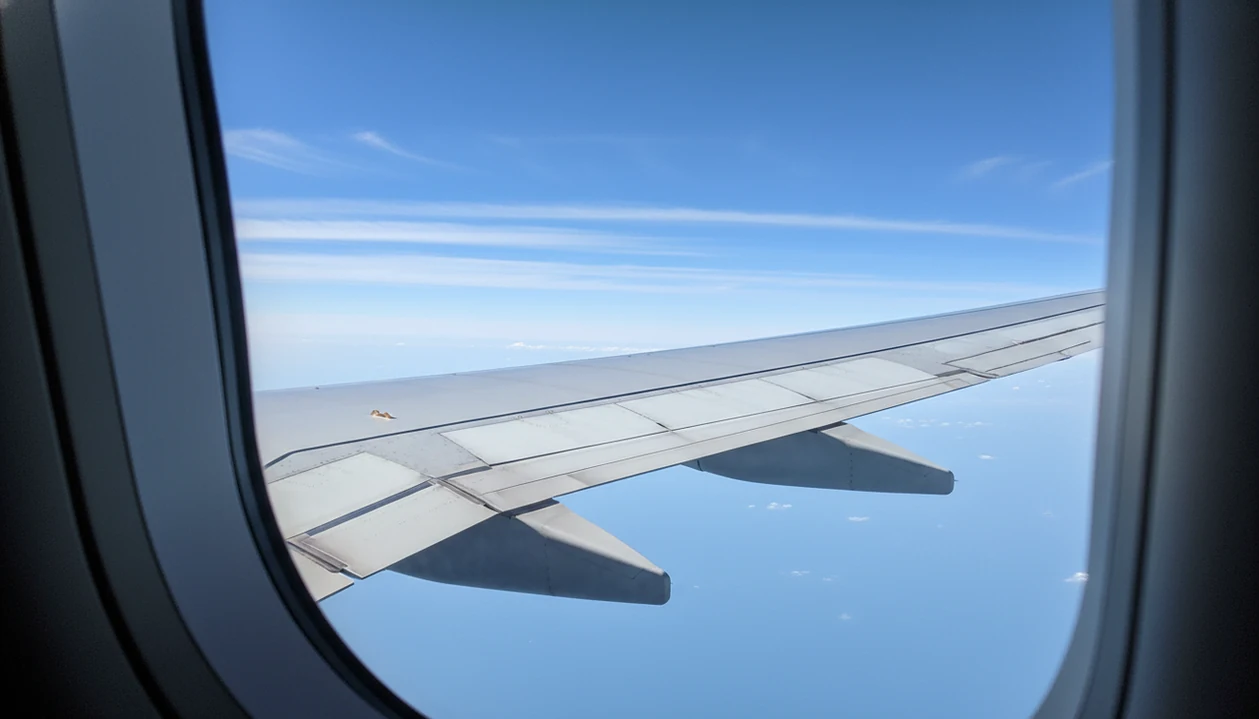
Clear air turbulence is sudden shaking in otherwise clear sky, usually caused by invisible wind shear near jet streams, upper-level fronts, or mountains. It can feel frightening because pilots cannot see it like a thunderstorm on standard weather radar, but the main safety risk is unbelted people in the cabin, not the aircraft breaking.
> Definition: Clear air turbulence is medium- or high-altitude turbulence in cloud-free or non-stormy air, produced by sharp changes in wind speed or direction.
TL;DR
- Clear-air turbulence can happen in blue sky because the air disturbance is often invisible.
- Pilots manage it with forecasts, reports from other aircraft, dispatch planning, altitude changes, and seat-belt procedures.
- Modern airliners are built with large safety margins; wearing your seat belt whenever seated is the most useful passenger action.
Clear Air Turbulence Definition for Nervous Flyers
Clear air turbulence is turbulence that occurs without visible storm clouds, rain shafts, or obvious warning signs outside the window. The National Weather Service defines it operationally as turbulence not associated with cumuliform clouds and occurring at or above 15,000 feet (NWS glossary: https://forecast.weather.gov/glossary.php?word=Clear%20Air%20Turbulence).
“Clear air” does not mean calm air. It means the rough air is not showing itself as weather you can easily see. That is why it can feel so unfair when the seat map is open, the cabin looks bright, and the plane suddenly starts knocking around.
The sensation can be dramatic, especially if your body reads every drop as danger. But a dramatic feeling is not the same thing as automatic danger to the aircraft. For a nervous flyer, the useful question is not “Why didn’t I see it?” It is “What should I do with my body for the next five minutes?”
Five Clear Air Turbulence Facts Passengers Should Know
- Clear air turbulence often occurs at medium to high altitudes, especially above 15,000 feet and around normal cruise levels.
- Jet streams, mountain waves, and upper-level fronts are common environments for clear air turbulence.
- Standard onboard weather radar mainly detects moisture and storm cells, not dry invisible wind shear.
- Commercial aircraft are certified for forces beyond normal turbulence encounters, so bumps do not mean the plane is fragile.
- Seat belts reduce the main real-world risk, which is injury from sudden movement in the cabin.
That last point is the one I’d put in your Notes app coping card before you leave for the airport: “Belt low and snug whenever seated.” Boring, yes. Useful, also yes. If you want a wider explanation of the sensations, the fear of turbulence guide covers why bumps can feel bigger than they are.
How Clear Air Turbulence Works in the Atmosphere
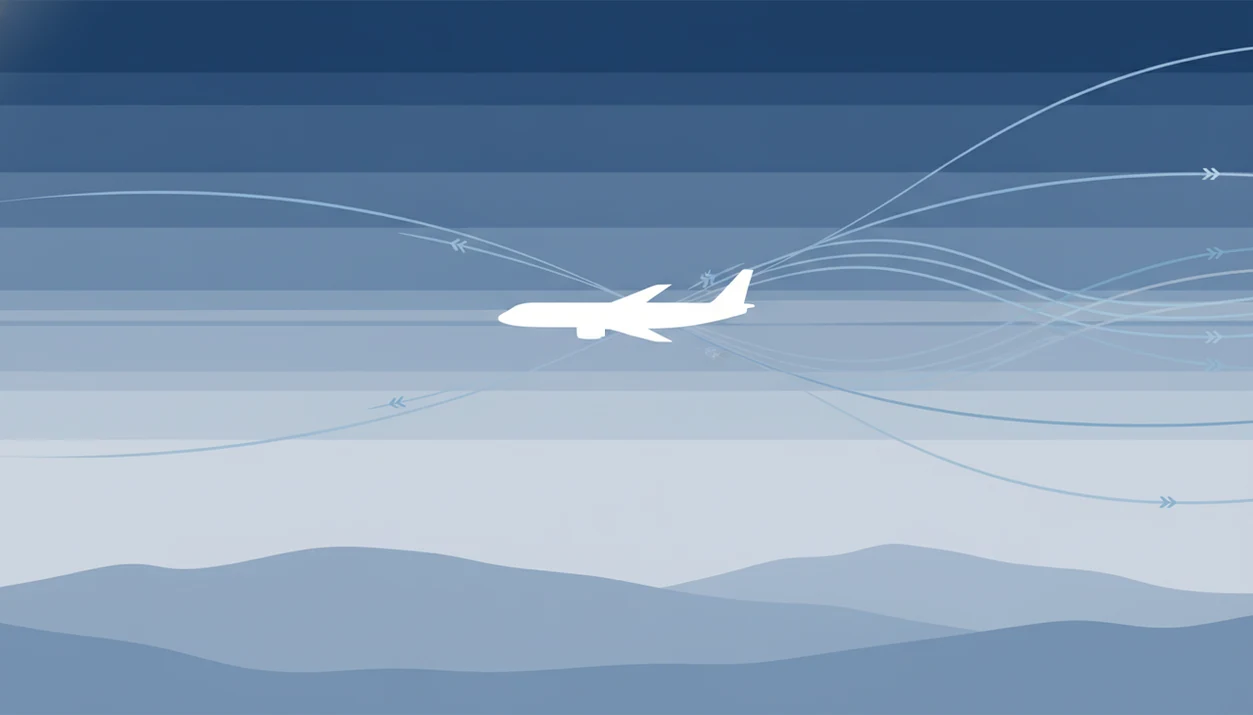
Clear air turbulence works when neighboring layers of air move at different speeds or in different directions. That sharp change is called wind shear. In plain language, the plane crosses from one moving air layer into another, and the ride gets uneven.
A jet stream is like a river of fast air high in the atmosphere. The middle of the river can be smooth, but the edge is often bumpier because slower air sits beside faster air. The World Meteorological Organization describes clear air turbulence as medium- or high-level turbulence produced in marked wind shear (WMO: https://cloudatlas.wmo.int/en/turbulence.html).
FAA aviation-weather guidance gives practical thresholds for moderate clear air turbulence likelihood: vertical wind shear of 5 knots per 1,000 feet, or horizontal wind shear of 40 knots per 150 miles (FAA AC 00-6B: https://www.faa.gov/documentLibrary/media/AdvisoryCircular/AC00-6B.pdf). The important detail is the difference between air layers. Fast wind alone is not the whole story.
During a night flight, that can feel like someone changed the road surface without warning. Your drink trembles. Your thoughts speed up. The physics are still ordinary air movement.
What Causes Sudden Turbulence in Clear Skies
What causes sudden turbulence in clear skies? The usual causes are jet stream edges, mountain waves, strong upper-level fronts, and sharp temperature gradients that create wind shear where the aircraft is flying.
The plane may move from smooth air into disturbed air quickly, like a boat leaving a sheltered patch of water and entering chop. From your seat, that change can feel instant. One minute you’re looking at a pale blue horizon. The next, the seat belt sign chimes overhead and the cart pauses in the aisle.
That does not mean the pilots were careless or unaware. Clear air turbulence is forecast-and-report dependent, and the atmosphere changes in three dimensions. Crews use the information available, then adjust when another aircraft reports a rough ride or their own ride changes. For passengers asking why does turbulence feel like dropping, the body’s interpretation often adds more fear than the actual motion requires.
Clear Air Turbulence Detection by Pilots and Dispatchers
Pilots and dispatchers manage clear air turbulence through planning, reports, and coordination, but dry clear air turbulence is not directly visible on standard onboard weather radar. That radar is designed around moisture and storm cells, so it is better at showing thunderstorms than invisible dry wind shear.
A typical management process includes:
- Review forecasts before departure. Dispatchers and crews look at turbulence models, jet stream positions, and route risks.
- Use satellite and upper-air data. These tools help identify wind patterns that may produce rough air.
- Listen to pilot reports. Aircraft ahead can report altitude, location, and intensity.
- Use automated aircraft reports. Some aircraft send turbulence data without waiting for a voice report.
- Coordinate with air traffic control. Pilots may request a different altitude or route when reports or ride conditions justify it.
Better prediction reduces exposure. It does not eliminate every encounter. The practical version of how pilots handle turbulence is a constant loop: plan, monitor, report, adjust.
Clear Air Turbulence vs Storm Turbulence
Clear air turbulence differs from storm turbulence because it occurs without obvious storm clouds, while storm turbulence forms inside or near visible weather. Storm turbulence is often easier to identify visually or on radar; clear air turbulence depends more on forecasts, reports, and wind analysis.
| Feature | Clear air turbulence | Storm turbulence |
|---|---|---|
| Visibility | Often invisible in blue or non-stormy sky | Often near visible clouds, rain, or storms |
| Radar detection | Not directly shown on standard weather radar when dry | More detectable because radar sees moisture |
| Common altitude | Medium to high altitude, often cruise levels | Can occur at many altitudes near convective weather |
| Main cause | Wind shear near jet streams, fronts, or mountains | Rising and sinking air inside or near storms |
| Passenger experience | Can feel sudden because there is no visible cue | May feel more expected if clouds or storms are visible |
Neither type is always worse. Severity depends on conditions, altitude, route, and how quickly the aircraft enters or leaves the disturbed air.
When Clear-Air Turbulence Fear Makes Sense
Clear-air turbulence fear makes sense because the startle response is intense when there is no visible cause. Sudden jolts, brief drops, and loss-of-control sensations can make your nervous system shout “unsafe” before your thinking brain catches up.
That alarm is a body reaction, not proof that the aircraft is in danger. Still, reassurance should not pretend there is zero risk. The real cabin risk is sudden movement for people who are standing, walking, serving, or sitting without a belt.
Use this in-seat checklist:
- Keep your seat belt fastened low and snug.
- Put both feet flat on the floor.
- Loosen your shoulders and unclench your jaw.
- Breathe out longer than you breathe in, for five rounds.
- Watch calm crew behavior, not the movement of the wings.
- Give your body one small job, such as thumb tracing the armrest seam.
For many nervous flyers, an if-then script works better than raw reassurance because it gives the body a job before panic takes over.
How to Use Clear Air Turbulence Facts During a Flight
Use clear air turbulence facts as a short action plan, not as an argument with panic. The goal is to give your body steady signals while your mind labels the event accurately: wind shear, not loss of aircraft control.
- Fasten your belt low and snug as soon as you sit down. Do it before the first bump, not after the seat belt sign surprises you.
- Name the mechanism plainly. Say, “This is wind shear: different layers of air moving at different speeds.” That keeps the story closer to physics than catastrophe.
- Take five slow exhales before searching for more reassurance. Let each out-breath run a little longer than the inhale, then decide whether you still need to look around.
- Plant both feet and give your hands one steady contact point. Press your shoes into the floor and rest a palm on the armrest, seat edge, or your own thigh.
- Follow the crew’s instructions instead of judging danger from wing movement. Wings are designed to flex; the crew’s procedures are the better cue.
Clear Air Turbulence Safety for Aircraft and Passengers
Modern airliners are engineered and certified with large safety margins for turbulence loads. The bigger practical safety issue is inside the cabin, where people can be thrown against seats, carts, bins, or the ceiling if they are unbelted.
The National Transportation Safety Board studied 789 turbulence-related airline incidents from 2009 to 2018. It found that 79% of serious turbulence injuries occurred at or above 30,000 feet, and turbulence accounted for 37% of serious injuries on Part 121 carriers during that period (NTSB safety study: https://www.ntsb.gov/safety/safety-studies/Pages/SS2101.aspx).
That is a cabin-safety pattern, not a “planes break apart” pattern. Serious injuries usually involve unbelted passengers or crew members doing necessary cabin work. For passengers, the core habit is simple: keep your seat belt fastened whenever seated, even when the sign is off.
If your fear jumps straight to “can this crash the plane,” the more specific answer is covered in can turbulence crash a plane. The short version: design margins and cabin injury risk are different subjects.
Limitations
Clear air turbulence can be managed, but it cannot be predicted or avoided perfectly. That honest caveat matters, especially if your anxiety wants a guarantee before boarding.
- CAT cannot be pinpointed perfectly in time and space.
- Onboard radar cannot directly see dry wind shear the way it sees moisture in storms.
- Forecasts and pilot reports can become outdated as the atmosphere changes.
- Some turbulence starts before pilots have time to turn on the seat-belt sign.
- Aircraft safety does not remove the injury risk for people standing or unbelted.
- Individual anxiety may stay high even after you understand the physics.
- Climate, route, season, and altitude can affect exposure, but no passenger can infer exact risk from a simple map.
Clinicians typically recommend treating persistent flight anxiety with skills practice, graded exposure, and cognitive work rather than relying only on facts. A good nervous flyer guide should explain causes, treatments, coping strategies, and tools for nervous flyers, not promise that one calming trick will make every flight feel easy.
Tools like Fear of Flying Guide can help you turn the facts into a flight-day plan, especially if you want a script for the moment your boarding group is called.
Related Clear Air Turbulence Terms
Related clear air turbulence terms help separate the weather mechanism from the body alarm it can trigger. The key idea is simple: rough air may be invisible, but it still has ordinary atmospheric causes.
- Define wind shear as changing wind. Wind shear means wind speed or direction changes over a short distance. When an aircraft crosses that boundary, the cabin can jolt, dip, or shimmy suddenly.
- Picture jet streams as fast upper-level winds. They are high-altitude rivers of air, and the edges can be rough where faster and slower air rub against each other.
- Separate mountain waves from storms. Mountain waves form as air flows over terrain, while storm turbulence comes from rising and sinking air in or near convective weather.
- Name the passenger sensation. If the bumps make your body panic, the fear of turbulence guide may fit; if the worst part is the stomach-lift feeling, read why does turbulence feel like dropping.
- Treat PIREPs as pilot reports. A PIREP is information from a crew about actual conditions, not a passenger-facing promise about exactly what your seat will feel next.
FAQ
Is clear air turbulence dangerous?
Clear air turbulence is rarely dangerous to the aircraft, but it can injure unbelted passengers or crew. The safest passenger habit is keeping your seat belt fastened whenever seated.
Can pilots see clear air turbulence on radar?
Pilots usually cannot see dry clear air turbulence directly on standard weather radar. They rely on forecasts, pilot reports, dispatch information, and ride conditions.
What causes sudden turbulence in clear skies?
Sudden turbulence in clear skies is usually caused by wind shear near jet stream edges, mountain waves, upper-level fronts, or strong temperature gradients. The aircraft can enter that disturbed air quickly.
Can turbulence break a plane?
Modern airliners are certified with large structural safety margins for turbulence loads. Normal and even strong turbulence is not the same as the aircraft reaching its structural limit.
Where does clear air turbulence usually happen?
Clear air turbulence usually happens at medium to high altitudes, often near cruise levels. Common zones include jet streams, mountain-wave areas, and upper-level fronts.
Why was the seatbelt sign off when turbulence started?
The seatbelt sign may be off because clear air turbulence can begin between forecasts or reports. Crews may turn the sign on as soon as they feel or learn about rougher air.
How do pilots avoid clear air turbulence?
Pilots reduce clear air turbulence exposure by using forecasts, pilot reports, dispatch planning, automated aircraft reports, and air traffic coordination. Weather radar helps them avoid storm-related turbulence, but it does not directly show dry clear air turbulence.
What should nervous flyers do during clear air turbulence?
Stay seated with your belt fastened, place your feet flat, relax your shoulders, and make your exhale longer than your inhale. Interpret the bumps as moving air, not as evidence that the aircraft is unsafe.