
Why Airplane Wings Bend And Why It Is Normal
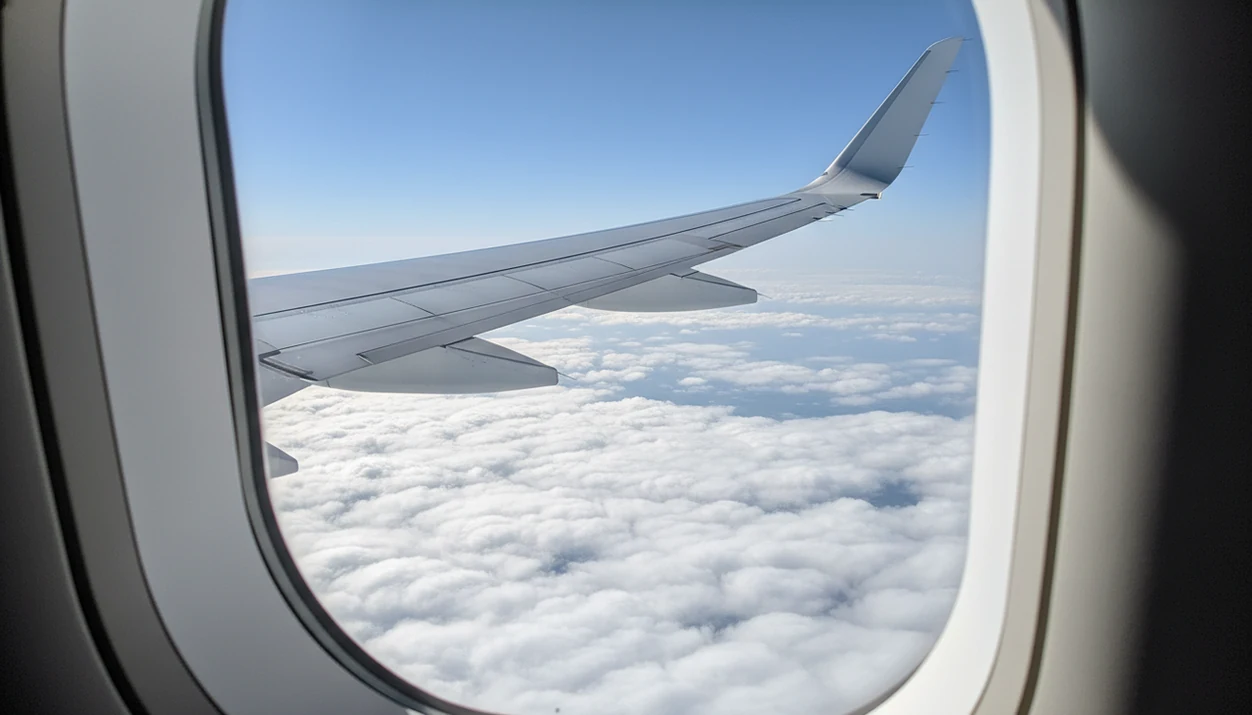
Airplane wings bend because they are designed to flex under lift, turbulence, and turns instead of staying rigid. This controlled flex acts like a spring, spreads loads through the wing structure, and is a normal part of safe aircraft design, which is the simple answer to why airplane wings bend.
Definition: Airplane wing flex is the intentional bending and twisting of an aircraft wing under aerodynamic loads so the structure can absorb forces safely and return to its normal shape.
TL;DR
- Visible airplane wing flex is normal, expected, and engineered into modern airliners.
- Certified transport-category airplanes must withstand 150% of their expected limit loads before structural failure.
- Wing flex in turbulence usually means the wing is absorbing energy, not approaching a breaking point.
Airplane Wing Flex Definition For Nervous Flyers
Airplane wing flex is designed bending and twisting, not accidental warping or weakness. The wing is built to move under load and then return to its usual shape, much like a diving board after a swimmer jumps.
Lift pulls the wing upward. The aircraft body pulls downward through the wing root. Turbulence and turns add changing loads, so the wing responds by flexing instead of staying brutally stiff.
That window-seat view can look wrong the first time.
If you’re sitting over the wing and see the tip rise, dip, and rise again, you’re usually seeing a tiny part of the structure’s tested range. The movement is visible because the wing is long, not because it is near its limit.
How Airplane Wings Bend In Turbulence And Turns
Airplane wings bend because lift pulls upward on the wing while the fuselage weight pulls downward through the wing root. That opposite loading creates bending, especially toward the wing tips where the structure is long and slender.
Inside the wing, spars act like the main beams. Ribs shape the airfoil. Stringers and skin help carry load across the surface. Aluminum and composite materials can be strong, light, and flexible at the same time. This is not loose movement. It is engineered structure doing work.
In turbulence, airflow changes moment by moment. Lift increases, drops, and shifts, so the wing tips move in response. During a banked turn, the aircraft carries a higher load factor, so the wings may flex more than they do in straight, smooth cruise.
The technical word is aeroelasticity. In plain English, it means the wing bends and twists under aerodynamic force in a controlled way. If the engines spool for takeoff and your seat belt is clicked across your lap, that rising wing shape is part of the same load path.
Five Facts About Why Airplane Wings Bend Safely
- Modern airliner wings are supposed to bend because flexible structures absorb and spread loads better than very rigid ones.
- FAA certification rules require transport-category airplanes to withstand limit loads multiplied by a 1.5 safety factor before structural failure, according to the Federal Aviation Regulations.
- Boeing reported that the 787 static wing test reached 150% of design load, with the wing tips deflecting about 25 feet during the test, before the airplane was cleared to move through the certification program source.
- Fatigue testing checks repeated bending cycles, not just one dramatic bend, because wings flex thousands of times across normal service.
- Long, slender, flexible wings can improve efficiency, ride quality, and structural load distribution when the flexibility is engineered and bounded.
For nervous flyers, visible wing movement is often easier to tolerate when you label it as load absorption rather than damage.
Wing Bend Test Evidence And Certification Safety Margins
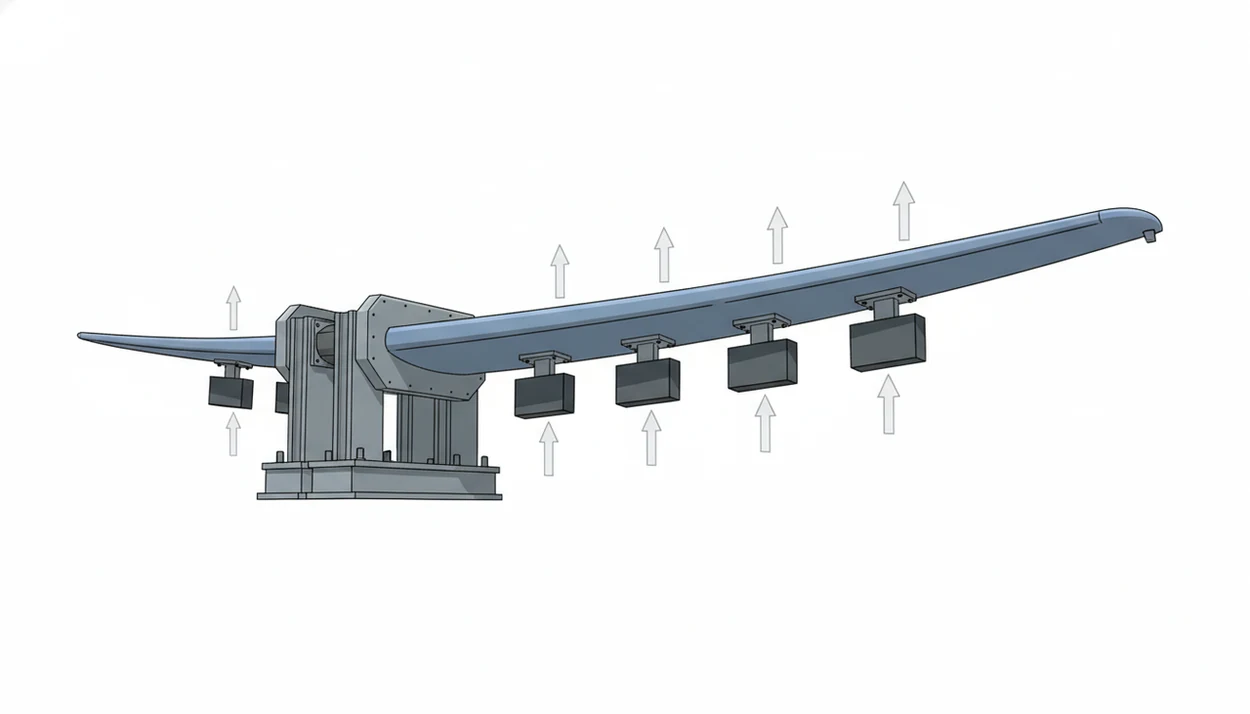
Do airplane wings get tested beyond what passengers see in flight? Yes. Certification testing is designed to prove a large safety margin between normal service loads and the structural failure point.
A limit load is the highest load the aircraft is expected to meet in approved operation. An ultimate load is higher: the limit load multiplied by a required safety factor. For transport-category airplanes, the FAA rule requires limit loads multiplied by 1.5 without structural failure, as stated in 14 CFR §25.303 source.
Ground tests are intentionally harsher than airline service. In Boeing's 787 static wing test, the airplane reached the required 150% design-load condition and the wing tips deflected about 25 feet during the test source. Different wings have different shapes, materials, and test results.
The takeaway is simpler: cabin-window flex is far below certification test extremes.
Wings Bend In Turbulence Like A Shock Absorber
Wings bend in turbulence because flex can reduce sharp gust loads before they travel through the whole aircraft. A rigid wing would pass more sudden force into the cabin structure, which could make bumps feel harsher.
NASA aeroelasticity research has shown that flexible wings can reduce gust loads and improve ride quality by letting the structure bend and redistribute aerodynamic forces source. That does not mean turbulence feels pleasant. It means discomfort and danger are not the same thing.
The ice cubes may still click in a cup.
When wings bend turbulence naturally, the movement can look dramatic from a window seat because the tip is far from the wing root. If your body tenses, give it one small job: press both feet flat, loosen your jaw, and count five slow breaths before checking the wing again.
Tools like Fear of Flying Guide can help nervous flyers pair aviation explanations with body-based coping steps, especially when the visual movement keeps pulling attention back to the window.
How To Use Wing-Flex Facts During A Flight
Use wing-flex facts as a quick in-flight script, not as a debate with fear. The goal is to name what you are seeing, check the cue that matters, and then bring your attention back into the cabin and your body.
- Label the movement as engineered flex before your anxious brain turns it into a danger story. You can say, “That is the wing absorbing changing lift,” even if your body still feels alarmed.
- Check the seat belt sign instead of repeatedly checking the wing tip. The sign gives you the passenger action; the window gives you more material for worry.
- Plant both feet on the floor, soften your shoulders, and slow your breathing for five full cycles. Let the exhale be a little longer than the inhale.
- Compare the motion with other normal flight cues: a gentle turn, a gust, a pitch change, or the cabin settling after a bump.
- Return attention to one planned coping action for the next minute, such as reading one paragraph, naming five objects, or listening to one track.
Airplane Wing Flex Examples On Modern Jets
Named aircraft help make wing flex less mysterious. Long, slender wings show movement more clearly, especially during takeoff, turbulence, turns, and landing gusts.
Boeing 787 Wing Flex
The Boeing 787 is a well-known flexible-wing example because its composite wing is long, swept, and visually expressive. Passengers often notice the tips rising during takeoff and moving gently in cruise bumps.
Airbus A350 Wing Flex
The Airbus A350 also uses modern composite wing structures, and passengers may notice graceful tip movement. Exact visible flex varies by weight, speed, weather, and seat position.
Wing Flex From A Window Seat
From a window seat, the wing tip looks more active because it is far from the aircraft body. Visible movement is not the same as structural damage.
If takeoff sounds and sensations stack on top of the wing view, the first minutes can feel busy; the step-by-step guide to takeoff anxiety explains those cues separately.
Flexible Airplane Wings Versus Rigid Wings
Rigid does not automatically mean stronger or safer. Aircraft wings need controlled flexibility because loads are moving, repeated, and uneven across the wing.
| Wing behavior | What it does | Why it matters for passengers |
|---|---|---|
| Engineered flexible wing | Absorbs and redistributes lift, gust, and turn loads | Reduces sharp force transfer into the aircraft structure |
| Overly rigid wing | Transmits sudden loads more directly | Can increase stress concentration and cracking risk |
| Semi-monocoque structure | Uses skin, frames, ribs, and stringers together | Lets the wing be strong without acting like a solid metal plank |
| Composite flexible wing | Uses layered materials to tune strength and bend | Supports long, efficient wings with controlled movement |
Flexibility is not uncontrolled floppiness. It is a bounded design choice. The full safety case includes materials, load paths, inspection intervals, flight limits, and maintenance.
For a nervous flyer, the useful question is not whether the wing moves; it is whether the movement is expected, bounded, inspected, and explained by the aircraft's certified design.
Common Myths About Why Airplane Wings Bend
The first myth is that visible flex means the wing is close to breaking. In normal airline flying, visible movement is a small fraction of what the structure is tested to withstand.
A second myth says turbulence can simply snap modern airliner wings off. Certified wings are designed for severe gust loads, and pilots also manage speed, routing, and altitude when weather gets rough. FAA transport-category rules separately address gust and turbulence load assumptions in 14 CFR §25.341 source.
The third myth is that rigid wings would be safer. Overly stiff structures can concentrate stress and raise cracking or fatigue concerns. Flex spreads the work.
Newer long, thin wings are not flimsy just because they move. Modern materials and semi-monocoque design let engineers tune stiffness, strength, and efficiency.
The maintenance side matters too. Fatigue testing and inspection programs address repeated bending over time. If your brain is also tracking thumps, whirs, or power changes, it may help to separate wing movement from normal airplane sounds.
When Airplane Wing Flex Applies And When It Does Not
Wing flex applies during takeoff, climb, cruise turbulence, turns, descent, and landing. It is normal when the movement is smooth, repeated, and generally symmetrical within expected flight conditions.
Not everything you see on the wing is the whole wing bending. Winglets are fixed tip devices. Flaps and slats extend for takeoff and landing. Spoilers lift on top of the wing. Ailerons move near the trailing edge to help control roll.
You do not need to diagnose wing safety from seat 22A.
Pilots and aircraft systems monitor abnormal handling, damage, control issues, and warnings. Your job as a passenger is much smaller: follow the seat belt sign, keep bags stowed, and use your panic plan if the view outside starts a spiral. FearOfFlying.com can be one place to build that flight-day plan before you open the airline app.
Limitations
Wing flex is normal, but it should not be used as a blanket promise that risk is zero. Aviation safety depends on design, certification, maintenance, weather decisions, crew training, and passenger procedures.
- No aircraft design reduces risk to absolute zero.
- Very rare combinations of severe turbulence, maneuvering loads, structural damage, or maintenance failures are treated as safety-critical scenarios.
- Certification tests rely on defined assumptions about expected service loads and approved operation.
- Very flexible wings can complicate control response, so engineers must manage aeroelastic behavior carefully.
- Turbulence can still feel frightening or uncomfortable even when the aircraft structure is safe.
- Different aircraft types have different wing shapes, materials, stiffness levels, and visible flex amounts.
- Passengers should follow seat belt instructions because cabin injuries, not wing failure, are the main turbulence concern.
- If wing movement is part of a wider fear pattern, learning to overcome fear of flying usually requires education plus repeated coping practice.
Clinicians typically recommend evidence-based treatment such as cognitive behavioral therapy and exposure practice for persistent phobias, while flight education can reduce misinterpretation of normal aircraft behavior.
FAQ
Can airplane wings snap off?
Modern airline wings are certified and tested far beyond normal flight loads, so wing failure from ordinary turbulence is extremely unlikely in service. No design is risk-free, but normal wing flex is expected behavior.
Is wing flex normal?
Yes. Wing flex is an intended design feature that helps the wing absorb lift, gusts, and turning loads.
Why do wings bend upward?
Wings bend upward because lift pushes upward along the wing while the fuselage weight and wing root structure resist that motion. The result is controlled upward bending, especially near the tips.
Do wings bend in turbulence?
Yes. Turbulence changes lift rapidly, so wings flex up and down as they absorb changing aerodynamic loads.
How much can airplane wings bend?
The exact amount varies by aircraft type, wing shape, weight, and speed. Certification and test examples show wings can bend far beyond the movement passengers normally see.
Are flexible airplane wings safer than rigid wings?
Engineered flexibility helps absorb and distribute loads, but safety depends on the full certified aircraft design. A wing must be flexible within defined structural limits.
Do pilots worry about wing flex?
Pilots expect normal wing movement and are trained to manage aircraft limits, weather, speed, and passenger safety. Normal flex is not treated as a problem by itself.
Can turbulence damage airplane wings?
Certified aircraft are designed for severe gust loads, and normal turbulence is not expected to damage the wings. Passengers should still wear seat belts because turbulence injuries usually happen inside the cabin.