
What causes turbulence?
By the Fear of Flying Guide team · Updated
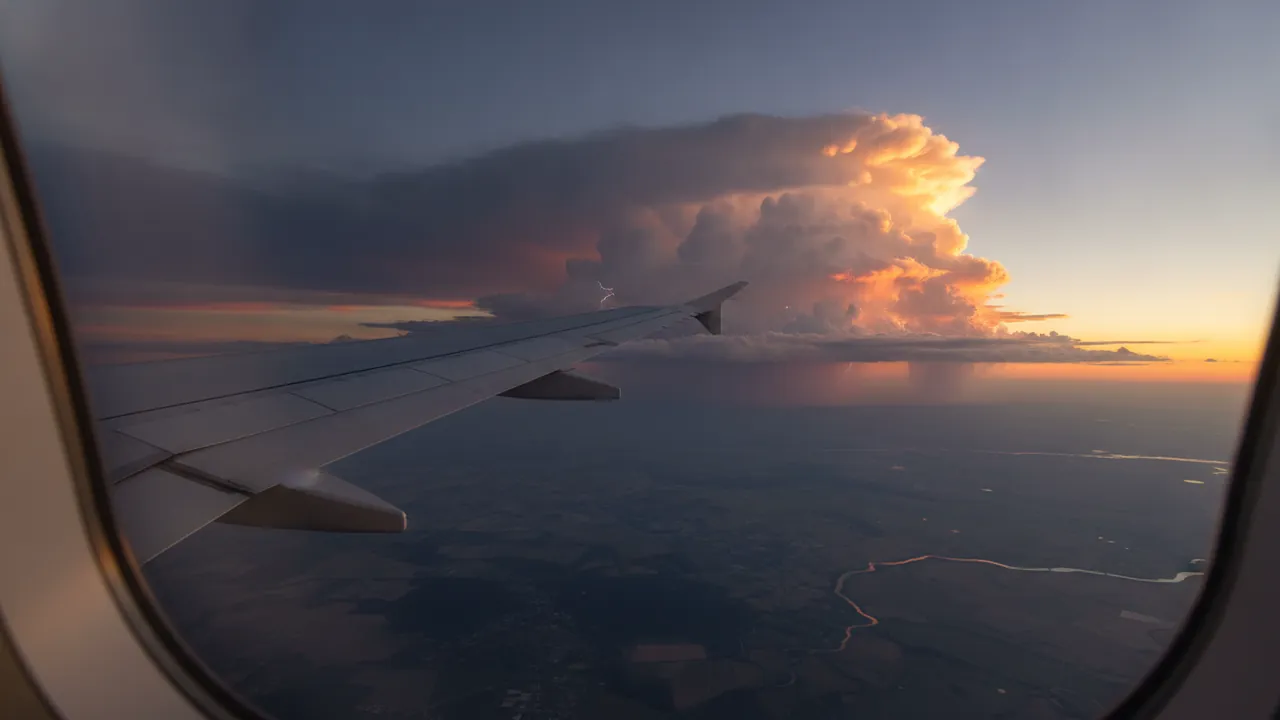
What causes turbulence? Irregular air movement that a plane flies through, and the main sources are convection (thunderstorms and rising warm air), wind shear near jet streams, wind flowing over mountains, buildings and terrain, and the wake of other aircraft. It is the most common trigger for people with fear of flying, and knowing where bumps come from takes away some of the surprise, which is half of what makes it frightening.
What turbulence is
Air is not a still medium. It rises, sinks and swirls, and when a plane crosses those changes, the lift on its wings changes for a moment, which you feel as a bump or a shake. Think of a boat on a choppy lake: the boat is fine, and the motion is the water. The plane stays under the pilots' control and keeps flying; the physics is in how planes stay in the air.
The main causes of turbulence
Convective turbulence
Warm air rises and cooler air sinks. Near thunderstorms and on hot afternoons over sun-heated ground, these up-and-down currents can be strong. The FAA identifies this as one of the main types. Pilots can see storm clouds and weather radar shows them, so crews steer around the worst cells.
Wind shear and clear-air turbulence
When two layers of air move at different speeds, the boundary between them can churn. Near the core of a jet stream this happens in clear sky, with no cloud to warn anyone. It is the reason the seat belt sign can come on in a blue sky. Our guide to clear air turbulence covers how pilots forecast and avoid it.
Mechanical and mountain wave turbulence
Wind pushed over mountains, hills and even large buildings becomes disturbed. Over a ridge, stable air can form waves that stretch for miles downwind and cause turbulence well above the peaks. Flights over mountain ranges and during approaches in strong wind often have a bumpier phase for this reason.
Wake turbulence
Every aircraft that produces lift leaves swirling vortices behind its wings. A following plane that crosses them gets a jolt. Air traffic control keeps minimum spacing behind large aircraft for this reason, and the effect is brief.
Low-level and weather-front effects
Near the ground, gusty wind and temperature differences can make takeoff and landing bumpy, and cold fronts and fast-changing weather add more. This is what many people feel on the climb out and on approach, as described in takeoff anxiety and landing anxiety.
How turbulence is rated
The FAA describes three everyday levels, with a fourth, extreme, reserved for rare cases.
| Level | What happens |
|---|---|
| Light | Slight, erratic changes in altitude or attitude. You may feel a slight strain against your seat belt. |
| Moderate | Larger or more frequent changes. You feel a definite strain against the belt and loose objects move. |
| Severe | Large, abrupt changes. The aircraft may be briefly hard to control and occupants are forced against their belts. Rare. |
Most turbulence people experience is light or moderate. Pilots report it to each other and to controllers, which is how following flights know to change level or route.
Why turbulence matters, and why it does not
Turbulence rarely threatens the aircraft. It threatens anyone standing or unbuckled. FAA data show that turbulence accounted for 152 of 420 US airline accidents from 2008 to 2022, about 36 percent, and each of those involved at least one serious injury, mostly to people not belted in or crew on their feet. The FAA's simple advice is to keep your belt fastened whenever you are seated, because turbulence can come without warning. The full injury numbers are in is turbulence dangerous.
If the bumps themselves make you panic, the problem is the fear, not the air. Fear of turbulence covers how to work on that directly.
Frequently asked questions
Why does a flight feel turbulence?
A plane feels turbulence when it meets air that is rising, sinking or moving at different speeds, briefly changing the lift on the wings. The wings keep working, and light turbulence is common.
Which flight route has the worst turbulence?
Routes near thunderstorms, over mountains or near strong jet streams tend to be bumpier, and conditions change daily. No route is always rough.
Can turbulence bring a plane down?
Turbulence cannot bring down a modern airliner. It can injure people who are not belted in, but aircraft are built for far greater loads, and pilots avoid the strongest areas.
Are pilots bothered by turbulence?
Pilots treat turbulence as a comfort and workload issue, not a danger. They slow to turbulence speed, change level if they can and switch on the seat belt sign.
Is turbulence worse at certain times of day?
Convective turbulence is often stronger in the afternoon when the ground is hottest and thunderstorms build. Clear-air turbulence can happen at any hour.
What are the types of turbulence?
The main types are convective, clear-air, mechanical or mountain wave, and wake turbulence. Each has a different cause, from heated air rising to wind shear to the wake of other aircraft.