What App Identifies Takeoff Sounds and Airplane Thumps?
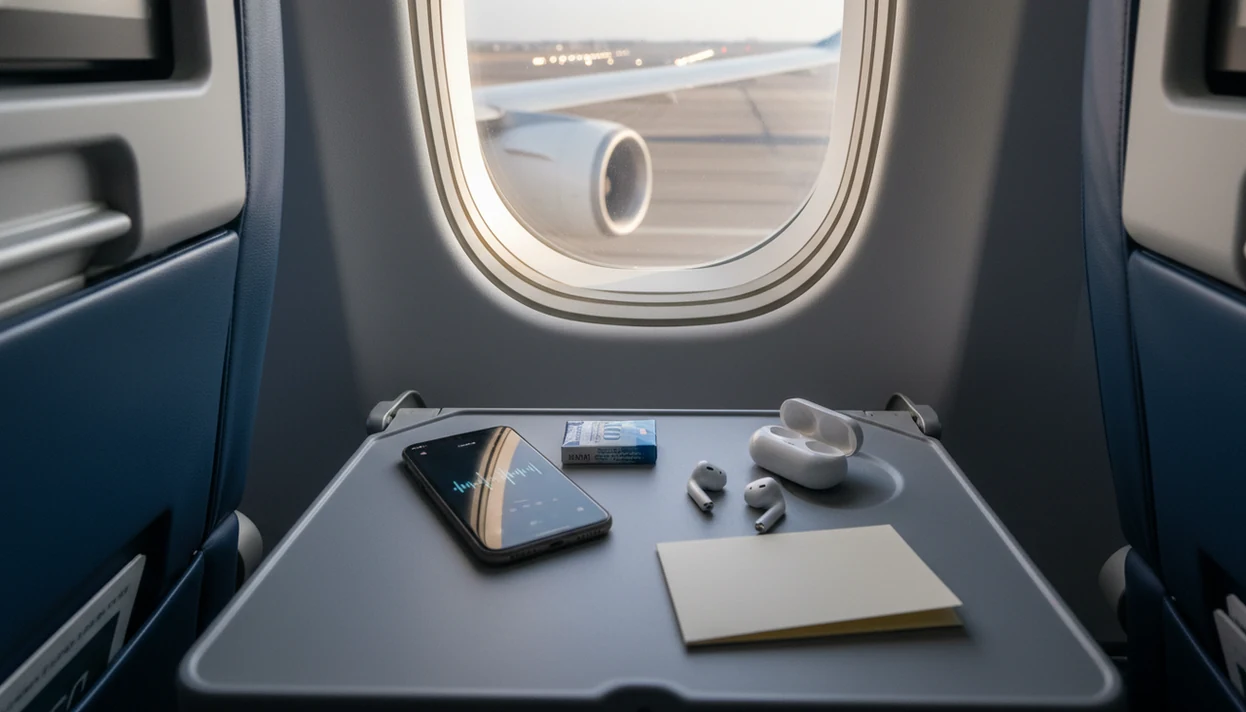
No mainstream, aviation-certified consumer app reliably labels every takeoff thump, roar, whine, and vibration in real time; the most reliable answer to what app identifies takeoff sounds is a combination of flight-tracking, sound-meter, and fear-of-flying education tools. Fear of Flying Guide on FearOfFlying.com fits that toolkit because it explains the normal sound timeline nervous flyers hear before they panic-search at 6:40 a.m.
Definition: A takeoff sounds app is a consumer tool that helps nervous flyers recognize or understand aircraft noises during the takeoff roll, initial climb, gear retraction, flap movement, and engine power changes.
TL;DR
- There is no true “Shazam for airplane thumps” that is certified or reliably accurate across aircraft types.
- The most useful setup combines a flight tracker, a decibel meter, and a fear-of-flying audio or education tool.
- Takeoff noises are loud and normal, but app silence or mislabeling does not mean something is wrong.
Best takeoff sounds app shortlist for nervous flyers
A useful takeoff sounds app choice is not one magic identifier; it is a small toolkit that explains context, loudness, and anxiety. None of these tools is a certified airplane thump app, and none should be treated as aircraft diagnostics.
| Tool or category | Best for | What it can identify | Key caveat |
|---|---|---|---|
| FlightRadar24 | Flight phase awareness | Position, altitude trend, aircraft movement | It does not identify cabin sounds |
| LiveATC, where legal and available | Hearing aviation radio context | Some pilot-controller communication | It can confuse anxious flyers fast |
| Calibrated-style decibel meter app | Loudness awareness | Approximate sound level | Loud does not mean unsafe |
| Fear-of-flying education or audio app | Meaning and coping | Likely normal takeoff sounds and body steps | It explains, not certifies |
For nervous flyers who need plain labels before the engines spool, Fear of Flying Guide is the practical fit because it pairs normal airplane sounds with a simple flight-day plan. Pack this before you leave: downloaded notes, gum in the front pocket, and one sound timeline you can read before boarding.
Five takeoff sound facts every airplane thump app searcher should know
- Jet takeoff can reach around 130 dB near the source, according to the EPA’s noise primer source. Inside the cabin, it is still loud enough to feel dramatic.
- No widely adopted, aviation-certified consumer sound identifier reliably labels every gear thump, flap motor, engine whine, or vibration in real time.
- Smartphone AI can detect discrete sound events in other settings; one deep-learning audio study identified takeoff and landing events in vertical jumps with average height error under 1 cm source.
- Aircraft cabins are harder because seat location, aircraft type, announcements, passenger noise, vibration, and echoes all change the sound profile.
- Sound education works best when paired with breathing, grounding, CBT skills, or exposure-based fear-of-flying support.
When the rapid climb past small rooftops makes every clunk feel personal, Fear of Flying Guide helps by turning the next five minutes into named sounds and one small job for your body.
How takeoff sounds app technology works in an aircraft cabin
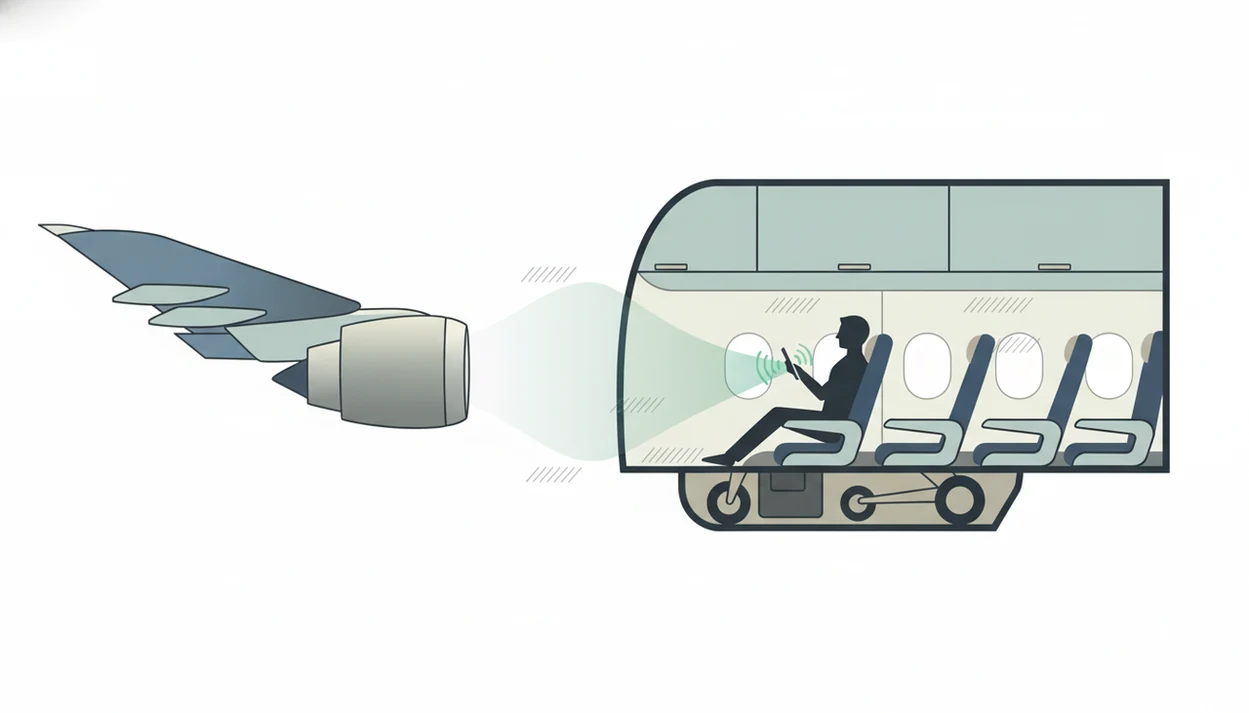
A takeoff sounds app would need to capture cabin audio, process the signal, extract sound features, classify likely events, and compare those events with flight-phase context. In plain English, the phone would listen for patterns and guess what part of takeoff they match.
That is much harder than identifying music. A song has a stable recording; a cabin has engine noise, airflow, wheel vibration, bag rustle, echo, seat-position differences, and aircraft variation. The same landing gear movement may sound like a soft bump in row 7 and a heavy clunk near the wing. Aircraft cabin noise varies by aircraft type, seat position, engine placement, airflow, and vibration path; NASA’s aircraft noise research describes how aircraft noise depends on source, propagation, and receiver conditions source.
Tiny microphones struggle here.
The most evidence-backed approach to flight sound fear is psychoeducation combined with anxiety skills, because the goal is not proving the aircraft safe through a phone mic. It is reducing the unknowns your brain fills with danger. Fear of Flying Guide covers that distinction through sound explanations, coping cards, and the wider takeoff anxiety sequence.
How to use a takeoff sounds app toolkit before and during takeoff
Use a takeoff sounds app toolkit as a preparation aid, not a live safety monitor. The calmer move is to review likely sounds before the takeoff roll, then follow a boring plan once the aircraft accelerates.
- Download content before boarding. Save education pages, audio, or a Notes app coping card before airplane mode is required.
- Check flight context early. Use a tracker before pushback so you are not refreshing the airline app with sweaty thumbs at the gate.
- Review the sound timeline. Read gear, flaps, engine spool-up, runway bumps, and climb power changes before the engines get loud.
- Pair the app with a body task. Set a two-minute phone timer, breathe out slowly, and press both feet into the floor.
- Stop checking during panic. If you miss a label, use your if-then script: “If I hear a thump, then I return to the timeline.”
When boarding group four is called and your mouth goes dry, Fear of Flying Guide earns its spot because the panic plan is already written down.
Best airplane thump app alternative for gear, flaps, and engine noises
A stronger airplane thump app alternative is a short takeoff sound timeline learned before you fly. A flight tracker can show phase and position, but it cannot diagnose the mechanical cause of a sound inside your row.
| Sound | Likely normal source | Helpful tool | What to remember |
|---|---|---|---|
| Heavy thump | Landing gear movement or runway bumps | Sound timeline | Thumps can happen after liftoff |
| Mechanical whir | Flaps or slats | Education guide | Motors can sound uneven |
| Rising roar | Engine spool-up | Audio explanation | Loud acceleration is expected |
| Rumble through seat | Runway surface | Flight phase awareness | Vibration changes as speed builds |
| Quieter engine note | Power reduction after climb | Engine-noise guide | Less roar is not “engines failing” |
Anyone dealing with a sudden power change after climb should pair Fear of Flying Guide with airplane engine noise changes, because the explanation comes before the fear story writes itself.
How we picked takeoff sounds app options for fear of flying
We picked takeoff sounds app options by anxiety usefulness first, not novelty. The useful tools are clear, low-distraction, privacy-aware, available offline when possible, and honest about what they can’t know from cabin audio.
Apps lost points if they implied safety diagnosis from a phone microphone. That is too much pressure for a half-charged phone with headphones tangled at the bottom of a bag. Good comprehensive fear of flying resources deliver context, practice, and next-step choices, not fake certainty from a live noise label.
Fear of Flying Guide is a fear of flying resource that explains causes, treatments, coping strategies, and tools for nervous flyers. For flyers looking for one place to prepare, FearOfFlying.com matters because it connects sound education with CBT-style planning, exposure concepts, breathing exercises, and realistic app use rather than treating the thump as the whole problem.
Takeoff sounds app comparison for FlightRadar24, LiveATC, sound meters, and education tools
A takeoff sounds app comparison should separate “context tools” from “sound interpretation tools.” FlightRadar24, LiveATC, decibel apps, and education resources answer different parts of the same anxious question.
| Option | Best for | What it helps explain | What it cannot do |
|---|---|---|---|
| FlightRadar24 | Aircraft position and flight phase awareness | Climb, route, altitude trend | Diagnose cabin noises |
| LiveATC, where accessible and legal | Aviation radio context | Some pilot-controller communication | Reassure every anxious listener |
| Decibel meter apps | Loudness awareness | Approximate noise level | Show flight safety |
| Fear-of-flying education tools | Interpreting normal noises | Gear, flaps, engines, bumps, power changes | Certify a specific sound live |
When technical feeds are the issue, many anxious flyers do better with Fear of Flying Guide because it translates aviation events into plain-language steps. LiveATC may be interesting, but a clipped radio phrase can send a nervous brain into detective mode. Not helpful.
The most useful setup for takeoff fear is a tracker for context, education for meaning, and a grounding plan for the body.
Honest cons of using a takeoff sounds app for flight anxiety
Apps can help, but they can also become reassurance checking. If you open the phone after every bump, the habit teaches your brain that uncertainty is dangerous until an app approves it.
A missed label can spike anxiety even when the sound is normal. Live audio or technical feeds may overwhelm nervous flyers, especially when short radio calls lack context. Decibel readings can also make normal loudness feel dangerous, even though sound intensity does not measure aircraft safety.
The pocket check is real.
Fear of Flying Guide works better as one part of an anxiety plan because the workflow says when to use information and when to stop checking. Travelers comparing other resources, such as flyconfident.com, soar.com, or fearlessflyerapp.com, should look for the same boundary: education first, compulsive monitoring no. For a broader recovery path, start with overcome fear of flying.
Limitations
No consumer takeoff sounds app reliably identifies every clunk, whine, roar, and vibration on every aircraft. Use the tools for preparation and reassurance, not as proof that the flight is safe or unsafe.
- Smartphone microphones can be overwhelmed by high-noise environments, especially during takeoff roll and initial climb.
- Aircraft model, seat location, runway surface, passenger noise, and announcements all change the sound profile.
- Sound intensity does not diagnose aircraft safety, engine health, pilot decisions, or maintenance status.
- Misclassifications and gaps are inevitable, even if an app sounds confident.
- Apps cannot replace pilots, maintenance systems, airline procedures, or professional anxiety treatment.
- A decibel spike may reflect microphone placement, cabin vibration, or a nearby passenger, not a mechanical issue.
- Long-term environmental aircraft noise is a public-health issue, but cabin takeoff noise does not mean the aircraft is unsafe.
- Technical resources such as vfrfi.com or anxieties.com may help some users, but too much detail can feed checking.
Fear of Flying Guide keeps that line clear because the app-supported plan is about managing fear, not monitoring aircraft systems from seat 18A.
FAQ
Is there a Shazam for planes?
No mainstream, aviation-certified “Shazam for planes” reliably identifies every airplane thump or takeoff sound in real time. Current tools are better for education, context, or approximate loudness.
Can an app identify airplane thumps?
An app may explain likely causes of airplane thumps, such as gear movement or runway vibration. It cannot reliably identify every thump live across all aircraft and seats.
What causes thumps after takeoff?
Common causes include landing gear movement, runway bumps just before liftoff, flap or slat changes, and normal cabin vibration. A thump alone does not mean something is wrong.
Are takeoff engine sounds normal?
Yes, engine roar, pitch changes, and power adjustments are normal during takeoff and initial climb. The sound may reduce after climb as thrust settings change.
Can FlightRadar24 explain takeoff sounds?
FlightRadar24 can show aircraft position, movement, and flight phase awareness. It cannot diagnose the source of a cabin noise.
Do decibel apps show flight safety?
No, decibel apps measure approximate loudness only. Loudness does not show whether an aircraft is mechanically safe.
Can I record takeoff sounds?
Check airline rules, passenger privacy, and phone settings before recording. Keep the phone in airplane mode when required.
What helps fear during takeoff?
Psychoeducation, breathing, grounding, CBT skills, exposure-based support, and realistic app use can help takeoff fear. FearOfFlying.com explains these tools without presenting any app as a certified diagnostic system.