
Airplane Engine Noise Changes After Takeoff, Climb, and Landing Explained
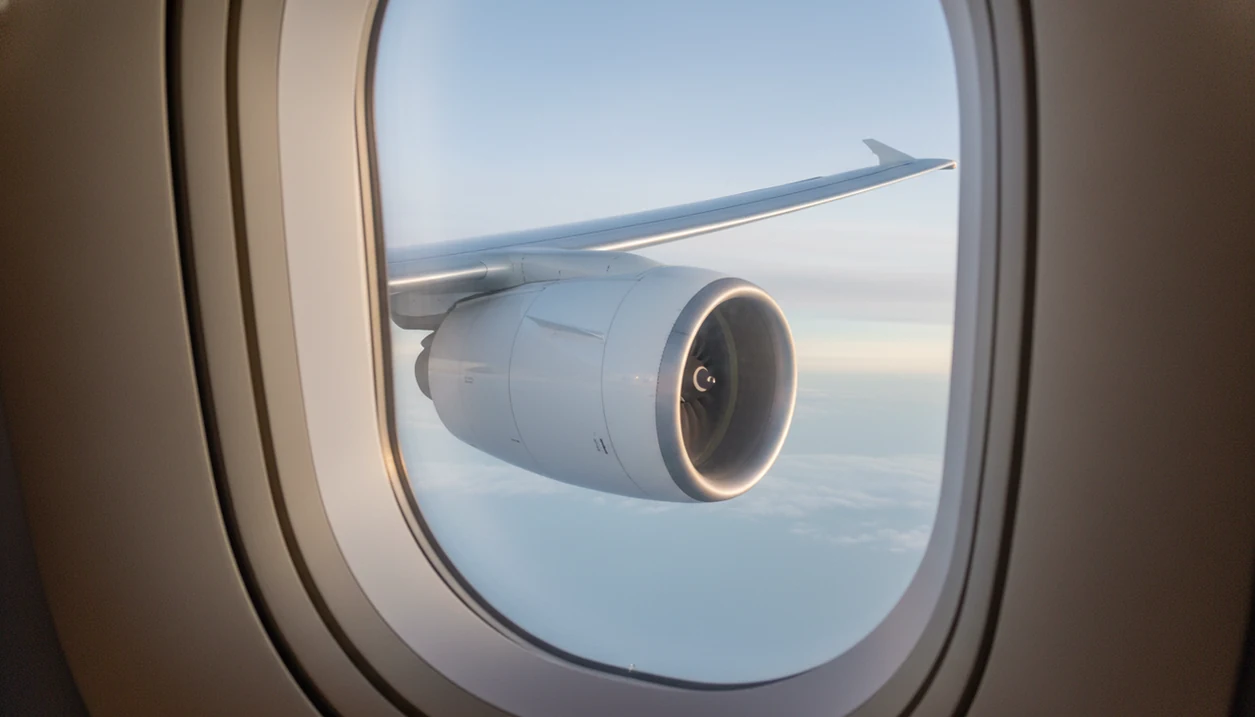
Airplane engine noise changes after takeoff are usually normal: pilots often reduce from takeoff thrust to climb thrust once the aircraft is safely airborne, so the engines may sound like they “slow down” while the plane keeps climbing. Other loud sounds often come from flaps, landing gear, hydraulics, air-conditioning, or airflow rather than engine trouble.
Definition: Airplane engine noise changes are the normal shifts in loudness, pitch, vibration, or whooshing sounds passengers hear as an aircraft changes thrust, speed, configuration, or flight phase.
TL;DR
- A quieter engine sound shortly after takeoff usually means climb power, not engine failure.
- Mechanical sounds during climb or landing often come from flaps, slats, landing gear, spoilers, hydraulics, or air-conditioning systems.
- Sound alone is a poor safety cue because aircraft type, seat location, weather, and normal pilot procedures all change what passengers hear.
Airplane Engine Noise Changes: Plain-English Definition
Airplane engine noise changes are the normal shifts in loudness, pitch, vibration, or whooshing sounds passengers hear as an aircraft changes thrust, speed, configuration, or flight phase. In plain English, the airplane is changing what it is doing, so the cabin soundtrack changes too.
A lot of sounds passengers call “engine noise” are not clean engine sounds. They may come from flaps moving, landing gear doors opening, hydraulic pumps, air-conditioning packs, or air rushing differently over the wings.
You may hear the cabin get quieter just as your stomach is still catching up with takeoff. That timing can feel suspicious. It is often routine, but no article can identify every sound from row 24 with certainty. Use the sound as context, not as a private safety diagnosis.
Why Engine Sound Changes After Takeoff
Why does the engine sound change after takeoff? The simple answer is that takeoff uses a high thrust setting, then pilots usually reduce to climb thrust once the aircraft is safely airborne.
Noise-abatement departure procedures commonly include a power or thrust reduction after takeoff at a specified altitude, which is one reason the cabin can get quieter while the aircraft continues climbing source.
That reduction can sound like the engines suddenly “back off.” The plane may still be climbing strongly, even though the cabin gets quieter. Nervous flyers notice it because it often happens soon after liftoff, right when the wheels have left the runway and the body is already on alert.
Picture the wheels bumping along the runway, then the roar softening a minute later. Your brain may label that as “power loss.” A more accurate if-then script is: “If the engine sound drops after takeoff, then I will assume climb power first, not failure.”
For takeoff-focused fear, the first minutes are covered more closely in takeoff anxiety.
Five Facts About Plane Engines Slowing Down Sounds
- A drop in noise after takeoff is usually the change from takeoff thrust to climb thrust.
- Quieter engines do not mean the aircraft stopped climbing; sound and climb rate are not the same cue.
- Flaps, slats, spoilers, and landing gear can make loud mechanical sounds that passengers mistake for engine trouble.
- Air-conditioning, bleed-air, and hydraulic systems can whine, hiss, pulse, or whoosh during normal operation.
- Aircraft-specific sounds can be normal, including Airbus PTU-style hydraulic noises on some aircraft; Airbus describes the PTU as a hydraulic power-transfer system that can operate automatically in certain conditions source.
The pocket check is real.
If your boarding pass is still glowing in Apple Wallet and your mouth is dry, facts can be hard to retrieve. Put these five lines in your Notes app before you leave. Make the plan boring on purpose, because boring is easier to use at 6:40 a.m.
How Airplane Engine Noise Changes Work
Airplane sound changes with thrust setting, fan speed, airflow, and aircraft configuration. “Configuration” means the parts that move for each phase of flight, such as flaps, slats, spoilers, and landing gear.
Aircraft noise is often measured in dB(A). The FAA explains that a 5 dB change is clearly noticeable for most people, and a 10 dB increase is generally perceived as about twice as loud source. So a normal power adjustment can feel dramatic in the cabin.
Modern turbofan engines are quieter than older jets because higher bypass ratios create more thrust from the large front fan, rather than only from hot exhaust. Still, passengers do not hear an engine-only signal. You hear a blended sound field: engines, air over the fuselage, vents, pumps, seat panels, and sometimes the overhead bin near your ear.
For nervous flyers, labeling the blend is often easier than chasing one exact noise.
Normal Airplane Noise Examples by Flight Phase
Normal airplane sounds change by flight phase. The same aircraft can roar, soften, hum, whine, thump, and rumble during one ordinary trip.
Takeoff and initial climb sounds
Takeoff: Expect loud acceleration, vibration, and a firm runway rumble. Initial climb: A quieter engine sound may follow the thrust reduction, then flap or slat movement may add mechanical noises. The FAA describes flaps as high-lift devices used to change wing performance, which is why flap movement can pair a mechanical sound with a noticeable airflow change source.
You might also notice the flight attendant checking overhead bins before the loudest part begins. That ordinary cabin routine can help your brain stay in the present.
Descent and landing sounds
Cruise: Engine hum is usually steadier, with occasional pitch or air-conditioning changes. Descent: Power adjustments, airflow noise, and pitch shifts are common as the aircraft slows and descends. Landing: Gear extension, flaps, slats, spoilers, reverse thrust, and runway rumble can all be loud.
The wider pattern is explained in normal airplane sounds, especially if one noise keeps replaying in your head.
Engine Noise Versus Flaps, Gear, and Hydraulic Sounds
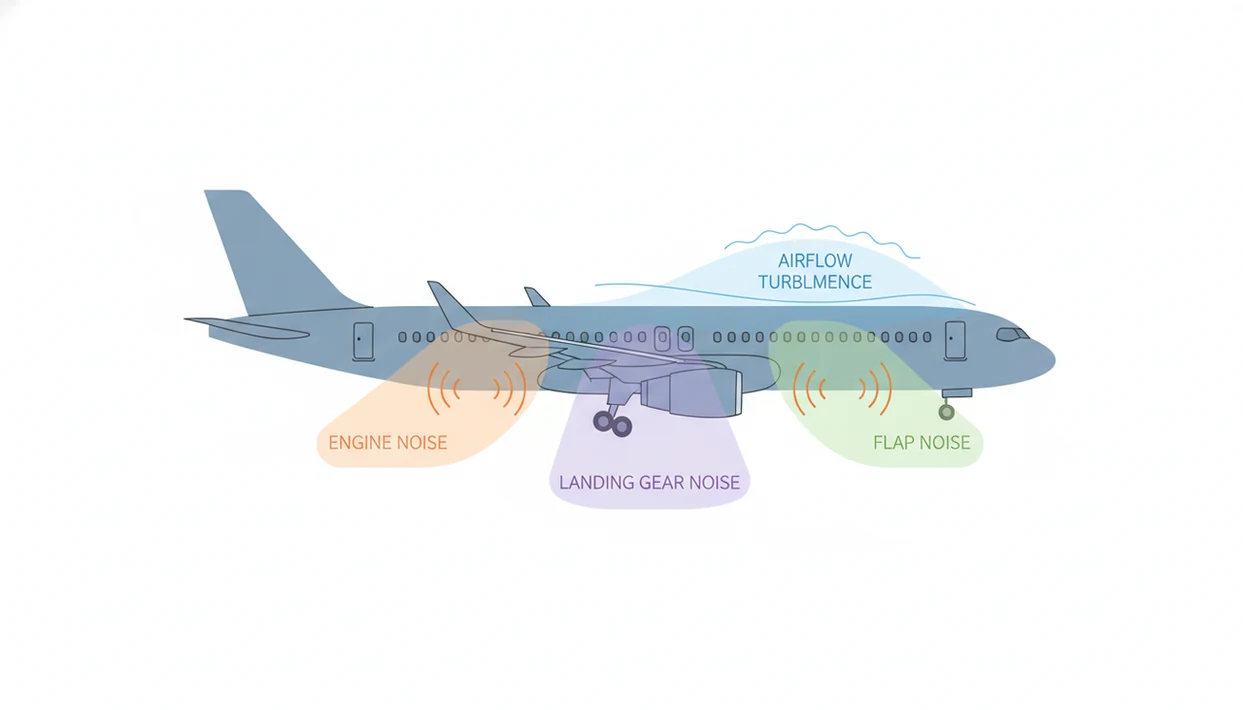
Passengers often mislocate sound direction in the cabin because the fuselage carries vibration and echoes. A noise that feels “under my seat” may come from the wing, gear bay, air-conditioning duct, or engine area.
| Sound source | What it may sound like | When passengers notice it |
|---|---|---|
| Engines | Roar, hum, pitch change | Takeoff, climb, cruise, descent |
| Flaps and slats | Whirring, grinding, airflow change | After takeoff and before landing |
| Landing gear | Thump, rumble, mechanical movement | Shortly after takeoff or before landing |
| Spoilers | Sudden airflow noise, panel movement | Descent, landing, after touchdown |
| Hydraulics | Whine, pulse, “barking” on some aircraft | Taxi, climb, approach |
| Air-conditioning | Hiss, whoosh, fan pitch change | Any phase |
Seat location matters. Over-wing seats hear wing devices more clearly. Rear cabin seats may hear engine pitch more sharply. Near-engine rows can make routine changes feel personal.
Common Myths About Airplane Engine Noise Changes
Myth: A sudden drop in sound means engine failure. Fact: It usually means a normal reduction from takeoff thrust to climb thrust.
Myth: The plane is descending if the engines get quieter. Fact: The aircraft can still be climbing while the engine sound is lower.
Myth: Loud mechanical sounds must be engine trouble. Fact: Flaps, slats, landing gear, spoilers, and hydraulics are routine noise-makers.
Myth: A quieter aircraft is automatically safer. Fact: Noise depends on thrust, design, weather, aircraft type, and configuration.
In cognitive behavioral therapy, anxious interpretations are often treated as thoughts to test rather than facts to obey; the NHS describes CBT as a way to identify and challenge unhelpful thinking patterns source. A good nervous flyer guide should explain causes, treatments, coping strategies, and tools for nervous flyers, not just tell you to “think positive.” Tools like Fear of Flying Guide can support that broader learning path.
When Airplane Engine Noise Changes Apply and When They Do Not
Normal explanations apply to routine takeoff thrust reduction, climb adjustments, cruise power changes, descent, and landing configuration. They also apply to many sounds from flaps, gear, spoilers, hydraulics, and cabin systems.
However, this does not prove every sound is normal. Passengers should give more weight to crew announcements, repeated abnormal symptoms, smoke, strong unusual smells, or emergency instructions than to personal sound interpretation.
Use a simple flight-day plan: “I do not diagnose the aircraft from sound alone. I listen to the crew, notice multiple cues, and give my body one small job.” That job might be pressing both feet into the floor for 30 seconds or taking a slow drink from the water bottle bought after security.
For rebuilding confidence beyond one flight, overcome fear of flying is the bigger roadmap. FearOfFlying.com also covers aviation explanations alongside anxiety tools.
How to Use This Guide When Airplane Engine Noise Changes
Use this guide as a short decision aid, not as a cockpit checklist. The goal is to slow the jump from “new sound” to “something is wrong” and bring your attention back to observable cues.
- Notice the phase of flight first. Ask whether you are taking off, climbing, cruising, descending, or landing before assigning meaning to the sound.
- Match the sound to ordinary sources. A roar may be thrust, a whir may be flaps or slats, a thump may be gear, and a louder whoosh may be changing airflow.
- Check the crew before your private theory. Calm cabin movement, routine announcements, and normal service matter more than a single sound your brain has isolated.
- Give your body one job. Press both feet into the floor, unclench your jaw, or take two slow sips of water instead of replaying the noise.
- Save the five facts before boarding. Put the checklist in your phone while you are still on the ground, so recall takes one glance rather than a debate at 10,000 feet.
Limitations
No cabin article can decode every airplane sound with certainty. Use this as a guide, not a cockpit instrument.
- Sound varies by aircraft type, engine model, airline procedure, weather, and seat location.
- Cabin acoustics can distort pitch, timing, loudness, and direction.
- Phone recordings often make normal sounds seem sharper or more uneven.
- Airbus, Boeing, regional jet, and turboprop sounds can differ a lot.
- Normal sound explanations do not replace crew instructions.
- Smoke, strong unusual smells, repeated abnormal cues, or emergency directions matter more than noise alone.
- Fear-of-flying reassurance may not fully control severe aviophobia, panic attacks, or trauma after a frightening flight.
ICAO noise standards also show that aircraft generations differ; Stage 4 aircraft must be at least 10 dB quieter than Stage 3 on cumulative certification noise source. Different aircraft, different soundtrack.
Read more
FAQ
Why do airplane engines get quieter after takeoff?
Airplane engines usually get quieter after takeoff because pilots reduce from takeoff thrust to climb thrust. The aircraft can still be climbing normally.
Are the plane engines slowing down when the sound drops?
The sound may drop because the thrust setting changes, but that does not mean the engines stopped working. “Slower sounding” is not the same as unsafe.
Can a plane still climb when the engines sound quieter?
Yes. A plane can keep climbing after the cabin gets quieter because climb thrust is still producing the power needed for ascent.
What is the loud thump after takeoff?
A loud thump after takeoff can come from landing gear movement, flap changes, or other normal configuration changes. Passengers should not diagnose a specific flight from one sound.
Why do airplane engines surge during descent?
Engine sound can rise and fall during descent because pilots and automation adjust power for speed, spacing, and airflow. These changes are common.
Are landing gear noises before landing normal?
Yes. Landing gear extension is often loud and mechanical, with thumps, whirrs, or rumbling before landing.
Why do airplane engines roar before landing?
Engines may roar before landing because of thrust adjustments, flap settings, or readiness to go around if needed. After touchdown, reverse thrust can also sound very loud.
When should airplane noise be concerning?
Noise is more concerning when it comes with crew instructions, smoke, strong unusual smells, repeated abnormal cues, or an emergency announcement. Sound alone is a poor safety cue.