
How high do planes fly?
By the Fear of Flying Guide team · Updated
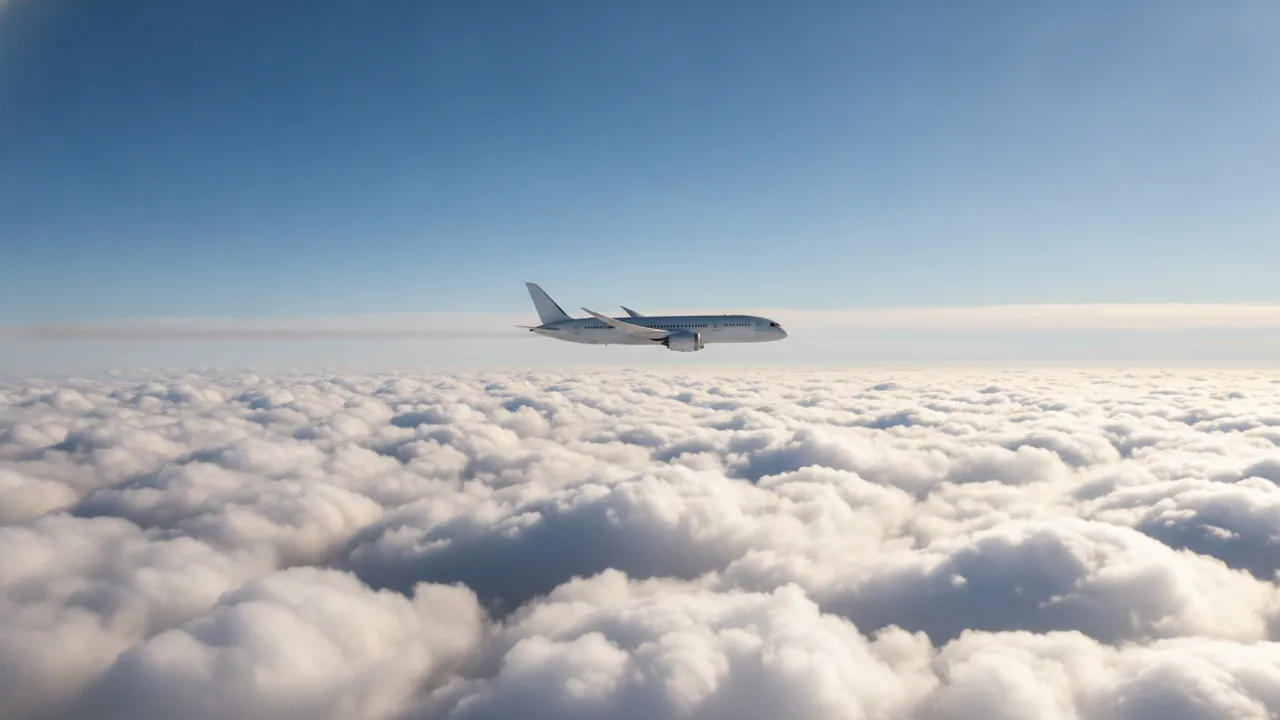
How high do planes fly? Most commercial airliners cruise at 31,000 to 38,000 feet, with 35,000 feet a common figure, at about Mach 0.78, or roughly 515 to 530 miles per hour. That is around 6 to 7 miles up, higher than Mount Everest (29,032 feet). The choice is not random, and for a nervous flyer the height is more reassuring than frightening once you see why it is picked. It is one of the most common questions behind fear of flying.
Typical airliner altitudes and speeds
| Item | Figure |
|---|---|
| Typical cruise altitude | 31,000 to 38,000 ft |
| Typical narrow-body cruise speed | Mach 0.78, about 515 to 530 mph |
| Boeing 737-600 to 737-900 and 737 MAX certified ceiling | 41,000 ft |
| Older Boeing 737-100 to 737-500 certified ceiling | 37,000 ft |
| Airbus A320 family certified ceiling | 39,100 ft standard, up to 41,000 ft for some configurations |
| Concorde (retired) maximum | 60,000 ft |
"Certified ceiling" is the height the aircraft is approved for, not where it normally flies. Airlines usually cruise below it, because a heavier plane cannot climb as high and because winds and traffic change the best level from flight to flight.
Why airliners cruise around 35,000 feet
- Thinner air means less drag. Higher up, the plane meets less air resistance and burns less fuel for the same speed. Climb too high, though, and the air is too thin for the wings and engines to work well.
- Above much of the weather. Most storms and a lot of bumpy air sit lower in the atmosphere, so cruising high gives a smoother ride on average. It does not remove turbulence, as explained in what causes turbulence.
- Organized traffic. Aircraft are assigned standard flight levels with set vertical spacing, and flights heading in opposite directions use different levels.
- A trade-off, not a rule. The best height depends on weight, temperature, winds and route, so 35,000 feet is a common planning value rather than a universal limit.
Why airliners do not fly much higher
At very high altitude the air is so thin that the range between the slowest speed the wings can fly at and the fastest speed the airframe is designed for gets narrow. Pressurization, engine performance and structure also become limits. No current airliner is designed to fly at 70,000 feet. Concorde, which retired in 2003, was the only passenger airliner to cruise near 60,000 feet.
Is it safe to fly that high
The cabin is pressurized, so passengers breathe air at a pressure equivalent to a much lower altitude, typically no higher than about 8,000 feet. A fall from altitude is not a concern, because airliners do not drop when something goes wrong: they glide, as explained in how planes stay in the air. The airframe is tested far beyond everyday loads, and the overall record is covered in is flying safe.
The height can feel different to your body than to a pilot. Some people feel exposed at altitude or have a fear of heights alongside the flying fear. Both respond to the same exposure-based approach described in the fear of flying treatment guide.
How a flight climbs and descends through the altitudes
A plane does not climb straight to one level and stay there. After takeoff it climbs steadily for 20 to 30 minutes, often in steps as air traffic control clears it higher. On long flights the crew may climb to a higher level as fuel burns off and the plane gets lighter, because a lighter aircraft can efficiently fly higher. The descent starts well before the airport, with a gentle glide-like slope and engines at low power. Those changes of pitch and engine sound, which feel like the plane is "dropping" or "struggling," are routine and are described in normal airplane sounds.
Airliner speed and why it feels slow
At 500 miles per hour you are moving fast, yet there is nothing nearby to judge it by, so the cabin feels still. Ground speed also depends on the wind: a tailwind from a strong jet stream can add well over 100 miles per hour, which is why eastbound flights across the Atlantic are often shorter.
Frequently asked questions
How high can an airliner fly?
Airliners are certified for roughly 37,000 to 41,000 feet depending on the model, and most cruise between 31,000 and 38,000 feet. Concorde reached about 60,000 feet but has retired.
Do planes fly higher than Mount Everest?
Airliners cruise well above Mount Everest, which stands at 29,032 feet, typically around 35,000 feet. The cabin is pressurized, so you do not feel the altitude.
Why can planes not go above 40,000 feet?
Above about 41,000 feet the air is too thin for wings, engines and pressurization to work well, and the gap between stalling and maximum safe speed narrows.
Can planes fly at 70,000 feet?
No current passenger jet is certified near 70,000 feet. Some military and research aircraft reach it with special designs, but airline flying stays far lower.
How fast do commercial planes fly?
A typical narrow-body airliner cruises at about Mach 0.78, around 515 to 530 mph through the air. Ground speed can be higher or lower depending on the wind.
Is the air thinner at 35,000 feet?
Air at 35,000 feet is far thinner than at sea level, which reduces drag and fuel use. The cabin is pressurized to a much lower altitude equivalent so passengers breathe normally.