
Is flying safe?
By the Fear of Flying Guide team · Updated
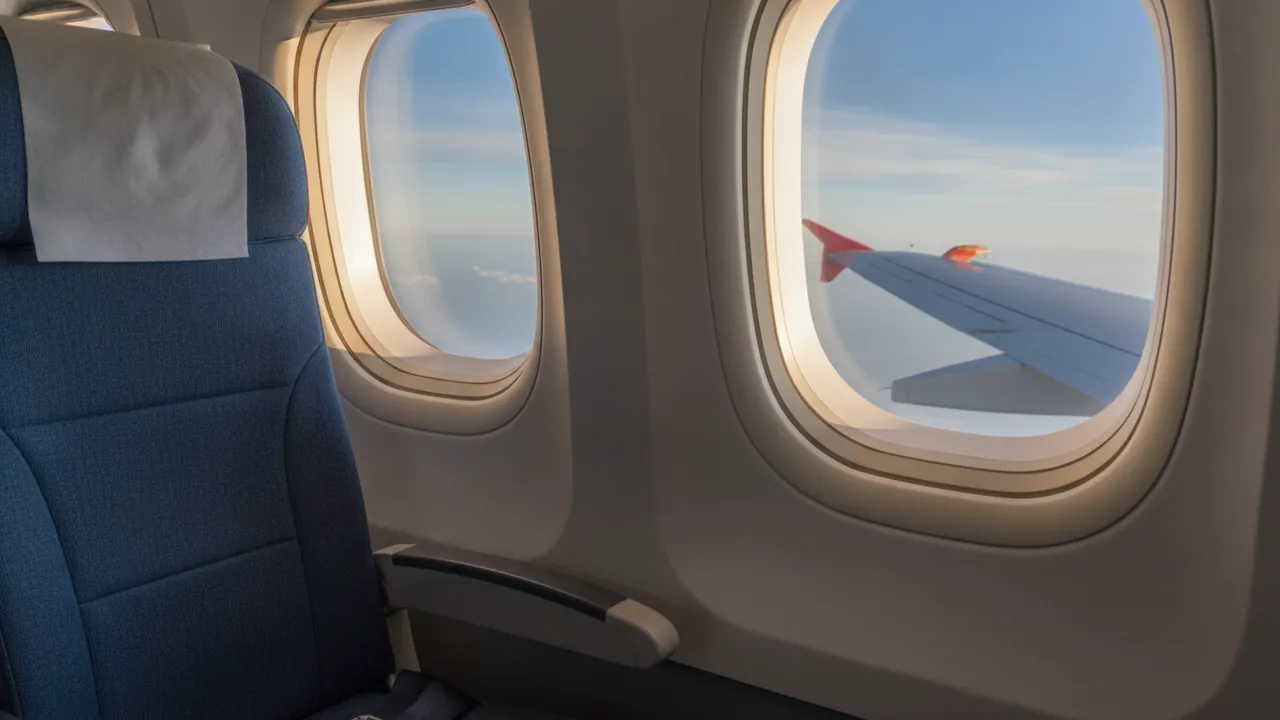
Is flying safe? Yes, flying on a commercial airline is one of the safest ways to travel. IATA counted 1.32 accidents per million flights in 2025, across 38.7 million flights, and the National Safety Council puts the lifetime odds of dying on a US airline at "too small to calculate." If you came here because of fear of flying, the numbers below are the honest version of that reassurance, including the parts that are less comforting.
The 2025 airline safety numbers
IATA publishes the global airline safety record each spring. For 2025 it reported 1.32 accidents per million flights, about one accident for every 757,000 flights. Eight of those accidents were fatal, and 394 people on board died. The five-year average for 2021 to 2025 was 1.27 accidents per million flights, six fatal accidents a year and 198 onboard deaths.
Two details matter. First, IATA counts any accident, including a hard landing that damages a wing or a runway excursion where everyone walks off. Most accidents are not fatal. Second, a year with a handful of fatal accidents is still a handful out of tens of millions of departures. A single crash fills the news for weeks, which is why the risk feels larger than it is.
Flying compared with driving
The National Safety Council compares deaths per passenger-mile. For 2014 to 2023, the risk in a passenger vehicle was more than 1,200 times higher than on a scheduled US airline. For 2022 alone, NSC's figures were 0.001 deaths per 100 million passenger-miles for airlines against 0.54 for passenger vehicles.
Per mile is the fairest comparison, though it flatters planes a little because flights cover long distances. Per trip the gap narrows, and it is still large. The most dangerous part of a flight day for most people is the drive to the airport.
Why the risk of flying is so low
Airline safety is not luck or one clever feature. It is layers, and each layer assumes the one before it can fail.
- Redundant systems. Airliners carry multiple hydraulic systems, electrical generators and flight computers. A plane can fly and land safely with one engine out, and it is certified to do so. The physics of that is explained in how planes stay in the air.
- Structural margins. Wings and fuselage are tested well beyond the loads they will meet in service, which is why the flexing of airplane wings is by design.
- Crew training. Pilots repeat emergency procedures in simulators on a regular schedule, and two pilots check each other's work throughout the flight.
- Maintenance and inspection. Aircraft follow mandatory inspection schedules, and faults found on one plane often lead to a fleet-wide fix.
- Learning from every accident. Investigators publish findings, and regulators turn them into rules. That is why the same kind of accident rarely happens twice.
What causes serious airline accidents
Safety analyses put loss of control in flight and controlled flight into terrain among the leading causes of fatal accidents, while runway excursions are the most frequent type but are usually survivable. Weather, crew decisions and mechanical failure show up in the mix, rarely alone. Turbulence is the thing most nervous flyers worry about, yet it causes injuries to people who are not belted in rather than crashes. Is turbulence dangerous goes through the injury data.
What is less reassuring about flying safety
Flying is not risk free, and pretending so does not help an anxious mind. Accidents do happen, a few hundred people die in a typical year worldwide, and some regions and operators have weaker records than others. For a traveler on a mainstream airline in a country with a mature regulator, the odds stay very small. The honest framing is not "nothing can go wrong" but "the system is built so one thing going wrong is not enough."
If the safety facts do not calm you down
Many people with flying anxiety already know the statistics and still feel afraid. That is normal: the fear is not a gap in information, it is an alarm that does not respond to arithmetic. Repeating the numbers to yourself in the seat often fails, and constant checking can feed the fear, as explained in safety behaviors and fear of flying. What works is treatment aimed at the alarm itself, covered in the fear of flying treatment guide. For the raw crash data in more detail, see plane crash statistics.
Frequently asked questions
Is flying safe right now?
Flying on a mainstream airline is safe right now. IATA's 2025 rate of 1.32 accidents per million flights is close to the recent average, and news events do not change the odds for your flight.
What is the riskiest part of flying?
Takeoff and landing are where most accidents occur because the aircraft is close to the ground. Those phases also have the most procedures and crew attention, and most accidents there are not fatal.
Is flying safer than driving?
Flying is safer than driving per mile traveled by a wide margin. NSC data for 2014 to 2023 put passenger-vehicle risk at more than 1,200 times that of scheduled US airlines.
Do I need to worry about flying?
Worrying will not make a flight safer, but strong worry is worth treating. Fear of flying is common and responds well to exposure-based therapy, while mild nerves are normal.
Is air travel getting less safe?
Air travel is not getting less safe. The five-year average to 2025 is 1.27 accidents per million flights, while flight numbers have grown a great deal over the decades.
Which airlines are the safest?
Safety audits such as IATA's IOSA registry list airlines that meet international standards, and most major carriers pass. Differences between audited airlines are small for passengers.