
Exposure Therapy Benefits After 30 Days of Fear-of-Flying Practice
Quick answer: Exposure therapy benefits after 30 days can show up as early, measurable progress: less avoidance, faster anxiety recovery, and more confidence around flying triggers. Most people should not expect fear to disappear in a month, but they can often track signs that their brain is learning to tolerate airports, aircraft sounds, turbulence videos, or boarding-related cues.
> Definition: Exposure therapy for fear of flying is a structured CBT method that helps nervous flyers repeatedly face flight-related triggers in safe, planned steps until anxiety becomes more tolerable.
TL;DR
- After 30 days, the most realistic gains are reduced avoidance, lower peak distress, shorter recovery time, and better willingness to keep practicing.
- Aviophobia exposure benefits can begin before an actual flight through imaginal exposure, airport visits, flight videos, simulators, or virtual reality cabins.
- Progress is strongest when exposures are repeated several times per week, tracked with simple metrics, and guided by an evidence-based CBT plan.
Exposure therapy benefits after 30 days: 5 early facts
After 30 days, exposure therapy progress is usually a set of process gains, not full remission. The win is often, “I still felt anxious, but I did not cancel, flee, or spiral for the rest of the day.”
- Reduced avoidance: You complete more flight-related tasks, such as watching takeoff videos or opening the airline app without shutting it immediately.
- Faster anxiety come-downs: Your body may still spike, but it returns from an 8 to a 5 sooner.
- Better confidence: You start to believe, “I can be scared and continue.”
- Ground-based progress counts: Airport visits, cabin sounds, and boarding imagery can build aviophobia exposure benefits before a real flight.
- Consistency matters: Several planned exposures per week usually beat one heroic session.
Exposure therapy is one of the strongest treatments for specific phobias when completed. Cleveland Clinic reports that over 90% of people who commit to and complete exposure therapy have significant symptom improvement source.
How exposure therapy works for fear-of-flying cues
Exposure therapy works through inhibitory learning: the brain learns that feared cues can be tolerated and do not always predict danger. In plain language, your alarm system gets new evidence.
This is not white-knuckling. Good exposure uses planned, repeated contact with triggers, then gives your body time to learn. For fear of flying, that might mean flight sounds on headphones, takeoff videos, turbulence recordings, airport visits, or VR cabins.
At first, anxiety may climb. That does not mean the plan is broken. The safety card held in damp fingers, the engine sound in a video, the imagined jet bridge pause, these cues can feel sharp at first. With repetition, many people notice the fear is still present but less bossy.
Clinicians typically recommend exposure as part of CBT for specific phobias because it pairs behavior change with new learning, not just reassurance. The broader structure is explained in CBT for fear of flying.
Before starting a 30-day fear-of-flying exposure tracker
Start with a fear ladder before you start counting wins. Put your easiest flight-related trigger at the bottom and your hardest one at the top.
Use a 0 to 10 scale, or a 0 to 100 SUDS scale, for anxiety. Pick one and keep it boring on purpose. A good tracker records four things: avoidance behaviors, peak anxiety, recovery time, and confidence after the exposure.
Pack this before you leave: a Notes app coping card, a two-minute phone timer, and one short if-then script. Example: “If I want to stop the video at takeoff, then I will plant my feet and wait 90 seconds.”
Get clinician support if symptoms are severe, linked to trauma, complicated by panic disorder, or affected by medical concerns. Medication questions belong with a prescriber, especially if you are mixing anxiety care with travel plans or sleep disruption.
How to track exposure therapy benefits after 30 days
To track exposure therapy benefits after 30 days, measure repeated behavior, not just how calm you felt. Consistency matters more than doing the scariest exposure immediately.
For this page, count progress as a measurable behavior change: completing more planned exposures, reducing escape or reassurance rituals, recovering faster after a spike, or moving one step higher on the fear ladder. Feeling calm is welcome, but it is not the only valid outcome.
- Set a baseline by recording your current fear rating for five cues, such as takeoff videos, turbulence audio, airport photos, boarding imagery, and looking at a booking screen.
- Choose repeatable exposures you can do several times per week, such as watching a takeoff video, visiting an airport parking area, using VR, or rehearsing the boarding walk.
- Log anxiety scores before, during, and after each exposure using the same 0 to 10 or 0 to 100 scale.
- Record avoidance honestly, including pausing videos, seeking reassurance, checking aircraft models, or mentally planning escape.
- Review weekly trends for completed exposures, lower peak distress, shorter recovery, or more willingness to try again.
- Adjust the ladder by repeating sticky steps before moving up.
For nervous flyers, exposure therapy usually works best when practice is frequent and measurable, while one-off “test yourself” flights fit fewer people because they give less learning data.
Aviophobia exposure benefits from airport, video, and VR practice
Meaningful aviophobia exposure benefits can happen before you board a commercial flight. Early milestones include tolerating aircraft sounds, watching turbulence explanations, sitting near airport parking areas, entering a terminal, or practicing a VR takeoff.
The first airport visit may be very small. Runway lights beyond the terminal glass can be enough for one session.
Ground-based exposure can reduce avoidance and dread because it targets the cues your brain already treats as threats. You are not waiting for flight day to practice. You are teaching the alarm system on ordinary Tuesdays, with a half-charged phone and headphones tangled at the bottom of your bag.
A 2021 review found that virtual reality exposure therapy for fear of flying reduced flight anxiety and avoidance after treatment, with benefits maintained at follow-up source. A 2023 randomized clinical study also found virtual reality exposure therapy reduced flight-anxiety symptoms compared with control conditions source. The evidence base is covered further in virtual reality exposure therapy flying.
Thirty-day exposure therapy progress metrics for nervous flyers
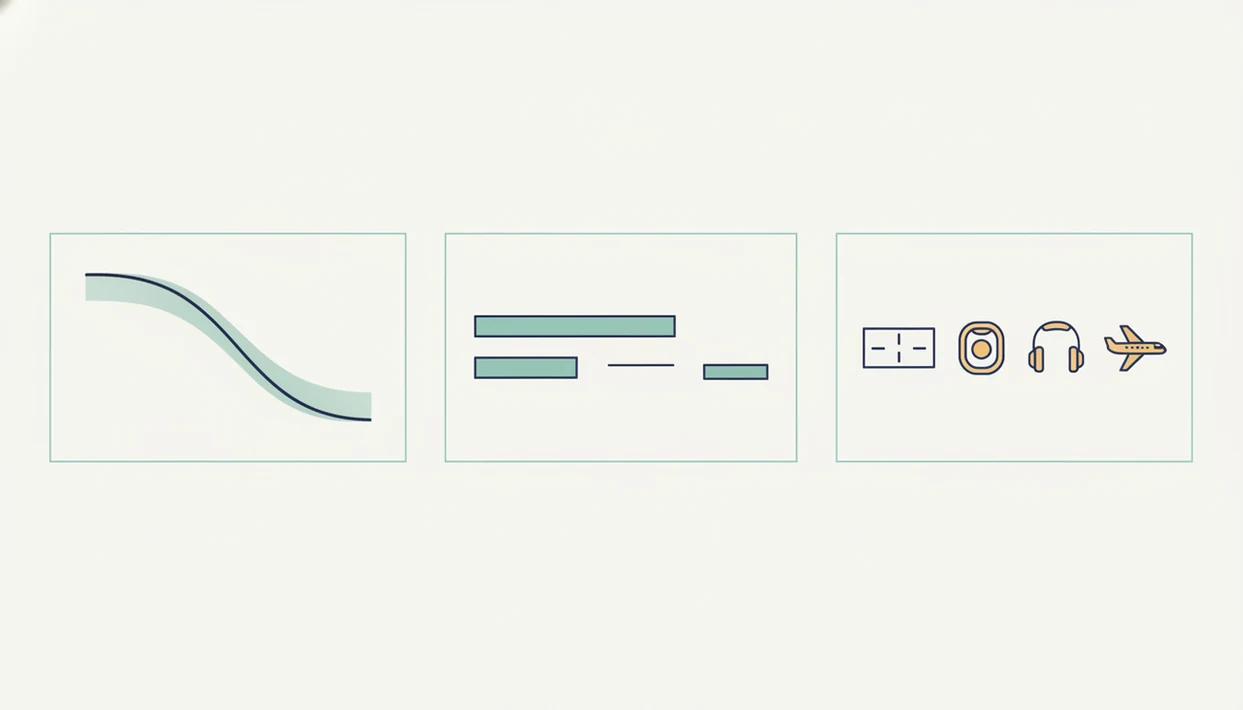
Do not judge exposure therapy progress only by whether anxiety was present. A person can still feel a 7 out of 10 and be improving because they stayed, recovered faster, or stopped cancelling practice.
Belief change counts too. Moving from “I will die if turbulence happens” to “I can feel scared and stay safe enough to continue” is real learning. It may show up before your body feels calm.
| Metric | What to record | What improvement may look like after 30 days |
|---|---|---|
| Completed exposures | Number of planned practices finished | 3 practices per week instead of 1 |
| Avoided tasks | What you skipped, paused, or escaped | Fewer stopped videos or cancelled airport visits |
| Peak anxiety rating | Highest 0 to 10 or 0 to 100 score | Peak drops from 9 to 7, or feels less shocking |
| Time to partial recovery | Minutes to return halfway toward baseline | Recovery takes 12 minutes instead of 35 |
| Anticipatory anxiety | Fear before practice or flight cues | Less dread the night before practice |
| Confidence rating | “Can I do the next step?” score | Confidence rises from 2 to 5 |
A paper worksheet, therapist CBT form, or Fear of Flying Guide tracker can keep these numbers in one place. The point is not to prove you felt calm; it is to show whether you practiced, stayed longer, recovered faster, or avoided less.
Common exposure therapy mistakes after 30 days of practice
The most common mistake is stopping the exposure the moment anxiety spikes. If you always leave at the peak, your brain may learn, “Escape saved me,” instead of, “The alarm came down while I stayed.”
Another mistake is practicing too rarely. One session every two weeks is hard to learn from. Jumping straight to the hardest trigger can also backfire, especially if your fear ladder skips basic steps like aircraft sounds or boarding imagery.
Safety behaviors can quietly block learning. These include excessive reassurance texts, alcohol use, compulsive seat checking, constant aircraft research, or rehearsing escape plans during every practice. The pocket check is real.
Early scary sessions do not automatically mean exposure therapy is failing. They may mean the step is too large, too rushed, or missing support. If medication is part of your plan, read about flight anxiety medication with a clinician’s guidance.
How to verify 30-day exposure therapy progress data
“Did exposure therapy work after 30 days?” The answer depends on whether your behavior changed, not whether fear vanished.
A positive 30-day signal looks like more completed exposures, less avoidance, faster recovery, and greater willingness to continue. Some people still report high anxiety but show meaningful functional improvement. For example, they may stay in the terminal longer, watch the full turbulence video, or stop texting “I can’t do this” before every practice.
The American Psychological Association reports that roughly 75% of people who enter psychotherapy show some benefit, and exposure-based CBT is commonly used for phobias; aviophobia-specific boarding outcomes vary by protocol and study source.
After 30 days, review your fear ladder. Keep the steps that are still teaching you something. Raise the difficulty only when the next step feels challenging, not chaotic. If you want a guided structure, an app that guides flight exposure therapy can sit alongside therapist-led care or self-tracking.
Limitations
Thirty days is a useful checkpoint, but it is usually not enough for full remission of long-standing aviophobia. Treat it as month one data, not a final verdict.
- Irregular, rushed, or safety-behavior-heavy practice can delay exposure therapy progress.
- Self-guided exposure may be less reliable than therapist-guided CBT, especially with panic or trauma history.
- Temporary anxiety spikes can happen early, and some people drop out without enough support.
- Exposure may need modification for severe PTSD, bipolar disorder, complex medical issues, substance use, or high suicide risk.
- Virtual or imaginal exposure may not fully replace real-flight practice for every person.
- Medication, alcohol, or sedating substances can complicate learning and should be discussed with a clinician.
- Children, teens, and people after a frightening flight may need a slower ladder and more coaching.
If symptoms are severe or functioning is impaired, seek professional guidance. FearOfFlying.com can be a practical nervous flyer guide, but it cannot diagnose, prescribe, or replace care from a licensed clinician.
FAQ
Can exposure therapy work in 30 days for fear of flying?
Yes, early benefits can appear in 30 days, especially reduced avoidance and faster recovery. Full recovery from fear of flying usually takes longer.
What should improve first during fear-of-flying exposure therapy?
The first improvements are often more willingness, fewer avoided tasks, and shorter anxiety recovery time. Peak fear may remain high at first.
Should anxiety disappear after exposure therapy?
No, the goal is better tolerance and new learning, not instant removal of anxiety. Many people improve while still feeling some fear.
How often should I practice exposure for fear of flying?
Most plans use repeated practice several times per week. Stay within a planned fear ladder rather than jumping straight to the hardest trigger.
Can VR exposure therapy help fear of flying?
Yes, research shows VR exposure can reduce flight anxiety and avoidance in aviophobia. It is often useful when real-flight practice is costly or impractical.
Is exposure therapy just forcing myself onto a plane?
No, proper exposure is structured, gradual, measured, and repeated. It is different from an unplanned flight where you simply endure panic.
What if exposure therapy feels worse at first?
Temporary anxiety spikes can happen during early exposure. If distress stays unmanageable, adjust the ladder or seek therapist-guided CBT.
When should I get professional help for fear of flying?
Get professional help if fear causes cancellations, panic attacks, trauma symptoms, substance use, or major life limits. A clinician can tailor CBT, exposure, and medication decisions safely.
Build a calmer 30-day fear-of-flying plan
Use Fear of Flying Guide to combine CBT, gradual exposure, aviation education, and tracking tools so you can measure progress without rushing the process. If symptoms are intense or medication is being considered, involve a qualified professional.
Get fear of flying help